Remembering the legacy of Michael Tilson Thomas

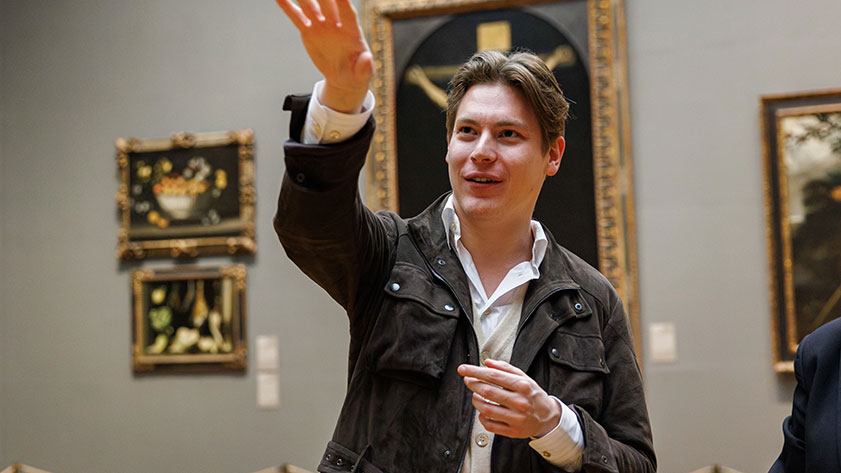
The Chicago Symphony’s concerts this weekend are dedicated to Michael Tilson Thomas, who died on April 22nd at his home in San Francisco. He was 81. Like so many others, I became unmoored by the news. Not because I knew him personally, but because so many of the concerts I remember most vividly from the last 30 years were his.

Friday’s reminder came by way of Karina Canellakis, who led the CSO through Tchaikovsky’s Symphony No.5. The performance kept pulling me back to a night in Seattle in 2009, when MTT was conducting the San Francisco Symphony on a West Coast tour. That Tchaikovsky was something. Rope-a-dope with the audience’s emotions. Canellakis, to her credit, played the same game.

What made Tilson Thomas rare was how exuded curiosity and love for his craft. He never seemed to be going through the motions. Through his illness, he continued to make music. That commitment was visible long before his diagnosis. When he took the podium, you felt it was safe to surrender to the music. The ride would be worth it. It was through MTT that I fell in love with Ives, gained a much deeper appreciation for Mahler’s symphonies, and embraced Cowell, Ruggles, and Scelsi.

Continue reading Remembering the legacy of Michael Tilson Thomas

The CSO gives Tüür’s accordion concerto a long-overdue US premiere

The Chicago Symphony is often described as a product of the great German and Viennese tradition. That reputation has been earned. But Thursday’s concert suggested the CSO’s story is more complex and interesting than that tight refrain.

The program opened with Brahms’s Variations on a Theme by Haydn and closed with Sibelius’s Second Symphony. Sandwiched between them was the U.S. premiere of Prophecy, Erkki-Sven Tüür’s accordion concerto, nearly two decades after the work was first performed in 2007. It should be noted that in 1904 under Theodore Thomas, the CSO also gave the U.S. premiere of Sibelius’s Second Symphony. The CSO has been doing this kind of work longer than people sometimes remember.

Continue reading The CSO gives Tüür’s accordion concerto a long-overdue US premiere

Tchaikovsky and Rota share the spotlight at Orchestra Hall

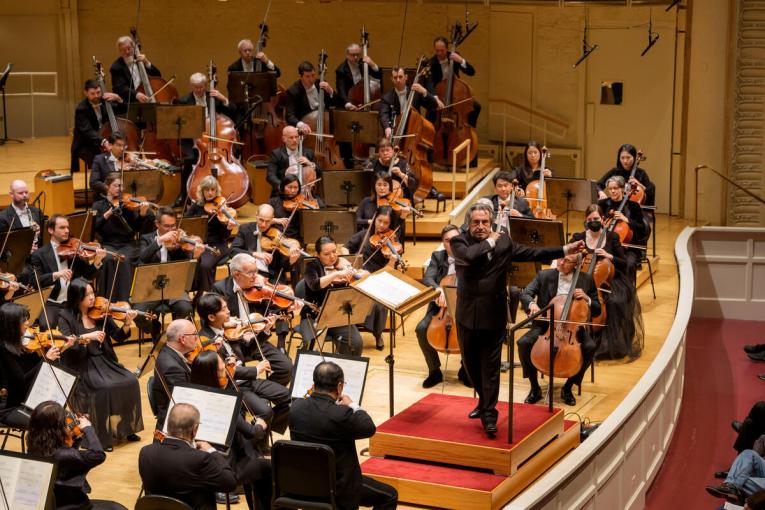
Some classical music works arrive on the concert stage like shy guests at a crowded party. They need a persuasive host to draw listeners in and reveal their charm, lest the room move on to flashier attractions. Not every work carries the inevitable triumph of a Beethoven symphony, for example. His ‘Eroica’ can survive a rough night and still leave an audience on its feet. But Tchaikovsky’s own third symphony, known as the ‘Polish,’ is not that kind of piece. It requires advocacy. On Thursday evening at Orchestra Hall, Riccardo Muti provided exactly that.

Continue reading Tchaikovsky and Rota share the spotlight at Orchestra Hall

Klaus Mäkelä’s imminent arrival brings Sibelius, Lindberg and a thrilling Walton surprise to CSO’s 2026-2027 season

The Chicago Symphony Orchestra’s upcoming season has been announced, and there’s a lot I could say about it. Let’s start with the obvious: With the 2026-2027 season, we are one year closer to the official start of the Klaus Mäkelä era with the CSO. In many ways, it feels as though the young Finn is already ours. Over the last two seasons, he has spent an increasing number of weeks on the podium at Orchestra Hall. And even before this, Mäkelä seemed everywhere in the local imagination. He was simply all that anyone who follows the CSO could talk about.

With his arrival now imminent, I am struck by how undefinable his musical identity remains as a conductor. He is clearly a congenial partner for the orchestra. He favors the large orchestral staples that suit the Chicago sound. 

Yet, there are hints of an interest that wanders beyond these well-worn tropes. Based on these hints, I even went so far as to bet my spouse that we would see Andrew Norman’s Play on the Chicago schedule for the upcoming season. Mäkelä has conducted it in Oslo, Amsterdam, and Berlin in recent years. It seemed logical he would bring the piece to Michigan Avenue. 

Continue reading Klaus Mäkelä’s imminent arrival brings Sibelius, Lindberg and a thrilling Walton surprise to CSO’s 2026-2027 season

Mäkelä’s heroic survey in Chicago

Photo Credit: Todd Rosenberg

Klaus Mäkelä is back in Chicago for one program before taking the orchestra on a week-long tour of the Northeast. A performance at Carnegie Hall—featuring the same program he conducted this weekend, a survey of two heroic depictions in Strauss’s Ein Heldenleben and Sibelius’s Lemminkäinen Suite—anchors the tour.

This isn’t Mäkelä’s first journey to Carnegie Hall with one of his orchestras. He has previously brought both the Orchestre de Paris and the Royal Concertgebouw Orchestra to the storied venue, receiving mixed but always passionate critical responses. Hopefully this next foray into New York’s unforgiving critical landscape fares better.

Based on Friday evening’s performance, it should. Both works chosen by the Finnish conductor hold deep historical connections to the Chicago Symphony. Theodore Thomas led the U.S. premieres of Strauss’s Ein Heldenleben, and both “The Swan of Tuonela” and “Lemminkäinen’s Return” from Sibelius’s suite. And a few years ago, Mäkelä even programmed “The Swan” in one of his early guest appearances here. These scores clearly suit him.

Continue reading Mäkelä’s heroic survey in Chicago

Four Bruckner concerts and one conclusion

Anton Bruckner has never resonated with me the way Mahler has. I don’t seek out his symphonies with any particular enthusiasm. When the mood strikes, I’ll put on a recording and settle into my listening chair, letting the music unfold. Friends speak of transcendence; I’m still trying to find my way in. Yet even if Bruckner has not quite claimed me, my relationship with him has been shaped less by the scores themselves than by the circumstances in which I’ve encountered them. In the few times I’ve heard Bruckner in concert—only three over many years—each performance has stayed with me for reasons that extend beyond the music.

The first was Kurt Masur’s Seattle Symphony account of the Fourth Symphony, which arrived during a crisis moment for the orchestra, with musicians and administration locked in a bitter contract negotiation. Masur’s presence steadied the ensemble, drawing out playing of real warmth and authority; the performance felt like an act of institutional reassurance as much as musical interpretation. A few years later in Minneapolis, I attended what turned out to be Stanislav Skrowaczewski’s final public concert: a compelling reading of the Eighth that ranks among the most engaging concert experiences I’ve had. The lobby that evening was bittersweet—staff were selling off overstock of Skrowaczewski’s recordings. His iconic Vox albums and copies of his celebrated Bruckner Ninth with Minnesota spread across tables while staff shared anecdotes of the man they knew as “Stan.” I’ve wondered since whether he knew it would be his last appearance.

Against that backdrop, my most recent Bruckner encounter carried a different kind of significance. The Berlin Philharmonic brought the Fifth Symphony to Chicago as part of their U.S. tour, and the atmosphere of the night was driven as much by the presence of the Berliners as by the score itself. This was a case where the orchestra’s superlative playing elevated music that doesn’t fully connect with me. I’ve now heard the Berlin Philharmonic twice at Orchestra Hall; both times their sheer quality has made me want to hear them in Berlin.

Continue reading Four Bruckner concerts and one conclusion

Yunchan Lim finds poetry in Schumann as Mäkelä unleashes Beethoven’s Seventh

Last October, on vacation in Amsterdam, I slipped into the Concertgebouw to hear Klaus Mäkelä lead the Royal Concertgebouw Orchestra. He had not yet assumed his full duties as music director there, but the relationship already felt settled and purposeful. The program paired Andrew Norman’s Play with Richard Strauss’ Don Juan and Rosenkavalier waltzes, a combination that showed both Mäkelä’s ambition and his curiosity. Norman’s sprawling, high-voltage score came off better than expected; the Strauss, lush and heroic by nature, felt less fully shaped. Still, the concert offered a useful snapshot of a conductor in the midst of defining himself, drawn to contrasts and willing to take risks.

This week, Mäkelä brought a similar philosophy to Orchestra Hall, standing before the Chicago Symphony, another orchestra he is soon to lead. Once again, old and new were placed in close proximity. Schumann and Beethoven formed the spine of the program, flanked by two modern works: Unsuk Chin’s subito con forza and Jörg Widmann’s Con brio – both receiving Chicago Symphony premieres. The effect was not novelty for its own sake but a deliberate attempt to focus Beethoven’s familiar music through a modern lens.

Continue reading Yunchan Lim finds poetry in Schumann as Mäkelä unleashes Beethoven’s Seventh

A song for the reappeared

Some works arrive at exactly the moment they’re needed. Matthew Aucoin’s Song of the Reappeared, receiving its world premiere with the Chicago Symphony Orchestra this week, is one of them.

The piece draws from Raúl Zurita’s INRI, a book-length poem born from Chile’s darkest chapter. After Pinochet’s dictatorship disappeared thousands—bodies dropped from helicopters, lives erased from memory—Zurita imagined those lost souls rising from sea and mountains. It was a memorial and a vision, anchored in grief but turned toward rebirth.

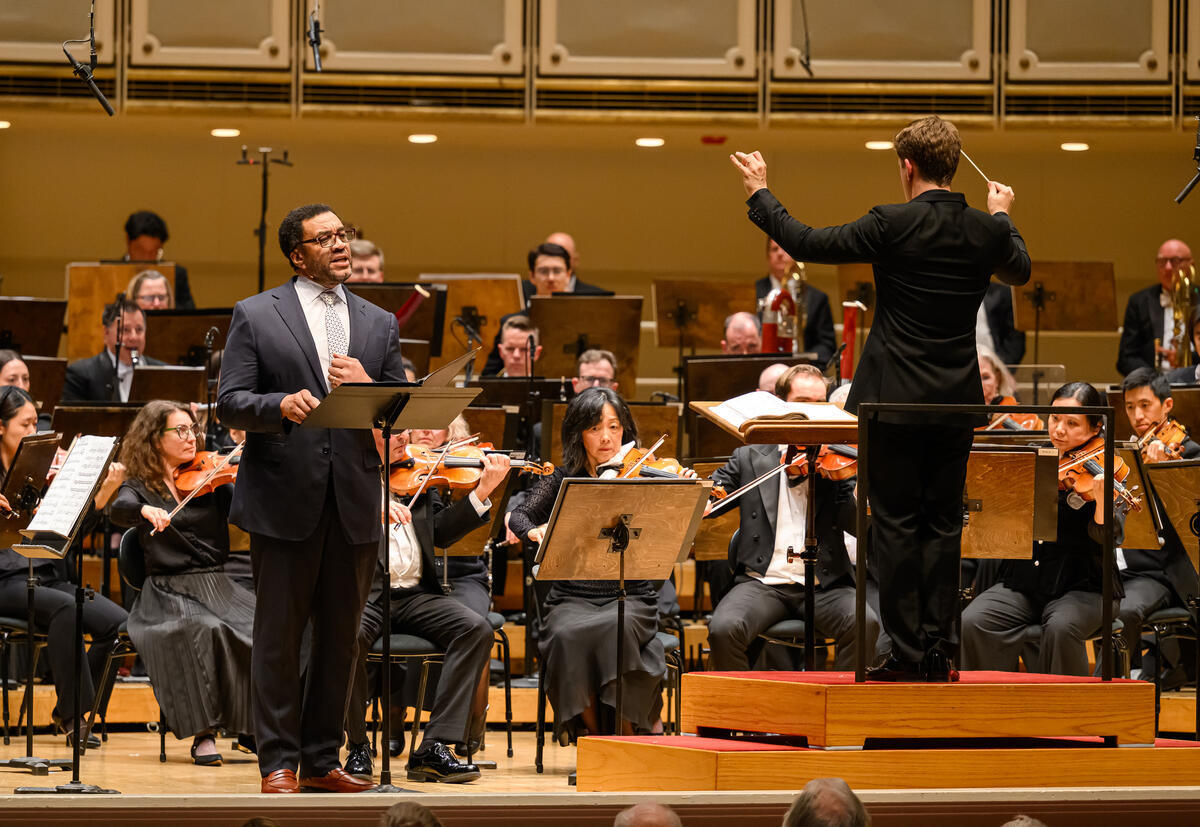
Written for soprano Julia Bullock, the work speaks to our present with unsettling clarity. In a city still reckoning with the effects of mass detentions that tore families apart, the title’s promise of return carries weight. This collaboration between Bullock and Aucoin represents both artists at their most potent. Aucoin has found new balance in his writing: vocal lines that connect immediately, layered over orchestral passages of startling power. Bullock herself describes it as some of the most exciting work the composer has produced.

After these Chicago performances, there are no plans set for the piece. That alone makes these four nights essential. Don’t let the chance to hear this new work work pass.

Information and tickets for remaining performances

Continue reading A song for the reappeared

Honeck offers a living, breathing setting for Mozart’s Requiem

Classical music’s great monuments often arrive in the concert hall trailing long histories behind them, along with layers of interpretation and expectations that no performance can meet. Mozart’s Requiem is undoubtedly one of those works. It gathers together some of the composer’s most stirring music and binds it with a spiritual character weighted by lore surrounding Mozart’s final days. The piece’s fragmentary nature allowed later composers to supply completions of varying character, adding an almost philosophical dimension on which are the most or least “Mozart.”

Put together, its murky antecedents, spiritual impact and mythological status leave Mozart’s Requiem almost in a state of suspension. For all its beauty, it is a piece that can inspire more promise than fulfillment. I have long thought that it thrives more readily on recordings than in performance, where its scale and pacing create challenges for modern orchestras.

Continue reading Honeck offers a living, breathing setting for Mozart’s Requiem