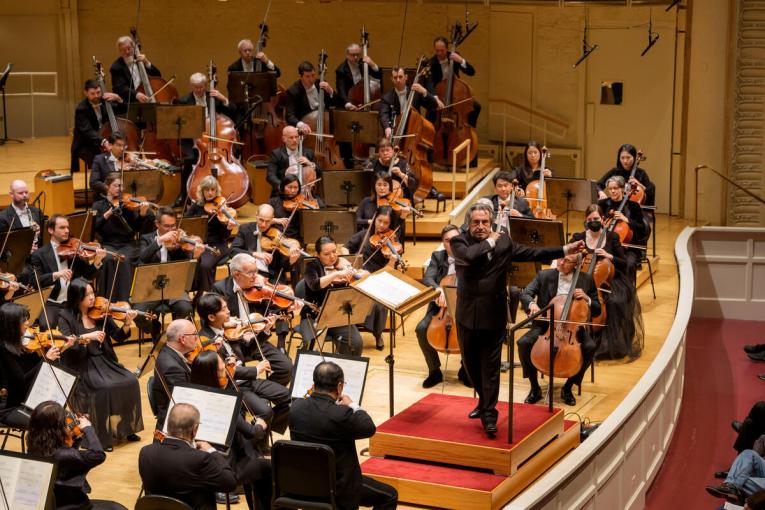
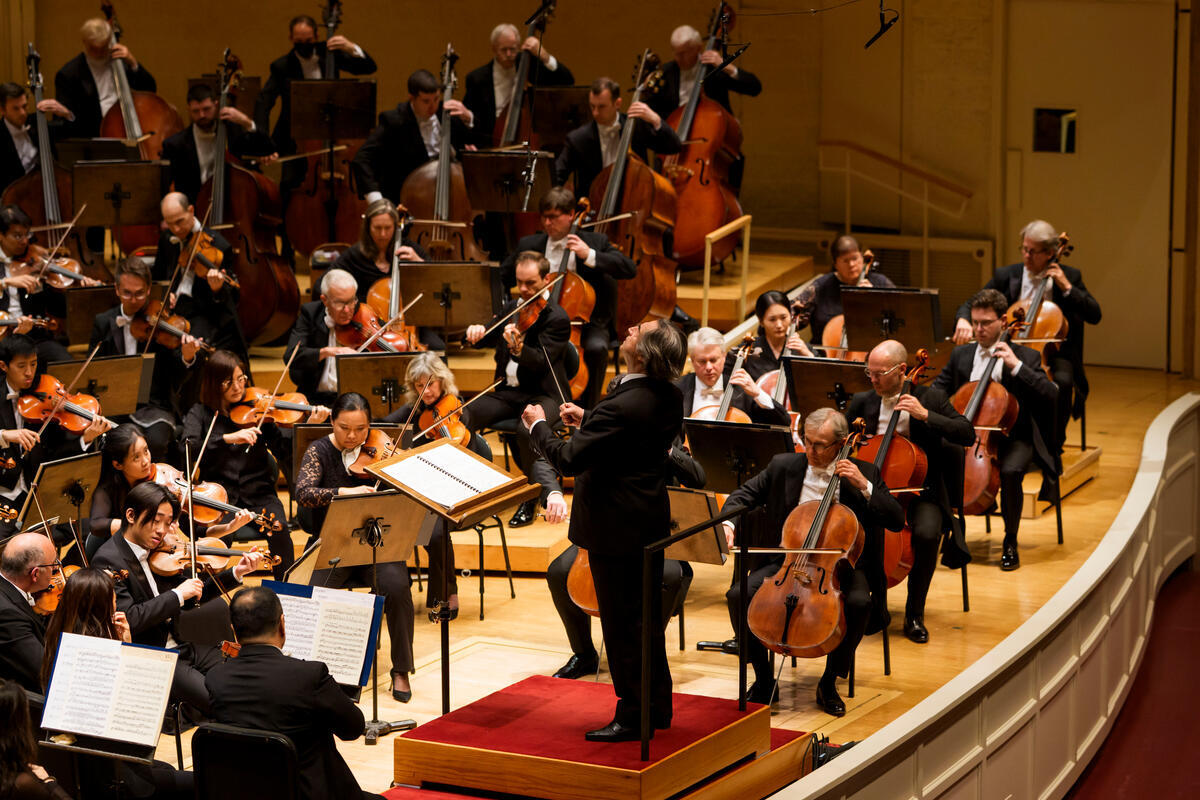
Tchaikovsky and Rota share the spotlight at Orchestra Hall

Some classical music works arrive on the concert stage like shy guests at a crowded party. They need a persuasive host to draw listeners in and reveal their charm, lest the room move on to flashier attractions. Not every work carries the inevitable triumph of a Beethoven symphony, for example. His ‘Eroica’ can survive a rough night and still leave an audience on its feet. But Tchaikovsky’s own third symphony, known as the ‘Polish,’ is not that kind of piece. It requires advocacy. On Thursday evening at Orchestra Hall, Riccardo Muti provided exactly that.

Continue reading Tchaikovsky and Rota share the spotlight at Orchestra Hall

Muti affirms what matters in a program of Brahms, Stravinsky and Rodrigo with the Chicago Symphony

For a good many people, the image of Johannes Brahms is inseparable from Maria Fellinger’s photographs. Fellinger, a friend of the composer, captured him in his later years: belly pushing outward, age etched into his face, his long beard and hair gone white or very light gray. Yet even in these twilight portraits, Brahms maintains his composure. He looks commanding, his suit still purposeful. These are the attributes of a composer who has lived life, knows what he believes, and is ready to share those convictions without hesitation. This same spirit permeates much of his later music, including the Fourth Symphony. By this point in his career, any hesitation in his musical voice has vanished entirely.

Continue reading Muti affirms what matters in a program of Brahms, Stravinsky and Rodrigo with the Chicago Symphony

First encounters and final judgments

One of the earliest pieces of music I immersed myself in when I first ventured into the world of classical music in the mid-1990s was Giuseppe Verdi’s Requiem. Back then, my understanding of both classical music and Verdi was thin, cobbled together from scattered references in popular culture: the occasional aria, the familiar strains of La Traviata, and, of course, the terrifying grandeur of the Requiem’s “Dies Irae.” The sheer force with which Verdi summoned dread and divine judgment through sound was unlike anything I had ever encountered. Hearing it for the first time was a full-body experience that rivaled the raw energy I’d felt listening to bands like the Smashing Pumpkins.

I can’t say with certainty whether I’ve ever experienced the Requiem live in a concert hall. So when the Chicago Symphony Orchestra announced it would close out its season with this very work under the sure-handed direction of Riccardo Muti a part of me itched to be there. Alas, as often happens, other commitments intervened. While I don’t typically associate the CSO with Verdi, it’s worth noting the Requiem has occupied a meaningful place during the tenures of the orchestra’s last three music directors.

Continue reading First encounters and final judgments