Tchaikovsky and Rota share the spotlight at Orchestra Hall

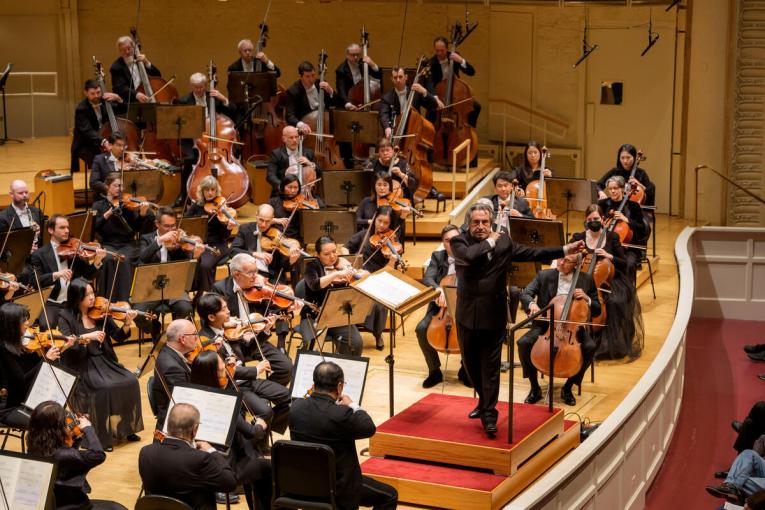
Some classical music works arrive on the concert stage like shy guests at a crowded party. They need a persuasive host to draw listeners in and reveal their charm, lest the room move on to flashier attractions. Not every work carries the inevitable triumph of a Beethoven symphony, for example. His ‘Eroica’ can survive a rough night and still leave an audience on its feet. But Tchaikovsky’s own third symphony, known as the ‘Polish,’ is not that kind of piece. It requires advocacy. On Thursday evening at Orchestra Hall, Riccardo Muti provided exactly that.

Continue reading Tchaikovsky and Rota share the spotlight at Orchestra Hall

Hunger, guilt and violence drive a haunting Der Silbersee at Chicago Opera Theater

Photo Credit: Michael Brosilow

Kurt Weill and Georg Kaiser’s Der Silbersee (‘The Silverlake’) has never been an easy work to classify. Somewhere between play, opera, and political fable, this 1933 hybrid resists the tidy categories that make theatrical works digestible. Chicago Opera Theater’s recent production embraces this essential ambiguity and builds its strength from it. Billed as ‘A Winter’s Tale,’ the work unfolds in cold, clear light. What begins as biting social satire gradually thaws into something lyrical and unresolved. Weill’s score grows increasingly hauntingly melodic as the narrative spirals inward.

The history surrounding Silbersee matters. The premiere came less than three weeks after Hitler became chancellor on January 30, 1933. Germany’s political climate was already darkening. For both Weill and Kaiser, this would be their last production in the Weimar Republic before exile. Weill fled in March 1933 and eventually settled in the United States while Kaiser settled in Switzerland. It is a final artistic statement from two men standing at the edge of an abyss they could not fully see.

Continue reading Hunger, guilt and violence drive a haunting Der Silbersee at Chicago Opera Theater

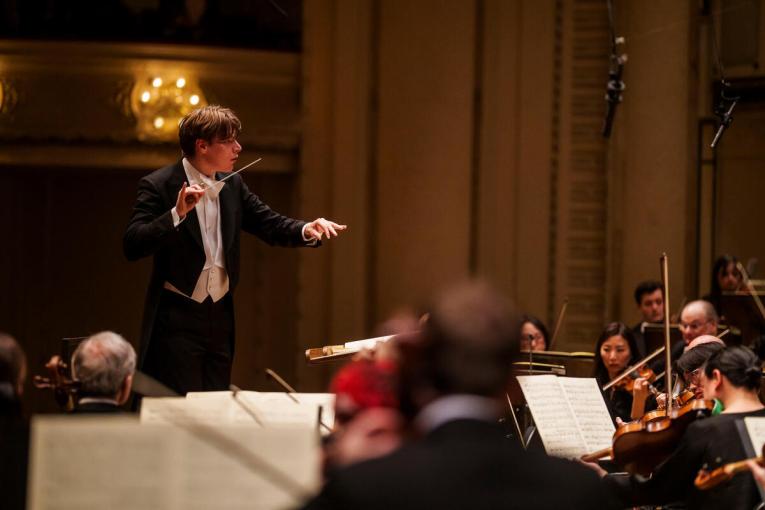
Klaus Mäkelä’s imminent arrival brings Sibelius, Lindberg and a thrilling Walton surprise to CSO’s 2026-2027 season

The Chicago Symphony Orchestra’s upcoming season has been announced, and there’s a lot I could say about it. Let’s start with the obvious: With the 2026-2027 season, we are one year closer to the official start of the Klaus Mäkelä era with the CSO. In many ways, it feels as though the young Finn is already ours. Over the last two seasons, he has spent an increasing number of weeks on the podium at Orchestra Hall. And even before this, Mäkelä seemed everywhere in the local imagination. He was simply all that anyone who follows the CSO could talk about.

With his arrival now imminent, I am struck by how undefinable his musical identity remains as a conductor. He is clearly a congenial partner for the orchestra. He favors the large orchestral staples that suit the Chicago sound. 

Yet, there are hints of an interest that wanders beyond these well-worn tropes. Based on these hints, I even went so far as to bet my spouse that we would see Andrew Norman’s Play on the Chicago schedule for the upcoming season. Mäkelä has conducted it in Oslo, Amsterdam, and Berlin in recent years. It seemed logical he would bring the piece to Michigan Avenue. 

Continue reading Klaus Mäkelä’s imminent arrival brings Sibelius, Lindberg and a thrilling Walton surprise to CSO’s 2026-2027 season

Civic Orchestra of Chicago brings vitality to Price, Walker, Kay and Dvořák at Orchestra Hall

Amid a Chicago orchestral landscape dominated by marquee ensembles, the Civic Orchestra of Chicago tends to exist in the shadows. That’s unfortunate, because this century‑old training orchestra—founded in 1919 by Frederick Stock, then music director of the Chicago Symphony Orchestra—remains one of the city’s most earnest and quietly radical institutions. It’s made up of early‑career musicians, players straddling the line between their conservatory training and professional life. Many alums move on to orchestras across the country. Quite a few land seats in the CSO itself. Yet the Civic’s real gift to the city isn’t its alumni roster. It’s the opportunity audiences receive to enjoy adventurous music in Orchestra Hall at a steal: general admission tickets start at $5.

The Civic Orchestra has also become an artistically compelling proposition under the direction of principal conductor Ken-David Masur. Beyond the typical warhorses, Masur has steered toward Copland and Takemitsu, Lutosławski and Chávez. Its March 2 concert was no exception, pairing Dvořák’s Symphony No. 7 in D minor with works by three Black American composers — Ulysses Kay, George Walker and Florence Price. It was an evening built around two, persistent questions: Who gets remembered, and why?

Continue reading Civic Orchestra of Chicago brings vitality to Price, Walker, Kay and Dvořák at Orchestra Hall

Handel’s triumphal and somber sides shine at festival close

George Frederic Handel’s career was interwoven tightly with the British monarchy, a relationship that spanned the exuberant heights of national peace and the somber depths of royal loss. In an afternoon of starkly contrasting emotional colors, the final performance of the 2026 Handel Week Festival Orchestra and Chorus gathered musicians from across the Chicago area to bring this dual legacy to life.

On March 1, they offered a fitting finale to three weeks of programming that has animated Pilgrim Congregational Church in Oak Park. The event paired the brassy, triumphal optimism of the Utrecht Te Deum and Jubilate with the heartbroken beauty of the Funeral Anthem for Queen Caroline known informally as The Ways of Zion Do Mourn.

This is how festivals should end—with large, multifaceted works that allow for genuine artistic synthesis. For the most part, festival organizer Dennis Northway, his orchestra, and four soloists—Kimberly McCord (soprano), Michelle Wrighte (mezzo-soprano), Cameo Humes (tenor), and Noah Gartner (baritone)—delivered where it most mattered. The afternoon oscillated between triumphant and solemn registers; throughout, the chorus and quartet remained the focal point of Northway’s conception.

Continue reading Handel’s triumphal and somber sides shine at festival close