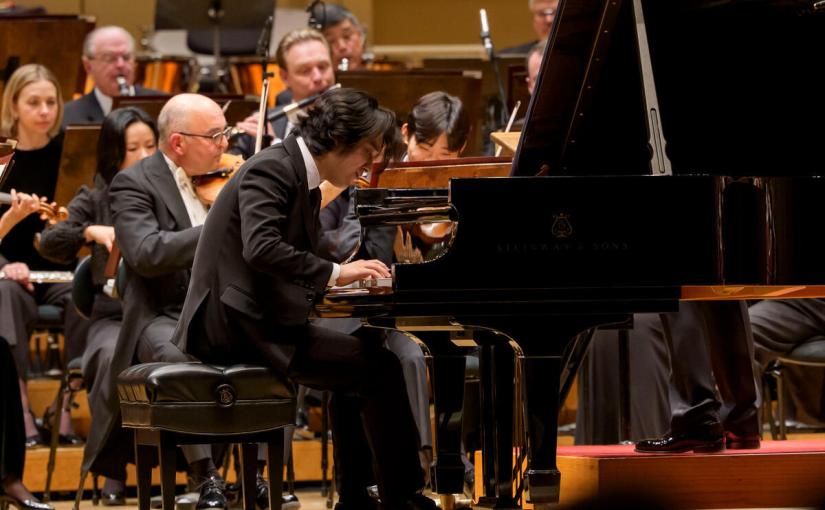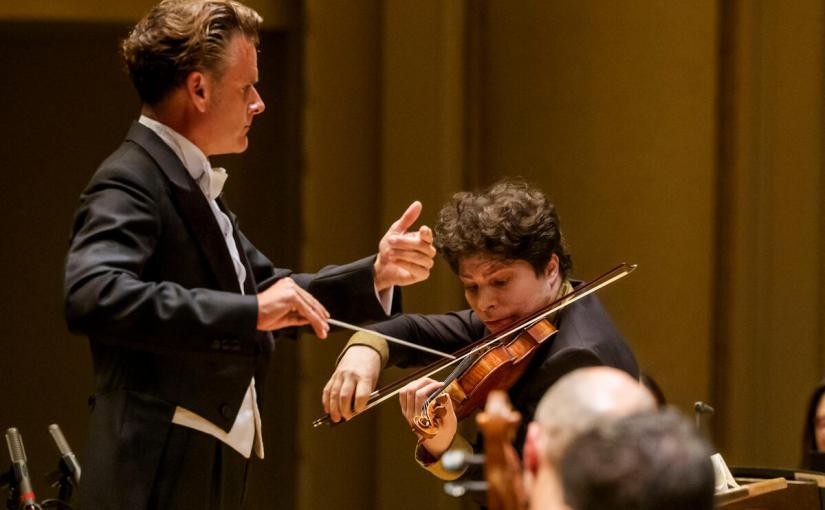
Yunchan Lim finds poetry in Schumann as Mäkelä unleashes Beethoven’s Seventh

Last October, on vacation in Amsterdam, I slipped into the Concertgebouw to hear Klaus Mäkelä lead the Royal Concertgebouw Orchestra. He had not yet assumed his full duties as music director there, but the relationship already felt settled and purposeful. The program paired Andrew Norman’s Play with Richard Strauss’ Don Juan and Rosenkavalier waltzes, a combination that showed both Mäkelä’s ambition and his curiosity. Norman’s sprawling, high-voltage score came off better than expected; the Strauss, lush and heroic by nature, felt less fully shaped. Still, the concert offered a useful snapshot of a conductor in the midst of defining himself, drawn to contrasts and willing to take risks.

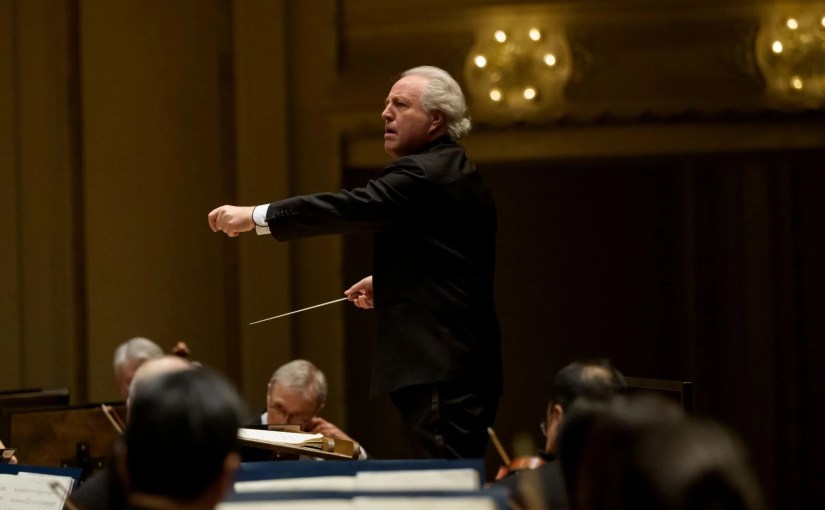
This week, Mäkelä brought a similar philosophy to Orchestra Hall, standing before the Chicago Symphony, another orchestra he is soon to lead. Once again, old and new were placed in close proximity. Schumann and Beethoven formed the spine of the program, flanked by two modern works: Unsuk Chin’s subito con forza and Jörg Widmann’s Con brio – both receiving Chicago Symphony premieres. The effect was not novelty for its own sake but a deliberate attempt to focus Beethoven’s familiar music through a modern lens.

Continue reading Yunchan Lim finds poetry in Schumann as Mäkelä unleashes Beethoven’s Seventh

A song for the reappeared

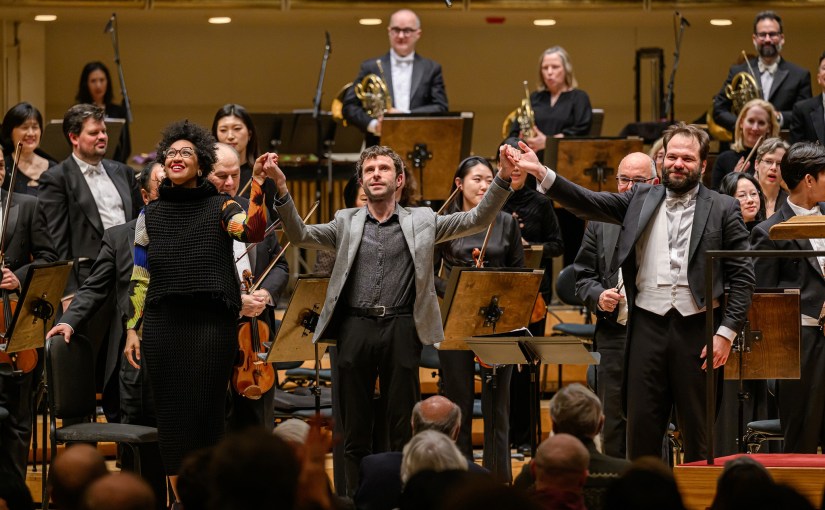
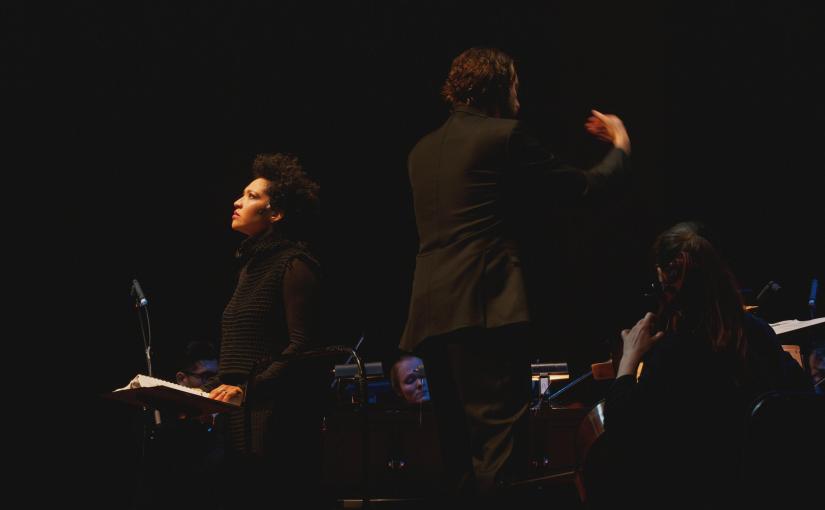
Some works arrive at exactly the moment they’re needed. Matthew Aucoin’s Song of the Reappeared, receiving its world premiere with the Chicago Symphony Orchestra this week, is one of them.

The piece draws from Raúl Zurita’s INRI, a book-length poem born from Chile’s darkest chapter. After Pinochet’s dictatorship disappeared thousands—bodies dropped from helicopters, lives erased from memory—Zurita imagined those lost souls rising from sea and mountains. It was a memorial and a vision, anchored in grief but turned toward rebirth.

Written for soprano Julia Bullock, the work speaks to our present with unsettling clarity. In a city still reckoning with the effects of mass detentions that tore families apart, the title’s promise of return carries weight. This collaboration between Bullock and Aucoin represents both artists at their most potent. Aucoin has found new balance in his writing: vocal lines that connect immediately, layered over orchestral passages of startling power. Bullock herself describes it as some of the most exciting work the composer has produced.

After these Chicago performances, there are no plans set for the piece. That alone makes these four nights essential. Don’t let the chance to hear this new work work pass.

Information and tickets for remaining performances

Continue reading A song for the reappeared

Honeck offers a living, breathing setting for Mozart’s Requiem

Classical music’s great monuments often arrive in the concert hall trailing long histories behind them, along with layers of interpretation and expectations that no performance can meet. Mozart’s Requiem is undoubtedly one of those works. It gathers together some of the composer’s most stirring music and binds it with a spiritual character weighted by lore surrounding Mozart’s final days. The piece’s fragmentary nature allowed later composers to supply completions of varying character, adding an almost philosophical dimension on which are the most or least “Mozart.”

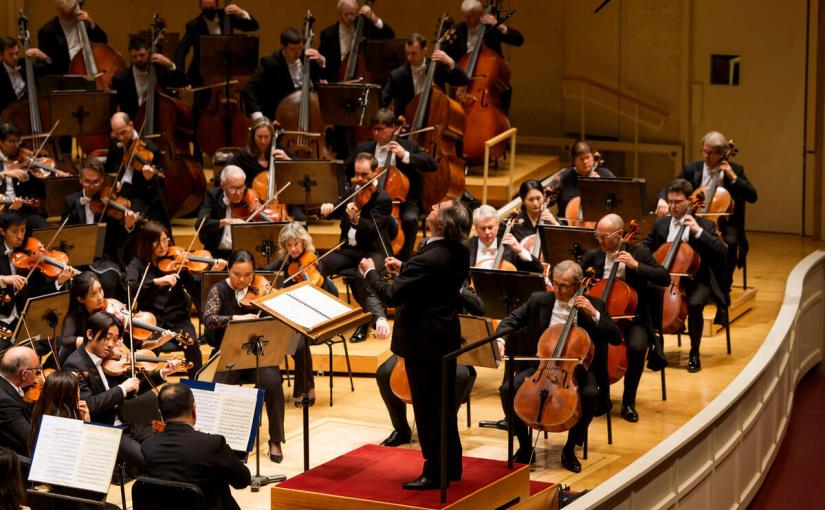
Put together, its murky antecedents, spiritual impact and mythological status leave Mozart’s Requiem almost in a state of suspension. For all its beauty, it is a piece that can inspire more promise than fulfillment. I have long thought that it thrives more readily on recordings than in performance, where its scale and pacing create challenges for modern orchestras.

Continue reading Honeck offers a living, breathing setting for Mozart’s Requiem

Chicago Symphony spotlights Julia Bullock in world premiere of Matthew Aucoin’s Song of the Reappeared

On a September morning in 1973, Chile’s turbulent political reality pivoted into a nightmare, with a coup that brought General Augusto Pinochet to power  inaugurated nearly two decades of repression. For many Chileans, the brutality unfolded in darkness. Secret police agents arrived at homes in unmarked cars. People vanished from doorways and street corners, becoming rumor. Some were taken to clandestine detention centers, interrogated, and tortured. Many were killed, their bodies discarded in rivers, lakes, and mass graves, or pushed from helicopters into the Pacific. It was terror designed not only to erase opponents but to erase evidence of their existence.

Continue reading Chicago Symphony spotlights Julia Bullock in world premiere of Matthew Aucoin’s Song of the Reappeared

Muti affirms what matters in a program of Brahms, Stravinsky and Rodrigo with the Chicago Symphony

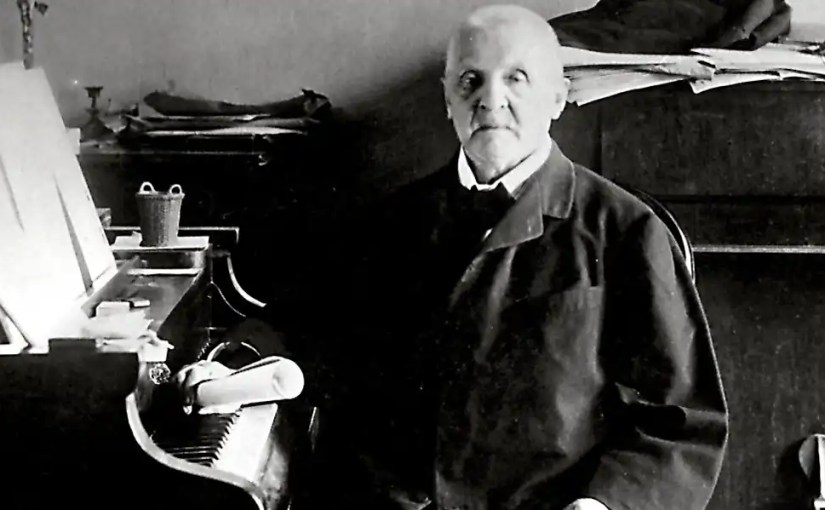
For a good many people, the image of Johannes Brahms is inseparable from Maria Fellinger’s photographs. Fellinger, a friend of the composer, captured him in his later years: belly pushing outward, age etched into his face, his long beard and hair gone white or very light gray. Yet even in these twilight portraits, Brahms maintains his composure. He looks commanding, his suit still purposeful. These are the attributes of a composer who has lived life, knows what he believes, and is ready to share those convictions without hesitation. This same spirit permeates much of his later music, including the Fourth Symphony. By this point in his career, any hesitation in his musical voice has vanished entirely.

Continue reading Muti affirms what matters in a program of Brahms, Stravinsky and Rodrigo with the Chicago Symphony

Classical music’s youth movement grows up, grows wise

Classical music has an uneasy relationship with youth. The very word “classical” suggests age, tradition, dust on velvet seats. Yet the field periodically becomes infatuated with young conductors, as if a twenty-something on the podium might rescue an art form everyone agrees is perpetually dying. The counterargument is equally familiar: conducting requires life experience, the emotional depth that only comes with years. You cannot truly understand Mahler at twenty-five, or so the thinking goes.

I confess to having held both views. As a younger concertgoer, I wanted the gerontocracy swept aside. Now, middle-aged myself, I care less about the conductor’s biography than whether the performance moves me. Still, there’s something instructive about watching how one era’s young lions become the next era’s establishment.

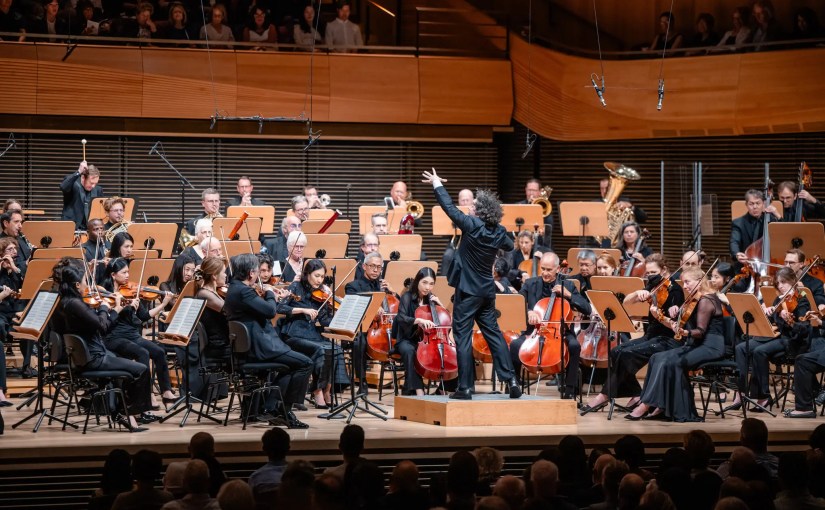
Last September in New York, two evenings illustrated this progression perfectly. At Geffen Hall, Gustavo Dudamel led the New York Philharmonic through Beethoven’s Fifth and John Corigliano’s First. Later that week at the Met, Yannick Nézet-Séguin conducted Mozart’s Don Giovanni.

Continue reading Classical music’s youth movement grows up, grows wise

Jordan and Hadelich lead the Chicago Symphony through its repertoire sweet spot

Not long ago, while spending a week in New York, I found myself walking through Central Park after a concert by the New York Philharmonic, wondering which composers belong to which American orchestras. It is a parlor game without definitive answers – New York might claim Gershwin or Ives – but Chicago’s answer came to me immediately: Brahms. Or, more broadly, the music of Central Europe. The Chicago Symphony Orchestra’s history is inseparable from the great European Classical and Romantic traditions, shaped by towering figures like Fritz Reiner and Georg Solti. When the orchestra recently offered an evening of Kodály, Dvořák and Brahms – works squarely in its wheelhouse – the performance felt like a homecoming.

Continue reading Jordan and Hadelich lead the Chicago Symphony through its repertoire sweet spot

Fall highlights from Chicago’s 25/26 classical music season

Labor Day has passed, taking with it the last illusions of summer leisure. What follows, as reliably as the shortening days, is the arrival of a new classical music and opera season. Chicago’s 2025–26 offerings promise the usual abundance of repertoire and revivals, along with a handful of events that seem more like occasions than routine schedulings.

Conrad Tao and Catalyst Quartet, Nova Linea Musica – September 10; December 3

In its second season, Nova Linea Musica continues to make the case that contemporary music deserves a place not at the margins but at the center of Chicago’s concert life. The opening recital belongs to Conrad Tao, a pianist who has built his career less on institutional endorsements than on his own iconoclastic instincts. Tao programs like someone unwilling to pander: a premiere by the Chicago composer Chris Mercer, a piece of his own, and music by Jürg Frey and Ben Nobuto suggest he’s more interested in probing the present than reassuring the past.

Continue reading Fall highlights from Chicago’s 25/26 classical music season

First encounters and final judgments

One of the earliest pieces of music I immersed myself in when I first ventured into the world of classical music in the mid-1990s was Giuseppe Verdi’s Requiem. Back then, my understanding of both classical music and Verdi was thin, cobbled together from scattered references in popular culture: the occasional aria, the familiar strains of La Traviata, and, of course, the terrifying grandeur of the Requiem’s “Dies Irae.” The sheer force with which Verdi summoned dread and divine judgment through sound was unlike anything I had ever encountered. Hearing it for the first time was a full-body experience that rivaled the raw energy I’d felt listening to bands like the Smashing Pumpkins.

I can’t say with certainty whether I’ve ever experienced the Requiem live in a concert hall. So when the Chicago Symphony Orchestra announced it would close out its season with this very work under the sure-handed direction of Riccardo Muti a part of me itched to be there. Alas, as often happens, other commitments intervened. While I don’t typically associate the CSO with Verdi, it’s worth noting the Requiem has occupied a meaningful place during the tenures of the orchestra’s last three music directors.

Continue reading First encounters and final judgments

Randall Goosby honors Florence Price in a heartfelt Chicago Symphony performance

Originally published at Seen and Heard International

The life of Florence Price is both remarkable and uniquely American—one of early triumph, quiet persistence, eventual rediscovery and a posthumous, lasting fame.

Born in Arkansas and educated at the New England Conservatory of Music, as a young woman Price moved to Chicago in the 1920s, part of the Great Migration that brought thousands of Black Americans to northern cities in search of opportunity and reprieve from racist violence. In 1933, during Chicago’s World’s Fair, her Symphony No. 1 was premiered by the Chicago Symphony Orchestra, marking the first time a major American orchestra had performed a work by a Black female composer. It was a milestone performance that seemed to herald a long and promising career.

Instead, it became a high-water mark. Despite the significance of the premiere, Price’s career plateaued and then faded into relative obscurity. During her lifetime and for decades after her death in 1953, she remained largely absent from concert halls.

Continue reading Randall Goosby honors Florence Price in a heartfelt Chicago Symphony performance