Labor Day has passed, taking with it the last illusions of summer leisure. What follows, as reliably as the shortening days, is the arrival of a new classical music and opera season. Chicago’s 2025–26 offerings promise the usual abundance of repertoire and revivals, along with a handful of events that seem more like occasions than routine schedulings.
Conrad Tao and Catalyst Quartet, Nova Linea Musica – September 10; December 3
In its second season, Nova Linea Musica continues to make the case that contemporary music deserves a place not at the margins but at the center of Chicago’s concert life. The opening recital belongs to Conrad Tao, a pianist who has built his career less on institutional endorsements than on his own iconoclastic instincts. Tao programs like someone unwilling to pander: a premiere by the Chicago composer Chris Mercer, a piece of his own, and music by Jürg Frey and Ben Nobuto suggest he’s more interested in probing the present than reassuring the past.

In December, the Catalyst Quartet will arrive with Shostakovich and Adams as ballast, but the real reason to listen will be the pair of world premieres and a performance of Coleridge-Taylor Perkinson’s rarely heard First String Quartet.
Klaus Makela and the Chicago Symphony – October 16-18; December 18-20
The partnership between the Chicago Symphony Orchestra and Klaus Mäkelä is unfolding with choreographed grace. The young Finnish maestro’s presence on the podium has expanded this season, a development that speaks volumes about the deepening rapport between conductor and musicians, as well as the clearer signposts pointing toward their shared future. That trajectory includes a much-anticipated return to Carnegie Hall in early 2026.
This fall, however, offers a more immediate glimpse into Mäkelä’s interpretive imagination. He will lead a program devoted entirely to Berlioz, with the Symphonie Fantastique at its core. It’s a provocative choice: Riccardo Muti launched his tenure as music director with the same work, winning critical acclaim and later issuing a live recording from those concerts. I was in the hall for those first performances and remember being completely gobsmacked by the orchestra’s playing, but also by the electric sense of occasion. Mäkelä, too, has released a recording of Fantastique, though critics have greeted it with more mixed assessments.
December brings another telling program, pairing Beethoven’s Seventh Symphony with contemporary works inspired by the classical master. Yunchan Lim also returns to perform Schumann’s Piano Concerto. In these choices, one begins to glimpse Mäkelä’s potential as the architect of the orchestra’s next chapter.

Yunchan Lim, Symphony Center Presents – October 19
The ascent of Yunchan Lim following his 2022 triumph at the Cliburn Competition has been nothing short of a spectacle, a testament to the powerful confluence of prodigious talent and a contemporary media landscape hungry for stars. Beneath the clamor of his remarkably swift rise, a not so quiet debate persists among critics and enthusiasts alike. The question is of the ultimate purpose of his undeniable virtuosity. Is his artistry truly singular or does it merely exist as a refined echo within a crowded field of exceptional young pianists?
His recordings for Decca give a tantalizing glimpses of a musician grappling with works, hinting at an interpretive vision that goes beyond the merely technical. His performance of the Goldberg Variations at Orchestra Hall will undoubtedly provide ample new material for those on all sides of the ongoing deliberation that has come to define his early career.
The CheckOut – September 13-28
The team behind the Thirsty Ears Festival and Access Contemporary Music has a new venture: a performance space carved out of a former 7-Eleven. To christen it, they’ve devised a two week festival that treats genre less as a boundary than as a suggestion. On the docket are two concerts devoted to Arvo Pärt’s luminous austerity, a literary-themed program by the Chicago-based Black Oak Ensemble, and a grab bag of other experiments that seem designed to test the space’s possibilities. The venue’s origins in fluorescent-lit convenience culture lend a touch of irony, but also a certain democratic promise: high art in a place once known for Slurpees.
Eyrie Festival – November 7 and 8
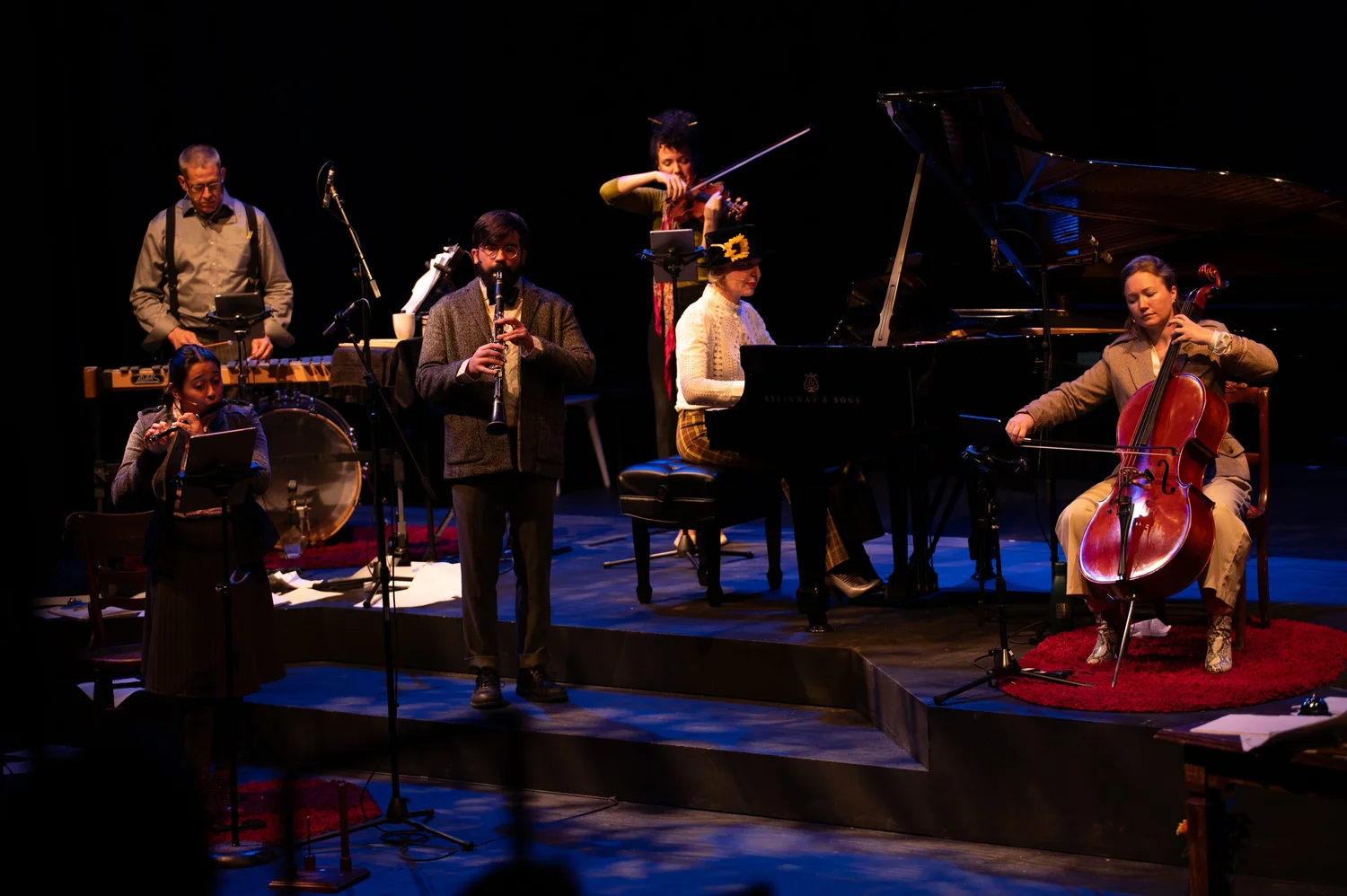
The Eyrie Festival serves as the capstone to the Blackbird Creative Lab, the experimental community incubated by the contemporary-music ensemble Eighth Blackbird during its residency at the Athenaeum. Since 2017, the Lab has quietly grown into a kind of guild for adventurous performers and composers, and Eyrie brings them back together. More than fifty artists in all, joined by faculty and invited guests for a reunion that doubles as a showcase.

Salieri’s Falstaff – December 3-7
Chicago Opera Theater delves into the byways of the repertory one more time, presenting Antonio Salieri’s Falstaff in honor of the 200th anniversary of the composer’s death. While history has relegated this work to the shadow of Verdi’s later masterpiece on the same subject, Salieri’s opera is more than a mere curio. It is a charming musical treatment of Shakespeare’s comic invention, and is a work that demonstrates a deft hand with both wit and sentiment. This particular sort of archival excavation is, of course, where the Chicago Opera Theater truly shines.