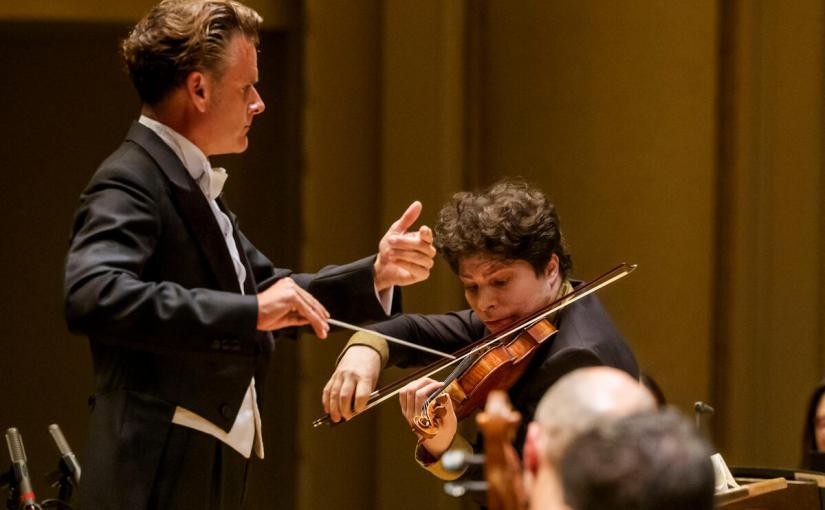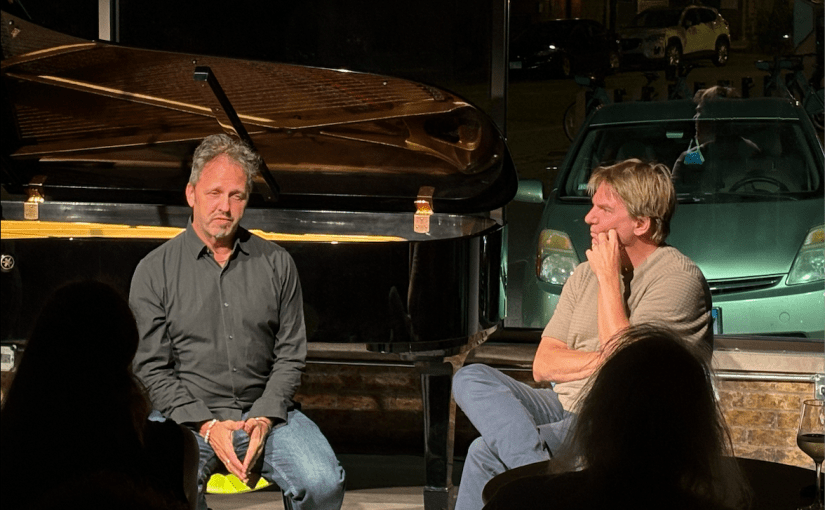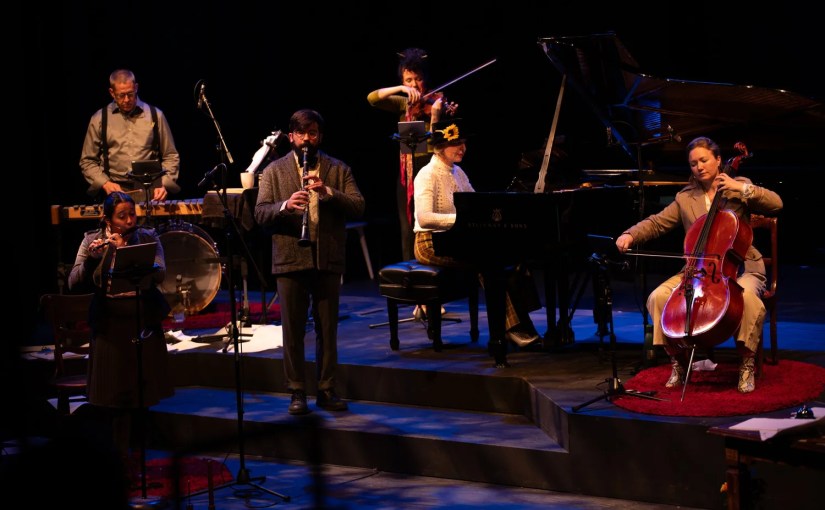
Fall highlights from Chicago’s 25/26 classical music season

Labor Day has passed, taking with it the last illusions of summer leisure. What follows, as reliably as the shortening days, is the arrival of a new classical music and opera season. Chicago’s 2025–26 offerings promise the usual abundance of repertoire and revivals, along with a handful of events that seem more like occasions than routine schedulings.

Conrad Tao and Catalyst Quartet, Nova Linea Musica – September 10; December 3

In its second season, Nova Linea Musica continues to make the case that contemporary music deserves a place not at the margins but at the center of Chicago’s concert life. The opening recital belongs to Conrad Tao, a pianist who has built his career less on institutional endorsements than on his own iconoclastic instincts. Tao programs like someone unwilling to pander: a premiere by the Chicago composer Chris Mercer, a piece of his own, and music by Jürg Frey and Ben Nobuto suggest he’s more interested in probing the present than reassuring the past.

Continue reading Fall highlights from Chicago’s 25/26 classical music season

Summer Listening: Beethoven, Haydn and Rush Hour Concerts

We are deep into Classical Music Chicago’s Rush Hour Concert season now, and this series continues to prove itself as one of the best deals for classical music lovers in a city starved for a decent chamber music scene. For those who haven’t been able to attend in person, I’ve pulled together a few standout performances from this season’s YouTube archive.

While these recordings offer a wonderful glimpse into the series, nothing quite matches the immediacy and warmth of experiencing live chamber music in an intimate setting like St. James Cathedral . The good news? There are still several concerts left in the season, including the Chen Quartet’s July 29th performance premiering a new work by Augusta Read Thomas and the season finale on August 19th featuring Dvorak’s Serenade for Winds. Two excellent opportunities to discover why Rush Hour Concerts are such an essential part of Chicago’s summer classical music landscape.

In the meantime, if you’re catching up, don’t miss Matthew Lipman’s lyrical take on Brahms’s two viola sonatas or the Kontras Quartet’s engaging performances of Ives and Terry Riley—both are well worth your time.

Continue reading Summer Listening: Beethoven, Haydn and Rush Hour Concerts

The final notes of a musical giant

Lesley Stahl’s recent interview with Michael Tilson Thomas for CBS Sunday Morning doesn’t break new ground, but it’s compelling all the same. There’s a short version—about nine minutes—and a longer, more expansive cut. What makes it essential viewing is the context: MTT is in the final stages of a battle with brain cancer, a disease that will almost certainly claim him.

In April, he gave what will likely be his final public concert. An event that marked the culmination of a spirited, defiant race against time and illness. I made a point to attend two of his more recent Mahler performances, of the Fifth and Sixth Symphonies. Time was clearly running out then for MTT, and for the singular magic he could conjure from an orchestra.

He remains witty, insightful, and profoundly committed to music. But there’s a new vulnerability. His speech is sometimes halting, his phrasing occasionally searching, words sometime hover just out of reach. That fragility only deepens the emotional impact of seeing one of the great musical minds of our time reflect on a career that helped shape American orchestral life at the end of the 20th and during the first quarter of the 21st Centuries.

Continue reading The final notes of a musical giant

First encounters and final judgments

One of the earliest pieces of music I immersed myself in when I first ventured into the world of classical music in the mid-1990s was Giuseppe Verdi’s Requiem. Back then, my understanding of both classical music and Verdi was thin, cobbled together from scattered references in popular culture: the occasional aria, the familiar strains of La Traviata, and, of course, the terrifying grandeur of the Requiem’s “Dies Irae.” The sheer force with which Verdi summoned dread and divine judgment through sound was unlike anything I had ever encountered. Hearing it for the first time was a full-body experience that rivaled the raw energy I’d felt listening to bands like the Smashing Pumpkins.

I can’t say with certainty whether I’ve ever experienced the Requiem live in a concert hall. So when the Chicago Symphony Orchestra announced it would close out its season with this very work under the sure-handed direction of Riccardo Muti a part of me itched to be there. Alas, as often happens, other commitments intervened. While I don’t typically associate the CSO with Verdi, it’s worth noting the Requiem has occupied a meaningful place during the tenures of the orchestra’s last three music directors.

Continue reading First encounters and final judgments

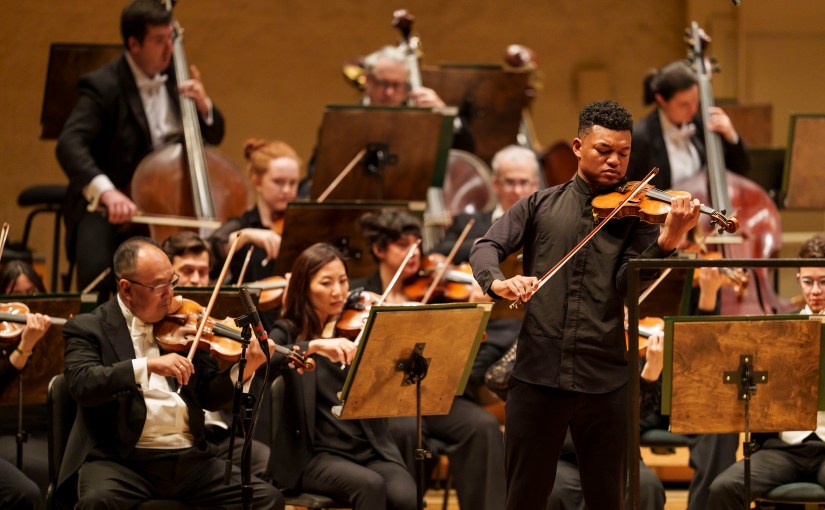
Randall Goosby honors Florence Price in a heartfelt Chicago Symphony performance

Originally published at Seen and Heard International

The life of Florence Price is both remarkable and uniquely American—one of early triumph, quiet persistence, eventual rediscovery and a posthumous, lasting fame.

Born in Arkansas and educated at the New England Conservatory of Music, as a young woman Price moved to Chicago in the 1920s, part of the Great Migration that brought thousands of Black Americans to northern cities in search of opportunity and reprieve from racist violence. In 1933, during Chicago’s World’s Fair, her Symphony No. 1 was premiered by the Chicago Symphony Orchestra, marking the first time a major American orchestra had performed a work by a Black female composer. It was a milestone performance that seemed to herald a long and promising career.

Instead, it became a high-water mark. Despite the significance of the premiere, Price’s career plateaued and then faded into relative obscurity. During her lifetime and for decades after her death in 1953, she remained largely absent from concert halls.

Continue reading Randall Goosby honors Florence Price in a heartfelt Chicago Symphony performance

Operas, quartets, and Mahler on the lawn

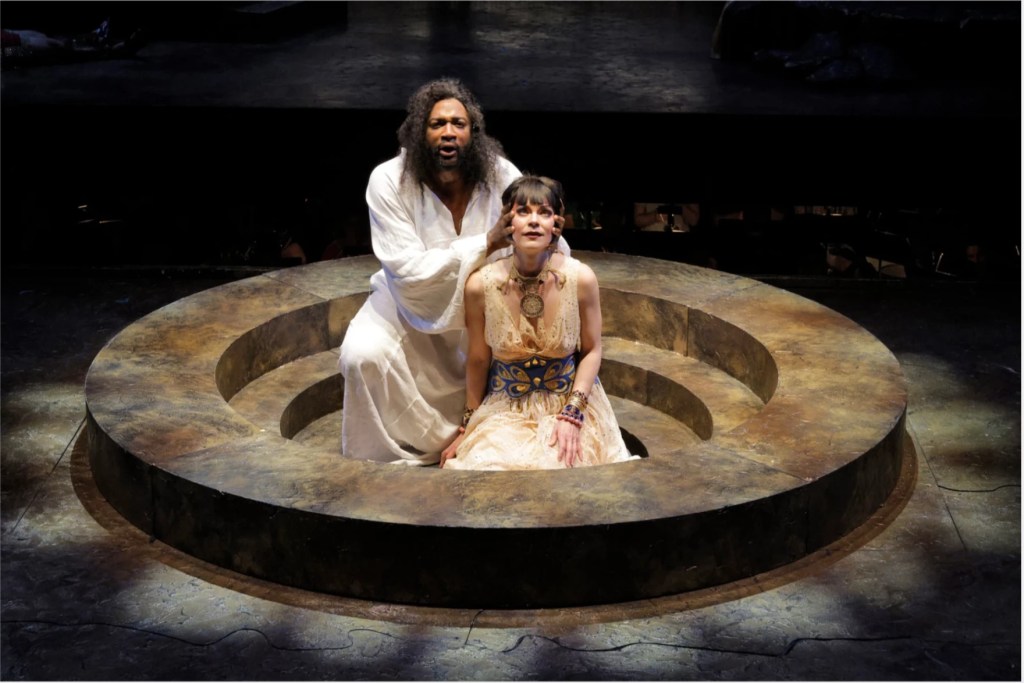
Photo Credit: Cory Weaver and Des Moines Metro Opera Festival. Last year’s production of Salome

Spring is struggling to take hold here in the Midwest. Just when you think warm temperatures and sunshine are here to stay, a cold spell with rain arrives to dampen the mood. Still, the weather won’t stop the summer classical music season from arriving in mid-June.

Classical music sounds better in the summer, at least to my ears. And it’s not just the music—it’s where it’s played: outdoor bandshells, rural hideouts, rustic auditoriums, and expansive lawns. Freed from the formality of the great concert halls, the music breathes differently, more freely, even when the conditions are less than ideal.

I’ve been fostering a side hustle as a part-time freelance music critic since the late ’90s, when I was slogging through law school. Writing about music in Iowa and the Quad Cities helped me survive those grueling academic years. But when summer arrived, everything changed. I stopped using music as a means of escape and started experiencing it as a source of joy. Completely. Whether it was chamber recitals at the local Unitarian church or evenings at Ravinia in Highland Park, those concerts—and the many that followed—came to define summer for me.

The summer of 2025 will be my first full summer in a new city. Last year was all about settling in, arguably the worst part of any move. But this year, I’m ready to see what the area has to offer classical music lovers like me. Here are a few events I’m especially looking forward to.

Continue reading Operas, quartets, and Mahler on the lawn

Mahler’s many voices: how the CSO has shaped and been shaped by his music

Originally published on Seen and Heard International

A palpable buzz filled Orchestra Hall on the afternoon of May 9th, as the Chicago Symphony Orchestra, led by Jaap van Zweden, launched into Mahler’s formidable Sixth Symphony. The Friday matinee had drawn a full house, and the performance that unfolded was a gripping study of control, power, and clarity. When the final movement’s infamous hammer blows fell, they did so with unflinching and devastating precision. The performance neither overstated Mahler’s deep ironies nor softened his stark vision.

This concert carried added weight: it marked the CSO’s final performance before their European tour, which included showcasing the Sixth and Seventh Symphonies at the prestigious 2025 Amsterdam Mahler Festival.

Continue reading Mahler’s many voices: how the CSO has shaped and been shaped by his music

Jaap van Zweden returns with a blazing Mahler Sixth

Jaap van Zweden returned to Orchestra Hall this week to lead the Chicago Symphony Orchestra in two commanding performances of Mahler’s Sixth Symphony. Whether by design or coincidence, this symphony has become something of a calling card for the Dutch maestro during his visits to Chicago. Van Zweden was on the podium the last two times the orchestra played the piece, and this time he not only led the work at home, but will also take it on tour to Amsterdam for the third Mahler Festival.

Mahler’s Sixth has long been shrouded in biographical myth—its popularity fed by the image of the composer as a death-haunted artist. This lens, while perhaps oversimplified, finds a potent anchor in the work’s unsettling musical language. The mythology would be nothing without the work’s infamous hammer blows in its final movement—strikes that have become almost synonymous with Mahler’s fatalism.

Continue reading Jaap van Zweden returns with a blazing Mahler Sixth

CSO shines under Mäkelä’s baton in trio performance of Brahms, Boulez, Dvořák

Originally published on Seen and Heard International

Brahms’ Second Piano Concerto is a meaty work.. It may not be as imposing as Mahler’s Third Symphony, but large enough in musical vision that it places great demand on both soloist and orchestra. Thus, it was an appropriate choice for Klaus Mäkelä’s second week with the Chicago Symphony Orchestra, and an equally fitting farewell for Daniil Trifonov, concluding his season-long role as the CSO’s artist in residence for 2024–25.

Continue reading CSO shines under Mäkelä’s baton in trio performance of Brahms, Boulez, Dvořák

CSO’s Mahler survey begins with a thrilling Seventh Symphony

Photo Credit: Todd Rosenberg

I keep finding my way back to performances of Mahler’s Seventh Symphony. It started in 2018, with a thrilling rendition by Carlos Kalmar and the Oregon Symphony. That performance roared. No, the Oregon Symphony isn’t a world-class orchestra, and subtlety wasn’t its strength. But they more than made up for it with heart and visible joy, especially as Kalmar and his players surged into the final bars of the fifth movement.

Last night, Jaap van Zweden was in town to open a mini-Mahler festival in Chicago. Over the next month, the Chicago Symphony Orchestra will perform three Mahler symphonies—the Seventh, Third, and Sixth—in a series of concerts. Van Zweden is leading the Seventh and Sixth, while Klaus Mäkelä, the CSO’s music director designate, will take the podium for the Third. Afterward, the orchestra heads out on a spring European tour featuring the Sixth and Seventh, including a stop at the third Mahler Festival in Amsterdam.

Continue reading CSO’s Mahler survey begins with a thrilling Seventh Symphony