Nova Linea Musica hosts the Catalyst Quartet in Against All Odds a program of resistance and reach

John Adams has a way of claiming the air around him. For the better part of fifty years, his music has defined the sound of American classical life, much as Aaron Copland’s did in the middle of the 20th century. So when a concert begins with Adams and then turns its attention elsewhere, the gesture carries weight. It suggests a quiet resistance: a willingness to acknowledge a dominant voice without letting it set the terms.

At Guarneri Hall on December 3rd, the Catalyst Quartet leaned into that tension. Their program, “Against All Odds,” opened with Adams’s brisk six-minute Fellow Traveler and closed with Coleridge-Taylor Perkinson’s String Quartet No. 1 “Cavalry”. Between the two stood a constellation of short works by younger composers—world premieres by Derrick Skye and Andrea Casarrubios, along with pieces by Jessie Montgomery, Jorge Amando Molina, and Aftab Darvishi. The lineup read like a study in how artists carve out space for themselves, whether by confronting the past, reframing inherited forms, or simply insisting on their own perspective.

Continue reading Nova Linea Musica hosts the Catalyst Quartet in Against All Odds a program of resistance and reach
Summer Listening: Beethoven, Haydn and Rush Hour Concerts

We are deep into Classical Music Chicago’s Rush Hour Concert season now, and this series continues to prove itself as one of the best deals for classical music lovers in a city starved for a decent chamber music scene. For those who haven’t been able to attend in person, I’ve pulled together a few standout performances from this season’s YouTube archive.

While these recordings offer a wonderful glimpse into the series, nothing quite matches the immediacy and warmth of experiencing live chamber music in an intimate setting like St. James Cathedral . The good news? There are still several concerts left in the season, including the Chen Quartet’s July 29th performance premiering a new work by Augusta Read Thomas and the season finale on August 19th featuring Dvorak’s Serenade for Winds. Two excellent opportunities to discover why Rush Hour Concerts are such an essential part of Chicago’s summer classical music landscape.

In the meantime, if you’re catching up, don’t miss Matthew Lipman’s lyrical take on Brahms’s two viola sonatas or the Kontras Quartet’s engaging performances of Ives and Terry Riley—both are well worth your time.

Continue reading Summer Listening: Beethoven, Haydn and Rush Hour Concerts

Operas, quartets, and Mahler on the lawn

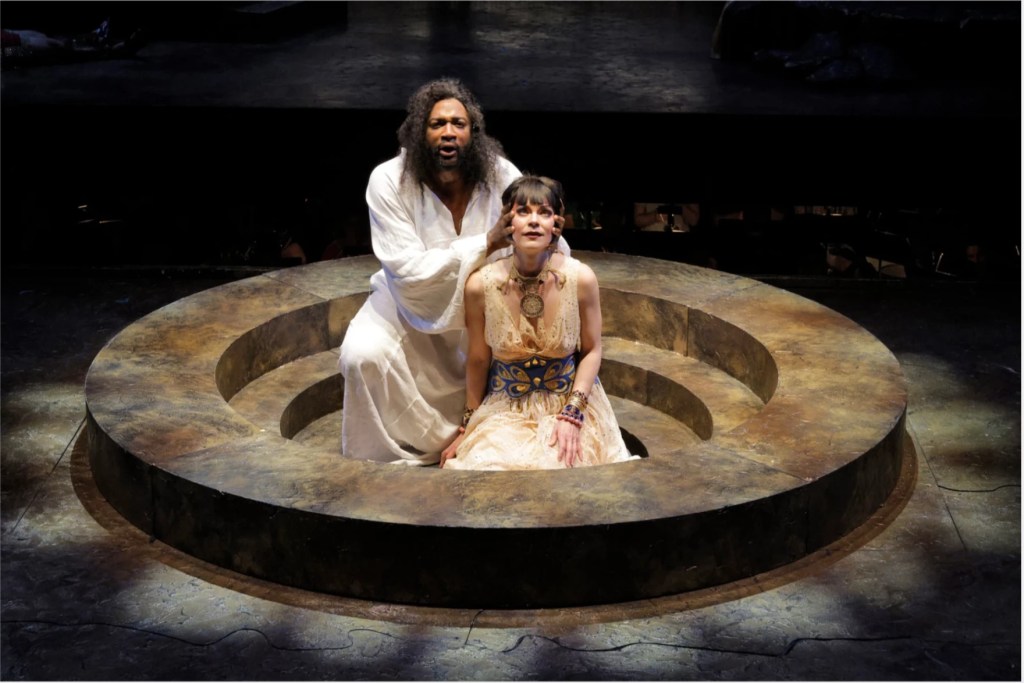
Photo Credit: Cory Weaver and Des Moines Metro Opera Festival. Last year’s production of Salome

Spring is struggling to take hold here in the Midwest. Just when you think warm temperatures and sunshine are here to stay, a cold spell with rain arrives to dampen the mood. Still, the weather won’t stop the summer classical music season from arriving in mid-June.

Classical music sounds better in the summer, at least to my ears. And it’s not just the music—it’s where it’s played: outdoor bandshells, rural hideouts, rustic auditoriums, and expansive lawns. Freed from the formality of the great concert halls, the music breathes differently, more freely, even when the conditions are less than ideal.

I’ve been fostering a side hustle as a part-time freelance music critic since the late ’90s, when I was slogging through law school. Writing about music in Iowa and the Quad Cities helped me survive those grueling academic years. But when summer arrived, everything changed. I stopped using music as a means of escape and started experiencing it as a source of joy. Completely. Whether it was chamber recitals at the local Unitarian church or evenings at Ravinia in Highland Park, those concerts—and the many that followed—came to define summer for me.

The summer of 2025 will be my first full summer in a new city. Last year was all about settling in, arguably the worst part of any move. But this year, I’m ready to see what the area has to offer classical music lovers like me. Here are a few events I’m especially looking forward to.

Continue reading Operas, quartets, and Mahler on the lawn

CMS musicians bring warmth and vitality to Harris Theater performance of Schubert, Mozart and W.F. Bach

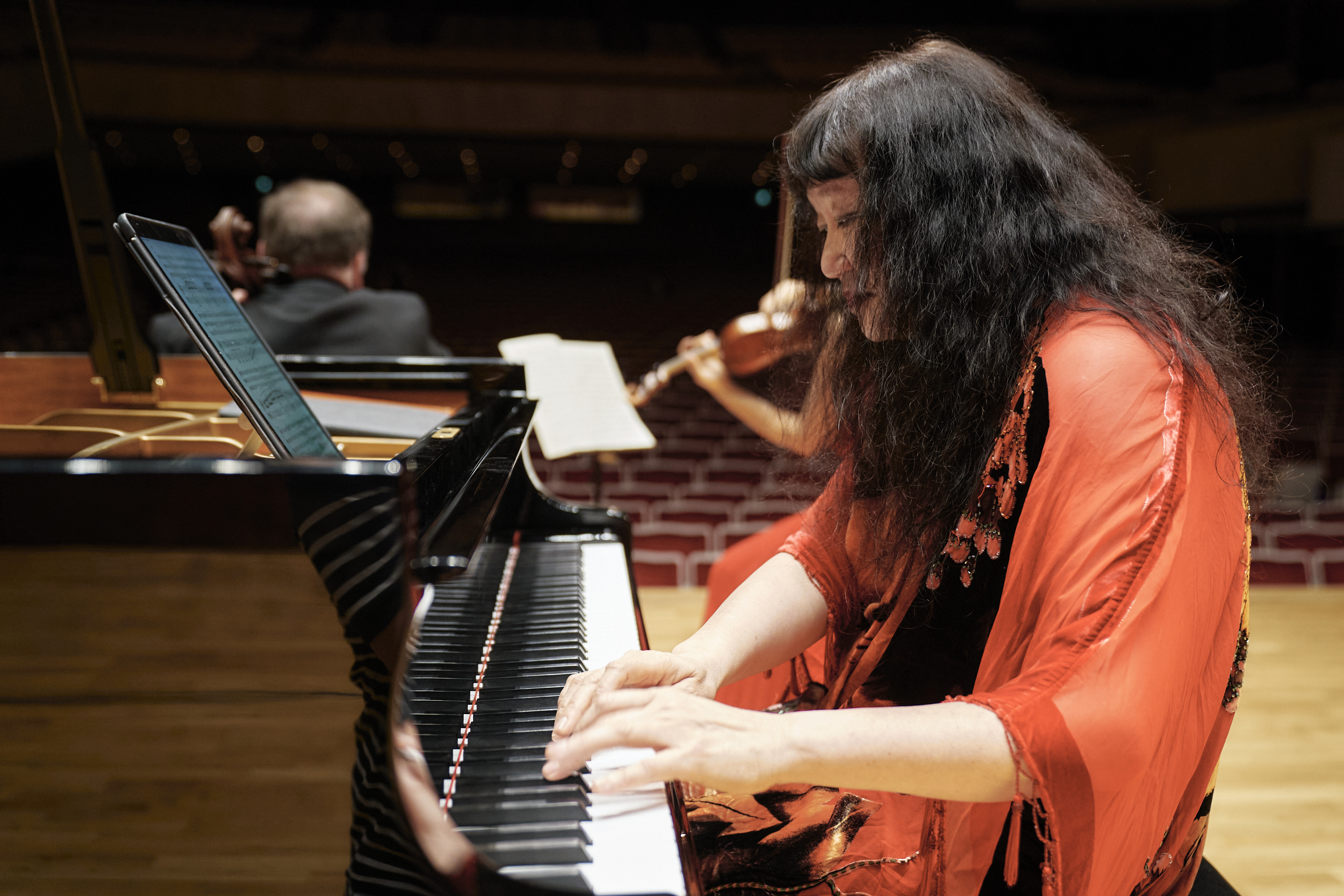
Pianist and CMS Co-Director Wu Han. Photo Credit: Chamber Music Society of Lincoln Center

Originally published on Seen and Heard International

Chicago’s classical music scene is undeniably shaped by the towering presence of the Lyric Opera and the Chicago Symphony, institutions that draw crowds with their scale and prestige. Against this backdrop, the Chamber Music Society of Lincoln Center’s series at the Harris Theater stands out as a quieter, yet equally vital, counterpoint—offering an intimate alternative that feels both rare and refreshing in a city where chamber music isn’t the first thing on most concertgoers’ minds. Tuesday’s CMS performance drove that point home, showcasing the unique appeal of small-ensemble playing in an intelligent program of Schubert, Mozart and Wilhelm Friedemann Bach.

Before the music began, co-artistic director Wu Han stepped out to greet the audience, striking a relatable note by admitting she’d heard some subscribers chose to spend their evening at the Lyric Opera’s La Boheme instead. With a wry smile, she turned the moment into a pivot to the future, announcing the dates for next season. Her co-director and husband David Finkel, will announce next season’s program at CMS’s final Chicago concert in April.

Continue reading CMS musicians bring warmth and vitality to Harris Theater performance of Schubert, Mozart and W.F. Bach

Golijov tribute concludes Cornish’s 2010-2011 season

Osvaldo Golijov

Cornish College is fast becoming Seattle’s center of daring, modern classical music performances. It is a rapid turn around for a college and a music program which identifies itself readily with John Cage, a composer critical to the growth of avant garde music in the United States. The school doesn’t boast a resident student orchestra like the University of Washington, but it has brought the Seattle Modern Orchestra to the school to perform as part of its music season. It’s talented and busy faculty routinely perform in recitals at the school and around town. In addition, more than a few of them are involved in curating programs and events of their own — like tomorrow’s May Day, May Day new music festival at Town Hall.

Cornish’s 2010-2011 season ended last Friday with a retrospective concert of Argentinian, American, Jewish composer Osvaldo Golijov. Anchored by the Odeonquartet, the program included a line up of  musicians that included Joseph Kauffman (bass with the Seattle Symphony); Laurie DeLuca (clarinet with the Seattle Symphony); and Paul Taub (flute and Cornish faculty member).

Two of Golijov’s more popular pieces — the string quartet version of Tenebrae and Dreams and Prayers of Isaac the Blind — along with three lesser known works filled out the program.
Continue reading Golijov tribute concludes Cornish’s 2010-2011 season

Brahms, Brahms and more Brahms

By Philippa Kiraly

Last year at Seattle Chamber Music Society’s Winter Festival, one of the concerts was devoted to Schumann’s Piano Trios. It was such an enlightening and successful performance that artistic director Toby Saks asked the same three players to do a similar concert at this year’s festival with Brahms’ Piano Trios. The result was Friday night’s concert at Nordstrom Recital Hall.

In the pre-concert recital, pianist Alon Goldstein linked the two concerts with comments on the connections between the Schumanns and Brahms and the Schumanns’ reaction, as they wrote it themselves, when the young Brahms first came to their house to play for them. Then Goldstein played one of the pieces Brahms had performed on that occasion: the Scherzo in E-Flat Minor, Op. 4.
Continue reading Brahms, Brahms and more Brahms

It’s back; the Seattle Chamber Music Society Winter Festival returns to Nordstrom

By Philippa Kiraly

By this stage in the winter, many people are starved for more chamber music than they can get from the excellent but not so frequent performances on the UW Chamber Music Series. When Seattle Chamber Music Society’s Winter Festival arrives at Nordstrom Recital Hall, with four recitals and four concerts in four days by superb musicians in a small hall, where every move, every sound, every nuance from every player can be seen and heard close up, it’s like having a long-awaited feast.

This year’s festival began Thursday night. First up was the recital by pianist Adam Neiman, his first of three free recitals—last night, Saturday night and Sunday afternoon—of all of Liszt’s Transcendental Etudes, S.139, in honor of the composer’s bicentennial.
Continue reading It’s back; the Seattle Chamber Music Society Winter Festival returns to Nordstrom

A different concept


By Philippa Kiraly

The Phiharmonia Quartett Berlin needs no introduction to devotees of chamber music, with more than a quarter century of performances behind it and a reputation as one of the best.

Playing at Meany Theater last night on the UW International Chamber Music Series, it gave performances of Shostakovich, Beethoven and Debussy that were arresting, thought provoking and illuminating.

Why? In Steven Lowe’s admirable program notes, he describes the first two works with words of force in several places, such as, “slashing, commanding chords” (Beethoven), “nightmarish, scratchy” (Shostakovich), and his notes seemed perfectly in tune with what we often expect from both these composers.
Continue reading A different concept

Mara Gearman and Alexander Bishop talk about their upcoming recital

Composer Alexander Bishop’s music came into wider awareness last spring when SSO violist Mara Gearman played two of his works as part of Paul Taub’s May Day, May Day festival. Gearman was looking for a couple of new pieces of music to play for the festival, and Bishop was seeking a violist to to play two short pieces he wrote for Viola. Bishop and Gearman are taking their partnership one step further on December 1st with a an all Bishop recital featuring two brand new works: a viola sonata and a string quartet. Composer and violist sat down with me last Saturday to talk about the recital, their creative partnership, and even the possibility of new Bishop compositions for the viola (a viola concerto perhaps?)

For your Thanksgiving and Black Friday viewing pleasure!

Continue reading Mara Gearman and Alexander Bishop talk about their upcoming recital

A dream team: the Kavafian-Schub-Shifrin Trio

By Philippa Kiraly

Violinist Ani Kavafian, pianist Andre-Michel Schub and clarinetist David Shifrin had been friends and musicmakers together for years before they formed the Trio made up of their last names, and the communion betweeen them was clear Wednesday night at the University of Washington’s Meany Hall.

Opening the UW International Chamber Music Series there, they gave a splendidly-played, excellently-designed program for their not-so-usual combination of instruments of works by Mozart, Bartok, Stravinsky and William Bolcom.
From the first strains of Mozart’s Trio in E-Flat, the “Kegelstatt,” for viola, clarinet and piano, there was a notable equality of balance between the players. Being alto instruments, the clarinet and viola can easily be overwhelmed by a piano with the lid full up, but never did that happen. A warm tone with plenty of energy but without force pervaded this elegant performance in which Shifrin’s smooth almost buttery clarinet carried most of the top voice.
Continue reading A dream team: the Kavafian-Schub-Shifrin Trio