Gilbert Varga takes the podium in a commanding performance with the SSO

By Philippa Kiraly

With flair, Swiss conductor Gilbert Varga made his debut on Seattle Symphony’s podium Thursday night for remarkable performances of Enescu’s “Romanian Rhapsody No. 1, Stravinsky’s “Petrouchka” and, with Horacio Gutierrez, Beethoven’s P iano Concerto No. 4.

It was hard to take your eyes off h im. Varga almost danced the music, gracefully using his entire body and the whole podium to convey to the orchestra what he wanted, and so clearly that the musicians responded with the precision of a Rolls Royce engine. He used no score for either the Enescu or Stravinsky, allowing him to give his attention to the musicians throughout.

Continue reading Gilbert Varga takes the podium in a commanding performance with the SSO
One of the very great string quartets: the Emerson

By Philippa Kiraly

We are so fortunate that the Emerson String Quartets, arguably among the greatest of string quartets since recordings began, comes regularly to perform at Meany Hall.

It was here Wednesday night with a program which, on the face of it, might have suggested to unadventurous audience members that they skip this one. Not a bit of it. The hall was virtually full of people maintaining an unusual hushed attention throughout the performance including between movements, of Charles Ives’ Quartet No. 1, “The Revival Meeting;” Lawrence Dillon’s String Quartet No. 5, “Through the Night,” commissioned by the Emerson and completed last year; Barber’s famous “Adagio” in its original version, a movement from his String Quartet No.1; and Dvorak’s charming Quartet No. 12, “American.”

Continue reading One of the very great string quartets: the Emerson

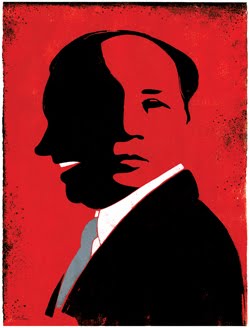
Only the Vancouver Opera could go to (Nixon in) China

By Colton Carothers

Nixon in China is the operatic interpretation of Richard Nixon’s historic visit to China.  Equally historic was Vancouver Opera’s staging of John Adam’s Nixon in China in its Canadian premier for Vancouver’s Cultural Olympiad near the end of March.  With an Olympic sized cast and an Olympic sized budget, you would expect a gold medal.  In selecting this piece itself, Vancouver Opera went for the gold: Nixon is a behemoth of an opera, requiring large orchestrations, costly sets and a large ensemble.  Did it live up to these Olympic sized aspirations?

Continue reading Only the Vancouver Opera could go to (Nixon in) China

The masterpiece by Prokofiev and Sergei Eisenstein

By Philippa Kiraly

How many film directors hope to boast that their movies are being shown and revered more than 70 years after their making? There can be few talking movies in that category before Sergei Eisenstein and Sergei Prokofiev collaborated on the epic “Alexander Nevsky” in 1938, one of the first and arguably the most massive movie production ever at that time and the forerunner of others in similar vein from “Ben Hur” to “Spartacus” and more.

“Nevsky” is black and white and a bit grainy by current standards, but what has helped to keep it high in the category of great films is the musical score by Prokofiev. To his great credit, Eisenstein allowed the composer considerable rein in his musical portrayals of the plot.

Continue reading The masterpiece by Prokofiev and Sergei Eisenstein

Corigliano Quartet performs at Cornish College

The Corigliano Quartet. Photo credit: Michael Jinsoo Lim.

Even though half of the Corigliano Quartet calls Seattle home, and another member has family in the city (Amy Sue Barston is the sister of Elisa Barston, principal second violin with the SSO), the group’s performances in the area haven’t been as plentiful as you might expect. To my knowledge, the last one was in 2008 when the group made their debut on the University of Washington’s International Chamber Series.  This quartet’s local schedule this season includes two concerts at the Cornish College of the Arts and a forthcoming performance in May with Simple Measures.

A Corigliano performance tends to be an adventure in contemporary music. This doesn’t mean the pieces they play are replete with dissonances, microtones, and explorations of the percussive properties of string instruments, far from it. The ensemble takes its name from the composer John Corigliano, a living, breathing, active artist who finds inspiration in the popular neo-romantic idiom that has demonstrated music can be easy on the ears and challenging to hear.

Continue reading Corigliano Quartet performs at Cornish College

Celebrating Seattle’s choral music community

Seattle’s choral music community is routinely passed over in praise and attention in favor of the Seattle Symphony and Seattle Opera. Even Seattle’s healthy early music community often garners more attention. This deficit persists even as local choral music groups have celebrated the contributions of Frank Ferko, centuries of “French” composers including Frank Martin, and Samuel Barber in his anniversary year during the month of March.

In the most recently concluded concert, Seattle Choral Arts presented what turned out to be the west coast premiere of Palo Alto, California (by way of Chicago and Valparaiso) composer Frank Ferko’s setting of the Stabat Mater. Most of the area’s local music lovers probably had never heard of Ferko before he talked publicly about composing the piece at a March 19th meet the composer reception held at Fare Start in downtown Seattle. Robert Bode, Choral Arts’ engaging music director even confessed that he didn’t know Ferko’s setting until he came across a recording of the piece by Cedille records, Anne Heider, and His Majestie’s Clerks.
Continue reading Celebrating Seattle’s choral music community

Ariadne opens at Meydenbauer in Bellevue

By R.M. Campbell

Richard Strauss’ “Ariadne auf Naxos” is a opera with many, sometimes opposing, characteristics. It is deft and sophisticated, a piece intended for refined tastes. High art is forced to mingle with low art, each looking unfavorably upon the other.

With the Seattle Opera Young Artists Program spring production, which opened Thursday night at Meydenbauer Center in Bellevue, the opera seems even more madcap than usual with the forces of the low made particularly engaging. Indeed, they appear to win the day in this fictitious battle.
Continue reading Ariadne opens at Meydenbauer in Bellevue

Denk, Schumann, and Ives: so happy together

Jeremy Denk is no stranger to a Seattle audience. For more than ten years he has been one of the Seattle Chamber Music Society’s regular pianists. In the summer, you could find Denk at the Lakeside School, and in the winter, Nordstrom Recital Hall. Local music lovers also know Denk from his long association with the violinist Joshua Bell. In fact, Bell and Denk last performed in Seattle in February.

Followers of Denk’s career commend his fearlessness regarding repertory and an authentic, intellectual approach to playing that is as much for him as it is for the audience. Though Denk is familiar to Seattle audiences, one might be surprised to know that the pianist only made his local recital debut on March 31st of this year, as part of the President’s Piano Series at the University of Washington.
Continue reading Denk, Schumann, and Ives: so happy together

Chicks, fox, witch, oxen, little kids…symphony concert?

By Philippa Kiraly

Animals, nature and generally pictorial matter suffused two thirds of the Seattle Symphony’s concert Thursday night at Benaroya Hall and, together with Prokofiev’s Piano Concerto No. 5, they created a lively, colorful and satisfactory program.

It can be enlightening to hear show music without the visual element, in this case the Suite from Janacek’s opera “The Cunning Little Vixen.” When you are watching a complete event on stage, there is so much to see and hear and take in that the details of the music can get passed by, so it’s good to hear it shorn of other elements.

Janacek is not easily pigeonholed. His central European origins and musical idioms are shot through with highly individual harmonies.

Continue reading Chicks, fox, witch, oxen, little kids…symphony concert?

Gallery concerts celebrate the Bach boys


By Harlan Glotzer

The most widely known early music ensemble in Seattle would probably have to be Seattle Baroque Orchestra, but the true scene of early music in this city are gems like Gallery Concerts. This afternoon’s performance—the Bach Family Birthday Bash—was the second in a two part Bach’s Birthday Festival. The outstanding display of works by Johann Sebastian Bach and three of his four musical sons, Carl Philipp Emanuel, Johann Christoph Friedrich, and Johann Christian on period instruments in appropriate performances practices held me enraptured from the preconcert lecture to the final movement.

This concert closed out the 21st season of Gallery Concerts, and I was ecstatic to see the pews of Queen Anne Christian Church (the regular performance space for Gallery Concert) completely filled. In addition to presenting a personal, friendly, and intimate concert going experience, Founding Director Jillon Stoppels Dupree and Artistic Director George Bozarth make Gallery Concerts a truly unique and important concert series by including repertoire and performance practices of the 19th century—something I have yet to see at any other early music society in this city. Even though this was a concert of Bach, which usually conjures the image of the “High Baroque,” they presented works that spanned the Baroque, Galant, and Early Classical idioms while simultaneously shedding light on the scope of music created in the Bach family’s nearly 300 year prominence in Germanic Central Europe.
Continue reading Gallery concerts celebrate the Bach boys