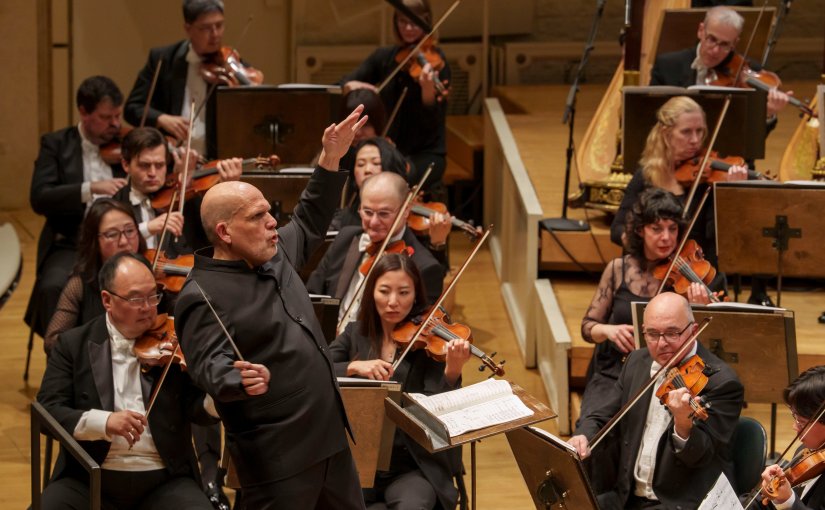
Chicago Symphony spotlights Julia Bullock in world premiere of Matthew Aucoin’s Song of the Reappeared

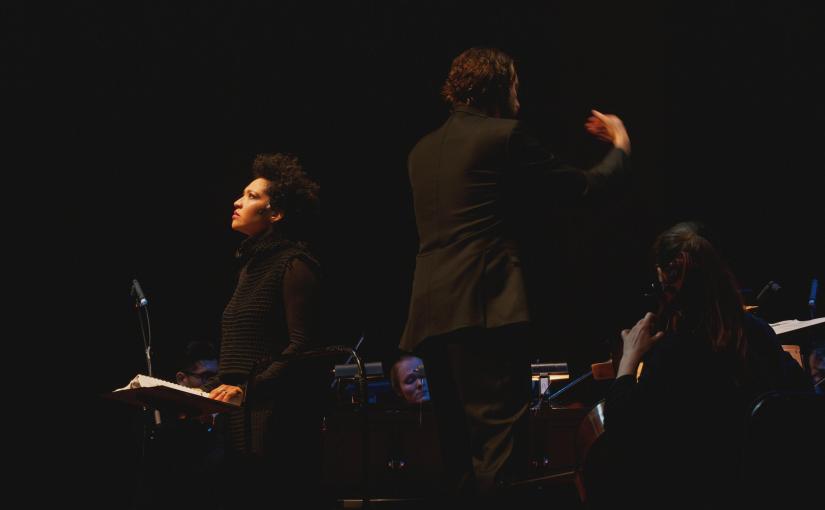
On a September morning in 1973, Chile’s turbulent political reality pivoted into a nightmare, with a coup that brought General Augusto Pinochet to power  inaugurated nearly two decades of repression. For many Chileans, the brutality unfolded in darkness. Secret police agents arrived at homes in unmarked cars. People vanished from doorways and street corners, becoming rumor. Some were taken to clandestine detention centers, interrogated, and tortured. Many were killed, their bodies discarded in rivers, lakes, and mass graves, or pushed from helicopters into the Pacific. It was terror designed not only to erase opponents but to erase evidence of their existence.

Continue reading Chicago Symphony spotlights Julia Bullock in world premiere of Matthew Aucoin’s Song of the Reappeared

Medea delivers an unforgettable experience at the Lyric

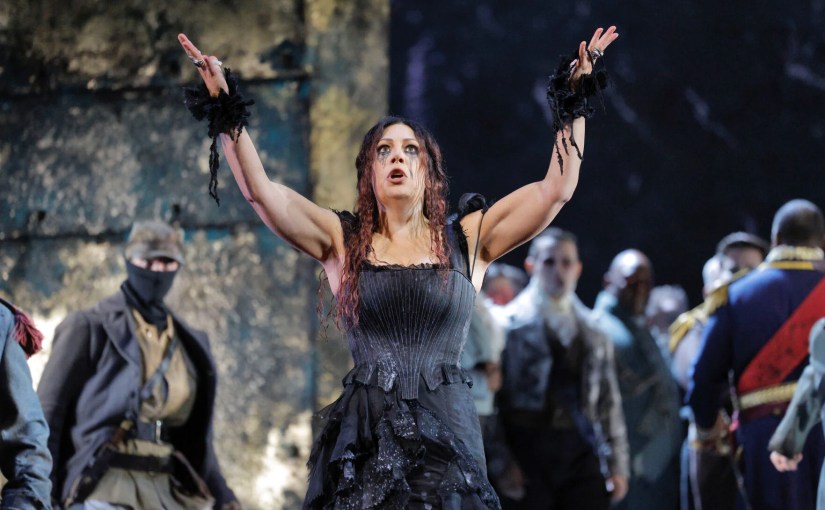
I had hoped to write something longer about Medea, which opened a week ago at the Lyric Opera. Time and circumstance have conspired against me, but this production demands to be acknowledged, even if briefly. Suffice it to say, the performance and production is not to be missed.

Luigi Cherubini’s Medea remains one of opera’s most unjustly neglected masterworks. A magnificent, proto-Romantic affair that bridges classical restraint with the full-throated passion that would define the nineteenth century. The score crackles with intensity, its dramatic architecture built on a foundation of inexorable tension that tightens with each scene until the inevitable, devastating conclusion. It’s a work that demands everything from its performers, particularly its title role.

Sondra Radvanovsky rises to meet those demands with a performance that can only be described as revelatory. She is one of the most dynamic, emotional singers on stage today, and her portrayal of Medea’s descent from wounded dignity to vengeful fury is nothing short of mesmerizing. Her voice carries the full weight of Medea’s rage and anguish yet never sacrifices beauty for dramatic effect. This is singing that cuts to the bone.

Equally crucial to the evening’s success is the presence of conductor Enrique Mazzola, a committed advocate for this work who understands its every contour. Under his baton, the Lyric Opera Orchestra played with a precision and fervor that matched the intensity unfolding onstage. The production itself serves the opera well, allowing the drama to unfold with clarity and power.

It all adds up to the most memorable opera experience for me of the last five years. If you have any opportunity to see this production before it closes, seize it. Performances of this caliber are rare, and Medea is an opera that deserves to be experienced in the theater, where its full power can be felt. The Lyric has given us something special.

Here is a roundup of critical opinions.

Continue reading Medea delivers an unforgettable experience at the Lyric

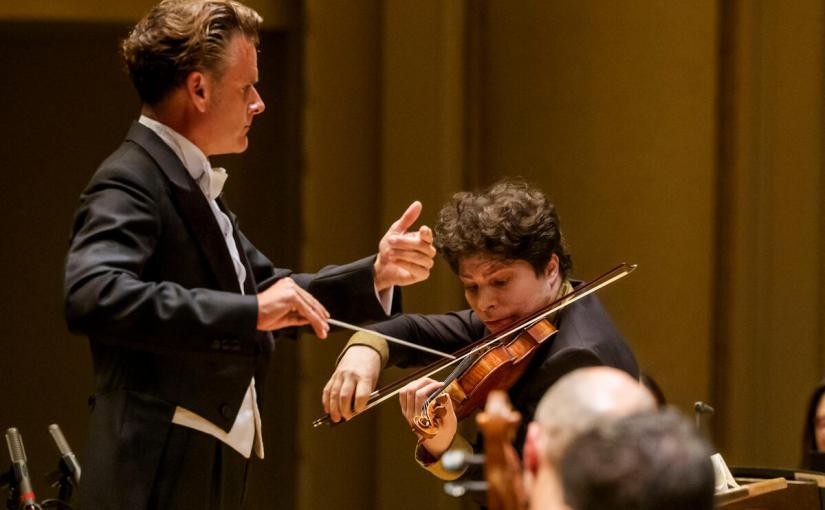
Jordan and Hadelich lead the Chicago Symphony through its repertoire sweet spot

Not long ago, while spending a week in New York, I found myself walking through Central Park after a concert by the New York Philharmonic, wondering which composers belong to which American orchestras. It is a parlor game without definitive answers – New York might claim Gershwin or Ives – but Chicago’s answer came to me immediately: Brahms. Or, more broadly, the music of Central Europe. The Chicago Symphony Orchestra’s history is inseparable from the great European Classical and Romantic traditions, shaped by towering figures like Fritz Reiner and Georg Solti. When the orchestra recently offered an evening of Kodály, Dvořák and Brahms – works squarely in its wheelhouse – the performance felt like a homecoming.

Continue reading Jordan and Hadelich lead the Chicago Symphony through its repertoire sweet spot

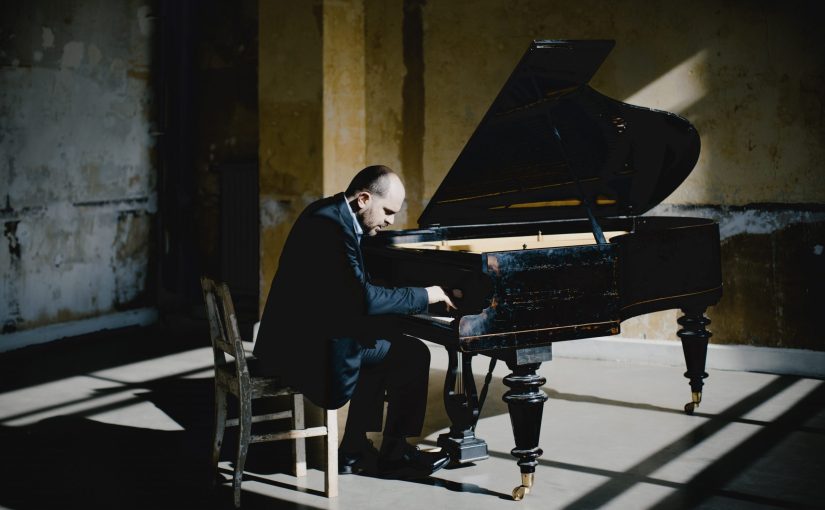
In Chicago, a new venue makes its case with Hickey’s audacious piano work Sapiens

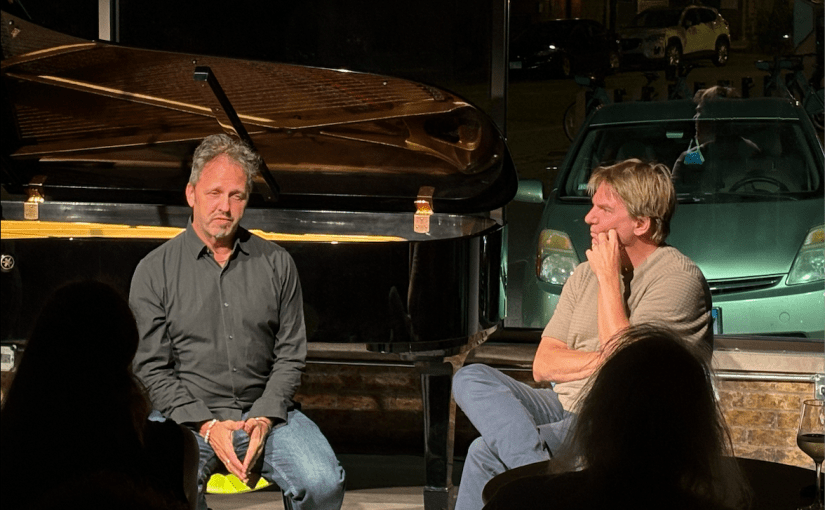
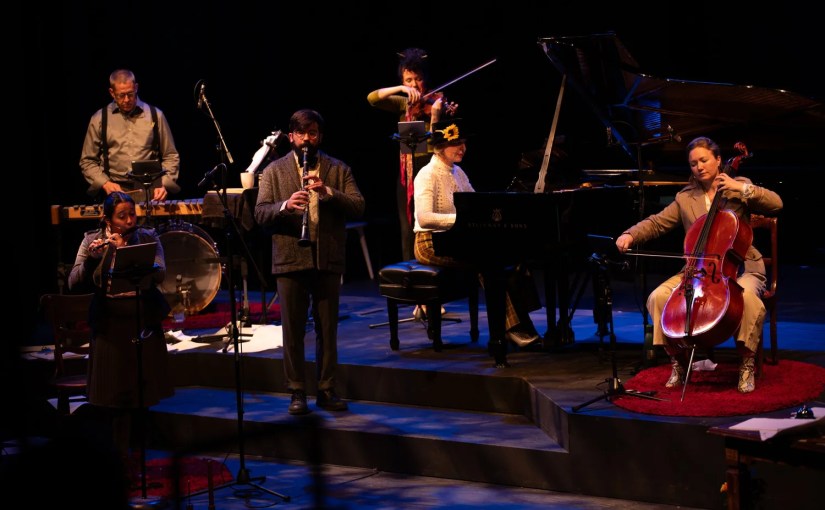
Chicago has no shortage of performance spaces, but none quite like The CheckOut. Housed in a former 7-Eleven on Clark Street in Uptown, the venue opened its doors September 12th under the stewardship of Access Contemporary Music. In just two weeks it has already staked its claim as one of the city’s most intriguing cultural outposts. The inaugural festival gave a sense of the possibilities: two sold-out nights devoted to Arvo Pärt’s hushed mysticism, the Black Oak Ensemble channeling Studs Terkel’s working class ethos, chamber music turns from the Palomar Trio and Kontras Quartet, and, finally, Wicked Drawl—a band that refuses genre with a gleeful mash of cabaret, country, classical, and jazz.

Continue reading In Chicago, a new venue makes its case with Hickey’s audacious piano work Sapiens

Fall highlights from Chicago’s 25/26 classical music season

Labor Day has passed, taking with it the last illusions of summer leisure. What follows, as reliably as the shortening days, is the arrival of a new classical music and opera season. Chicago’s 2025–26 offerings promise the usual abundance of repertoire and revivals, along with a handful of events that seem more like occasions than routine schedulings.

Conrad Tao and Catalyst Quartet, Nova Linea Musica – September 10; December 3

In its second season, Nova Linea Musica continues to make the case that contemporary music deserves a place not at the margins but at the center of Chicago’s concert life. The opening recital belongs to Conrad Tao, a pianist who has built his career less on institutional endorsements than on his own iconoclastic instincts. Tao programs like someone unwilling to pander: a premiere by the Chicago composer Chris Mercer, a piece of his own, and music by Jürg Frey and Ben Nobuto suggest he’s more interested in probing the present than reassuring the past.

Continue reading Fall highlights from Chicago’s 25/26 classical music season

Experience Handel’s Water Music on the Chicago River

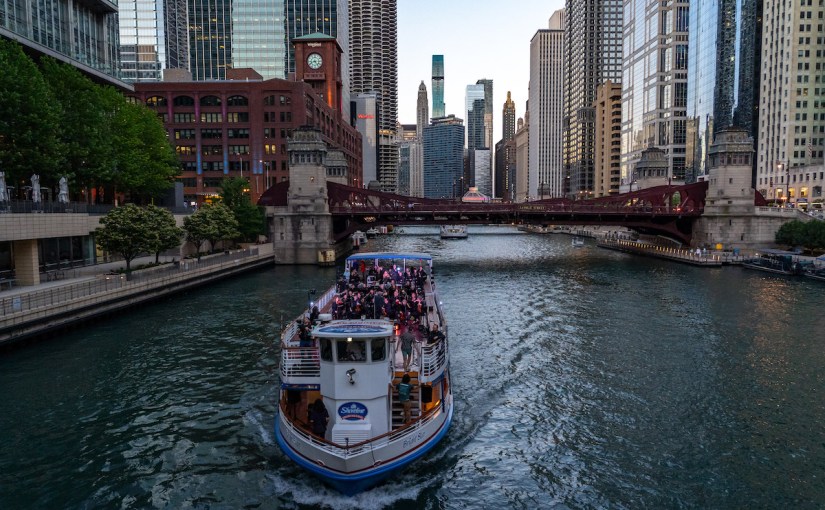
After last year’s debut, Music of the Baroque is bringing back The Chicago Water Music to the Chicago River on Wednesday, September 10th. Dame Jane Glover will once again lead the ensemble from aboard the “Bright Star” as it travels from Ogden Slip to Merchandise Mart, but this year comes with an ambitious new twist: a citywide singalong.

The program follows the same winning formula: highlights from Handel’s Water Music and Music for the Royal Fireworks, plus choral favorites, but adds “Hallelujah, Chicago,” inviting the entire city to join in singing the “Hallelujah” Chorus from Messiah.

Continue reading Experience Handel’s Water Music on the Chicago River

Jaap van Zweden returns with a blazing Mahler Sixth

Jaap van Zweden returned to Orchestra Hall this week to lead the Chicago Symphony Orchestra in two commanding performances of Mahler’s Sixth Symphony. Whether by design or coincidence, this symphony has become something of a calling card for the Dutch maestro during his visits to Chicago. Van Zweden was on the podium the last two times the orchestra played the piece, and this time he not only led the work at home, but will also take it on tour to Amsterdam for the third Mahler Festival.

Mahler’s Sixth has long been shrouded in biographical myth—its popularity fed by the image of the composer as a death-haunted artist. This lens, while perhaps oversimplified, finds a potent anchor in the work’s unsettling musical language. The mythology would be nothing without the work’s infamous hammer blows in its final movement—strikes that have become almost synonymous with Mahler’s fatalism.

Continue reading Jaap van Zweden returns with a blazing Mahler Sixth

CMS musicians bring warmth and vitality to Harris Theater performance of Schubert, Mozart and W.F. Bach

Pianist and CMS Co-Director Wu Han. Photo Credit: Chamber Music Society of Lincoln Center

Originally published on Seen and Heard International

Chicago’s classical music scene is undeniably shaped by the towering presence of the Lyric Opera and the Chicago Symphony, institutions that draw crowds with their scale and prestige. Against this backdrop, the Chamber Music Society of Lincoln Center’s series at the Harris Theater stands out as a quieter, yet equally vital, counterpoint—offering an intimate alternative that feels both rare and refreshing in a city where chamber music isn’t the first thing on most concertgoers’ minds. Tuesday’s CMS performance drove that point home, showcasing the unique appeal of small-ensemble playing in an intelligent program of Schubert, Mozart and Wilhelm Friedemann Bach.

Before the music began, co-artistic director Wu Han stepped out to greet the audience, striking a relatable note by admitting she’d heard some subscribers chose to spend their evening at the Lyric Opera’s La Boheme instead. With a wry smile, she turned the moment into a pivot to the future, announcing the dates for next season. Her co-director and husband David Finkel, will announce next season’s program at CMS’s final Chicago concert in April.

Continue reading CMS musicians bring warmth and vitality to Harris Theater performance of Schubert, Mozart and W.F. Bach

Remembering Charles Ives with the Chicago Sinfonietta

Photo Credit: Charles Ives Society

Charles Ives, one of America’s most adventurous composers, pushed the boundaries of classical music with his polytonal chaos, dissonances and American echoes. Yet, despite these innovations, he remains underappreciated compared to figures like Aaron Copland. In celebration of Ives’ 150th birthday last year, historian Joseph Horowitz is leading a campaign to elevate his legacy. Through blog posts, a documentary film, a radio program, and curated festivals, Horowitz is championing Ives’ music near and far. For Chicago audiences, the effort culminates in a special concert at the University of Chicago this weekend.

Continue reading Remembering Charles Ives with the Chicago Sinfonietta

Christian Tetzlaff dazzles in Sibelius Violin Concerto; Afkham and the CSO bring Schoenberg to life

Originally published on Seen and Heard International

Violinist Christian Tetzlaff and guest conductor David Afkham headlined the Chicago Symphony Orchestra’s concert series this weekend. The German duo presented a program of works by Richard Wagner, Jean Sibelius, and Arnold Schoenberg – three selections that highlight the shifting landscape of classical music at the turn of the 20th century.

Composed just a year apart, Sibelius’ Violin Concerto and Schoenberg’s Pelleas und Melisande reflect two distinct responses to the influence of Richard Wagner. A young Sibelius was deeply affected by Wagner’s music, particularly after experiencing Parsifal at Bayreuth. Although Sibelius initially attempted operatic composition, he shifted to orchestral works and initially retained traces of Wagner’s harmonic language and orchestration. But gradually, he developed a flourish-lite style focused on organic development and austere textures. Schoenberg, too, revered Wagner, particularly Tristan und Isolde. Pelleas und Melisande embodies both the height of late Romanticism and a pivot toward the composer’s more radical innovations. Schoenberg roots the piece with Wagnerian leitmotifs and expansive orchestration. Yet the work’s complex harmonic language hints at dissonances that would later become a staple of the composer’s music.

Continue reading Christian Tetzlaff dazzles in Sibelius Violin Concerto; Afkham and the CSO bring Schoenberg to life