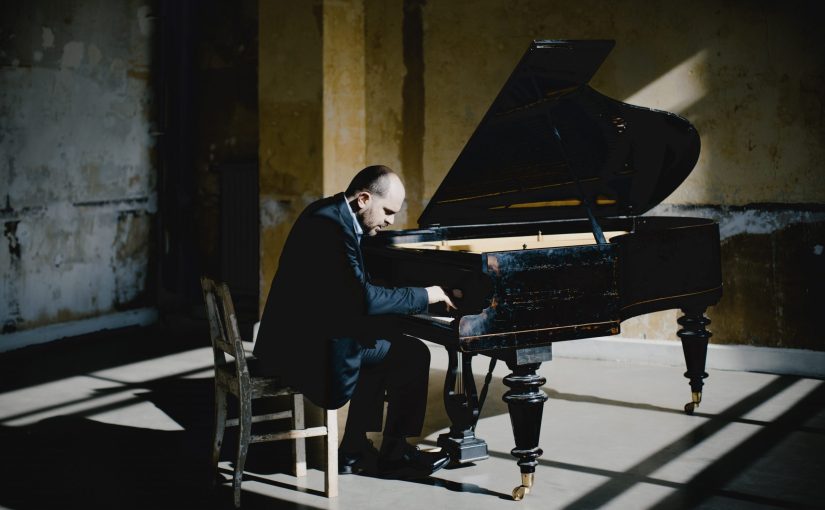
Moments before Kirill Gerstein took the stage Sunday afternoon at Orchestra Hall, the sounds of the city were not those of a typical pre-concert bustle. Along Michigan Avenue, marchers were demanding accountability from ICE for the killing of Alex Pretti in Minneapolis. I’ve seen plenty of protests over the years; I remember Occupy Wall Street supporters taking over a community college campus near my Seattle apartment in 2011, and the summer of 2020 when the Capitol Hill Occupied Protest (CHOP) was established in the heart of Seattle’s Capitol Hill neighborhood in the wake of George Floyd’s murder.
Yet, I cannot recall a moment where the two disparate parts of my life — politics and music — came so close to intermingling. For a brief time, I questioned whether I should abandon Gerstein’s recital to join the march for the justice and fair treatment that remains so elusive in 2026.
Continue reading Liszt and Brahms become a refuge in Kirill Gerstein’s Chicago recital
 Gathering Note