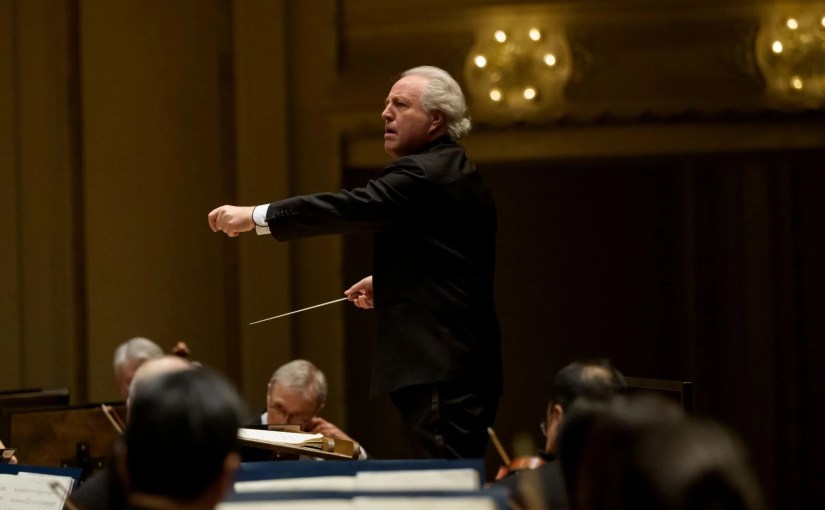
Honeck offers a living, breathing setting for Mozart’s Requiem

Classical music’s great monuments often arrive in the concert hall trailing long histories behind them, along with layers of interpretation and expectations that no performance can meet. Mozart’s Requiem is undoubtedly one of those works. It gathers together some of the composer’s most stirring music and binds it with a spiritual character weighted by lore surrounding Mozart’s final days. The piece’s fragmentary nature allowed later composers to supply completions of varying character, adding an almost philosophical dimension on which are the most or least “Mozart.”

Put together, its murky antecedents, spiritual impact and mythological status leave Mozart’s Requiem almost in a state of suspension. For all its beauty, it is a piece that can inspire more promise than fulfillment. I have long thought that it thrives more readily on recordings than in performance, where its scale and pacing create challenges for modern orchestras.

Continue reading Honeck offers a living, breathing setting for Mozart’s Requiem

Summer Listening: Beethoven, Haydn and Rush Hour Concerts

We are deep into Classical Music Chicago’s Rush Hour Concert season now, and this series continues to prove itself as one of the best deals for classical music lovers in a city starved for a decent chamber music scene. For those who haven’t been able to attend in person, I’ve pulled together a few standout performances from this season’s YouTube archive.

While these recordings offer a wonderful glimpse into the series, nothing quite matches the immediacy and warmth of experiencing live chamber music in an intimate setting like St. James Cathedral . The good news? There are still several concerts left in the season, including the Chen Quartet’s July 29th performance premiering a new work by Augusta Read Thomas and the season finale on August 19th featuring Dvorak’s Serenade for Winds. Two excellent opportunities to discover why Rush Hour Concerts are such an essential part of Chicago’s summer classical music landscape.

In the meantime, if you’re catching up, don’t miss Matthew Lipman’s lyrical take on Brahms’s two viola sonatas or the Kontras Quartet’s engaging performances of Ives and Terry Riley—both are well worth your time.

Continue reading Summer Listening: Beethoven, Haydn and Rush Hour Concerts

Kahchun Wong’s musical alchemy: Beethoven and Mahler in perfect harmony

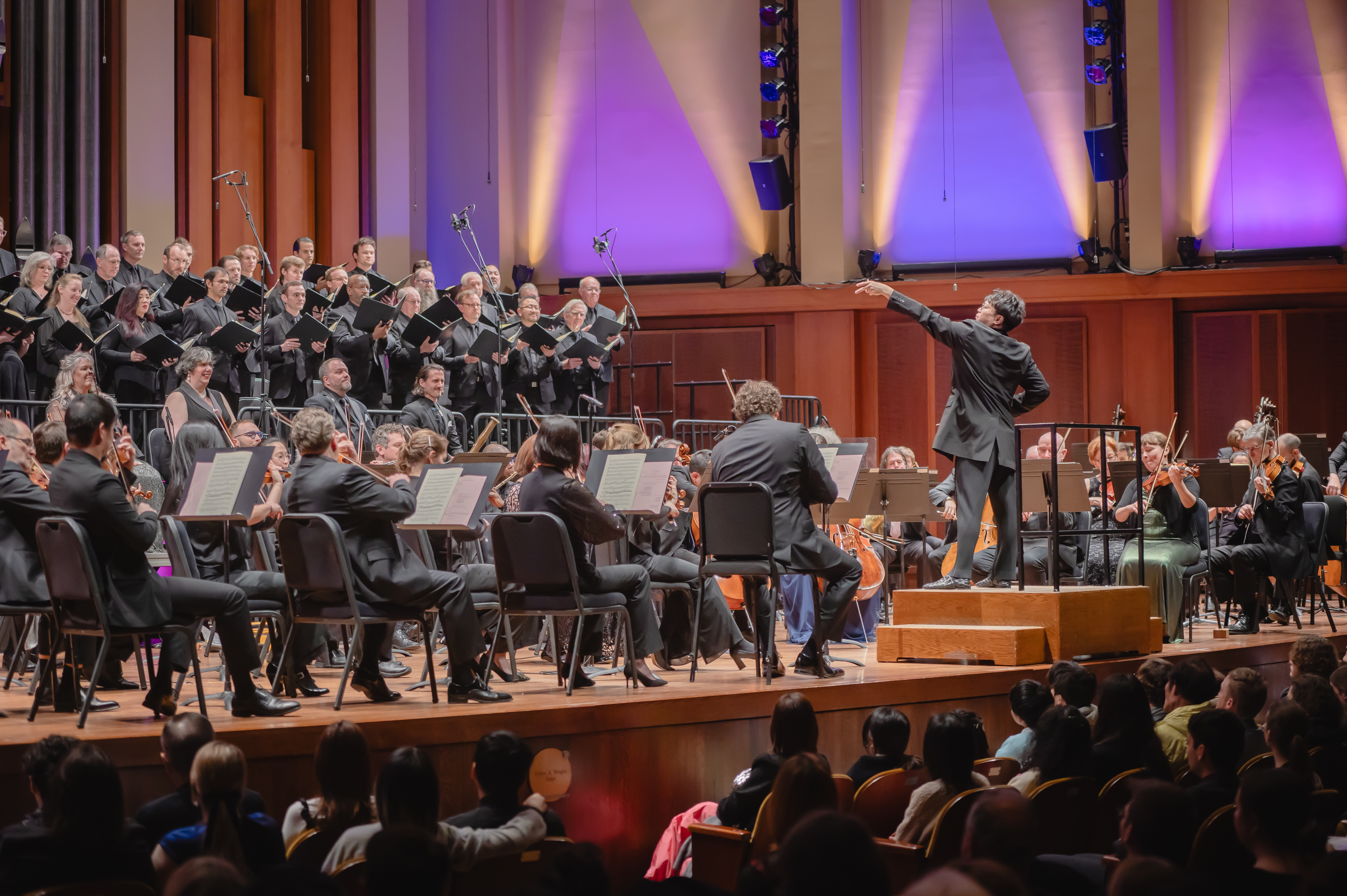
Photo Credit: Carlin Ma

Also published at Seen and Heard International

Anticipation crackles in the air, thick like summer lightning before the storm breaks.  A hush descends, settling over an expectant audience.  Every cough or rustling program feels like a desecration. At the podium, conductor Kahchun Wong stands at the edge of creation – shoulders squared, back straight, baton held aloft.  A moment’s pause, pregnant with possibility, his hand dips, slow and deliberate, tracing the first stroke of a masterpiece – Beethoven’s Ninth Symphony.

For sixty minutes Beethoven’s motifs ebb and flow, a struggle between light and shadow, order and chaos.  Wong, a captain at the helm, guides the orchestra through the tempestuous waves.  His every gesture framing the music’s path: joy, anguish, defiance, triumph.  

By the end, Wong succeeded in taking the audience gathered at Benaroya Hall on a journey they would not soon forget.  Wong conducted four performances from December 28th to 31st.  Most years, Seattle’s traditional end-of-December performances of Beethoven’s Ninth are an afterthought for devoted concertgoers.  They’re reliable revenue generators – and who doesn’t like a little uplift and possibility of Beethoven’s Magnum Opus (or one of them) to ring in the New Year?  

Continue reading Kahchun Wong’s musical alchemy: Beethoven and Mahler in perfect harmony