The final notes of a musical giant

Lesley Stahl’s recent interview with Michael Tilson Thomas for CBS Sunday Morning doesn’t break new ground, but it’s compelling all the same. There’s a short version—about nine minutes—and a longer, more expansive cut. What makes it essential viewing is the context: MTT is in the final stages of a battle with brain cancer, a disease that will almost certainly claim him.

In April, he gave what will likely be his final public concert. An event that marked the culmination of a spirited, defiant race against time and illness. I made a point to attend two of his more recent Mahler performances, of the Fifth and Sixth Symphonies. Time was clearly running out then for MTT, and for the singular magic he could conjure from an orchestra.

He remains witty, insightful, and profoundly committed to music. But there’s a new vulnerability. His speech is sometimes halting, his phrasing occasionally searching, words sometime hover just out of reach. That fragility only deepens the emotional impact of seeing one of the great musical minds of our time reflect on a career that helped shape American orchestral life at the end of the 20th and during the first quarter of the 21st Centuries.

Continue reading The final notes of a musical giant
First encounters and final judgments

One of the earliest pieces of music I immersed myself in when I first ventured into the world of classical music in the mid-1990s was Giuseppe Verdi’s Requiem. Back then, my understanding of both classical music and Verdi was thin, cobbled together from scattered references in popular culture: the occasional aria, the familiar strains of La Traviata, and, of course, the terrifying grandeur of the Requiem’s “Dies Irae.” The sheer force with which Verdi summoned dread and divine judgment through sound was unlike anything I had ever encountered. Hearing it for the first time was a full-body experience that rivaled the raw energy I’d felt listening to bands like the Smashing Pumpkins.

I can’t say with certainty whether I’ve ever experienced the Requiem live in a concert hall. So when the Chicago Symphony Orchestra announced it would close out its season with this very work under the sure-handed direction of Riccardo Muti a part of me itched to be there. Alas, as often happens, other commitments intervened. While I don’t typically associate the CSO with Verdi, it’s worth noting the Requiem has occupied a meaningful place during the tenures of the orchestra’s last three music directors.

Continue reading First encounters and final judgments

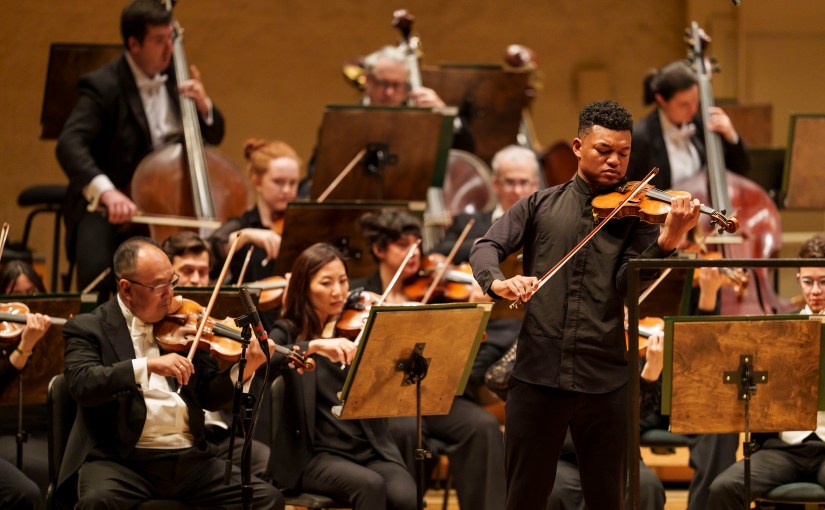
Randall Goosby honors Florence Price in a heartfelt Chicago Symphony performance

Originally published at Seen and Heard International

The life of Florence Price is both remarkable and uniquely American—one of early triumph, quiet persistence, eventual rediscovery and a posthumous, lasting fame.

Born in Arkansas and educated at the New England Conservatory of Music, as a young woman Price moved to Chicago in the 1920s, part of the Great Migration that brought thousands of Black Americans to northern cities in search of opportunity and reprieve from racist violence. In 1933, during Chicago’s World’s Fair, her Symphony No. 1 was premiered by the Chicago Symphony Orchestra, marking the first time a major American orchestra had performed a work by a Black female composer. It was a milestone performance that seemed to herald a long and promising career.

Instead, it became a high-water mark. Despite the significance of the premiere, Price’s career plateaued and then faded into relative obscurity. During her lifetime and for decades after her death in 1953, she remained largely absent from concert halls.

Continue reading Randall Goosby honors Florence Price in a heartfelt Chicago Symphony performance

Operas, quartets, and Mahler on the lawn

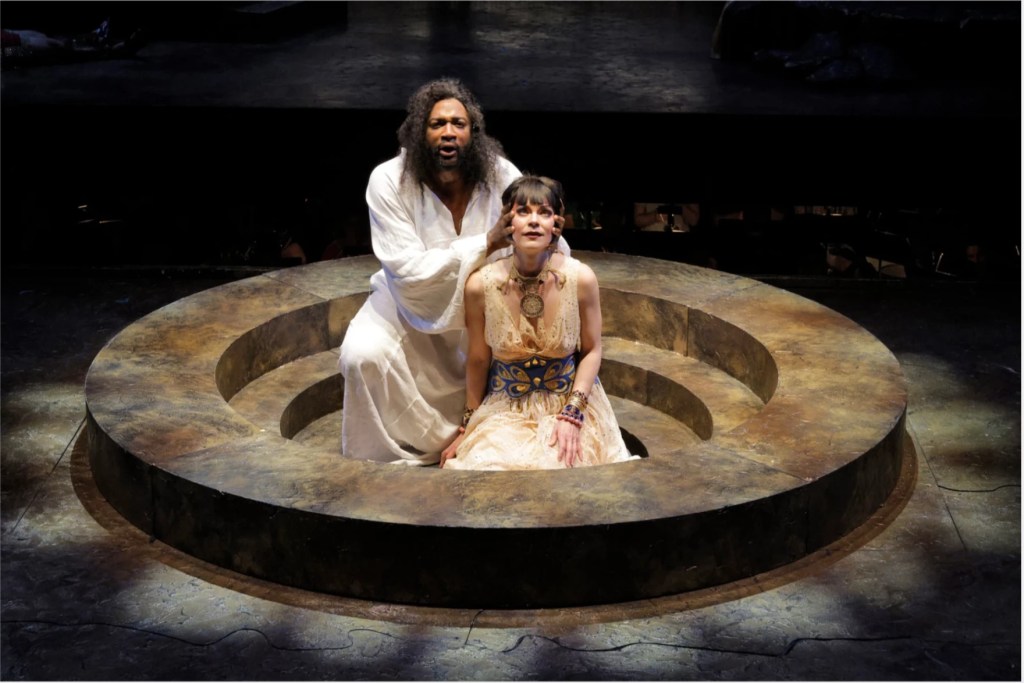
Photo Credit: Cory Weaver and Des Moines Metro Opera Festival. Last year’s production of Salome

Spring is struggling to take hold here in the Midwest. Just when you think warm temperatures and sunshine are here to stay, a cold spell with rain arrives to dampen the mood. Still, the weather won’t stop the summer classical music season from arriving in mid-June.

Classical music sounds better in the summer, at least to my ears. And it’s not just the music—it’s where it’s played: outdoor bandshells, rural hideouts, rustic auditoriums, and expansive lawns. Freed from the formality of the great concert halls, the music breathes differently, more freely, even when the conditions are less than ideal.

I’ve been fostering a side hustle as a part-time freelance music critic since the late ’90s, when I was slogging through law school. Writing about music in Iowa and the Quad Cities helped me survive those grueling academic years. But when summer arrived, everything changed. I stopped using music as a means of escape and started experiencing it as a source of joy. Completely. Whether it was chamber recitals at the local Unitarian church or evenings at Ravinia in Highland Park, those concerts—and the many that followed—came to define summer for me.

The summer of 2025 will be my first full summer in a new city. Last year was all about settling in, arguably the worst part of any move. But this year, I’m ready to see what the area has to offer classical music lovers like me. Here are a few events I’m especially looking forward to.

Continue reading Operas, quartets, and Mahler on the lawn