“Pulchinella Gets Even”

By Philippa Kiraly

The correct title of Paisiello’s 1770 opera is “Pulchinella Vendicato.” Y ou can translate vendicato as vengeance or revenge, or as puppeteer Stephen Carter put it, gets even.

However you don’t have to wait long to find out just what Pulchinella does in that vein as the opera begins Friday this week and goes on weekends until May 2, at Northwest Puppet Center.

This is the 11th consecutive year opera has been mounted by the Puppet Center, with a fine early music ensemble of singers and instrumentalists, and of course, the puppets themselves. Stephen Carter has made several new puppets for this show and all of them have new clothes, made by Christine Carter.

Continue reading “Pulchinella Gets Even”

Quarter notes: Gergiev, Holst, and Pro Musica

V. Gergiev about conducting, his schedule, and Russia.

Seattle Pro Musica is a semi-finalist for the American prize and the group’s conductor, Karen Thomas, is also a semi-finalist in the conducting category.  Congrats Karen and Pro Musica!

Gustav Holst and Hans Graf .

Amelia is coming fast, be sure to check out to learn about Seattle Opera’s first commission in forty years. Check out part two of Seattle Opera’s making of series.

Coming up on May 1st, I am one of the three MC’s (Gavin Borchert and Dave Beck are the other two) for new music festival at Town Hall. $5 for twelve hours of music is just about the best deal around.

Portland Baroque comes to town

By R.M. Campbell

For more than a quarter of century, the Portland Baroque Orchestra has been an integral part of the early music scene on the West Coast. Any number of luminaries have been associated with the period orchestra. including Ton Koopman Richard Egarr, Andrew Manze and Monica Huggett, the ensemble’s artistic director for 15 years. At one time the orchestra attempted to create a base in Seattle. That was not successful, so we have to wait for special opportunities to hear this exemplary group of musicians.

Continue reading Portland Baroque comes to town

PNB offers an all-Balanchine program for April

Pacific Northwest Ballet corps de ballet dancer Sarah Ricard Orza with company dancers in Serenade, choreographed by George Balanchine (c) The George Balanchine Trust. Photo courtesy Angela Sterling

By RM Campbell

Every so often Pacific Northwest Ballet devotes an evening to the work of George Balanchine, such as the mixed bill which opened Thursday night at McCaw Hall. These programs are always welcome not only because they are danced well, but they are done with an authentic voice.
Continue reading PNB offers an all-Balanchine program for April

Questioning the conductors: Gilbert Varga

Gilbert Varga is in town this week to conduct the SSO in a series of concerts with Stravinsky and Beethoven as the focus. Beethoven’s Fourth Piano Concerto will have the help of Horaccio Gutierrez; after the intermission it’s Stravinsky’s ballet Petrouchka.

Varga is the son of violin legend Tibor Varga. The younger Varga also played the violin but switched to conducting. Varga is or isn’t (depending on whether he is telling you his biography or you are reading the bio prepared by his agents) a newbie to North American concert halls. Regardless, his North American career has picked up considerably during the last decade, and he is regularly making stops at the continent’s leading orchestras.

Varga’s claim to fame, perhaps, comes from his commanding baton technique. It is aggressive, imposing, and precise. You can get a sense of his craft by watching this video of him .

My conversation with Varga on this point reminded me of an old measure the writer and composer Virgil Thomson used to ask when evaluating a new piece of music: is it merely good clock work or can it actually tell time too?  Applied to Varga, is there a vision and inspiration behind his surgically precise slicing?

I am not able to attend the concerts this weekend (traveling), so I will leave this last point for audiences to judge.

from on .

Gilbert Varga takes the podium in a commanding performance with the SSO

By Philippa Kiraly

With flair, Swiss conductor Gilbert Varga made his debut on Seattle Symphony’s podium Thursday night for remarkable performances of Enescu’s “Romanian Rhapsody No. 1, Stravinsky’s “Petrouchka” and, with Horacio Gutierrez, Beethoven’s P iano Concerto No. 4.

It was hard to take your eyes off h im. Varga almost danced the music, gracefully using his entire body and the whole podium to convey to the orchestra what he wanted, and so clearly that the musicians responded with the precision of a Rolls Royce engine. He used no score for either the Enescu or Stravinsky, allowing him to give his attention to the musicians throughout.

Continue reading Gilbert Varga takes the podium in a commanding performance with the SSO

One of the very great string quartets: the Emerson

By Philippa Kiraly

We are so fortunate that the Emerson String Quartets, arguably among the greatest of string quartets since recordings began, comes regularly to perform at Meany Hall.

It was here Wednesday night with a program which, on the face of it, might have suggested to unadventurous audience members that they skip this one. Not a bit of it. The hall was virtually full of people maintaining an unusual hushed attention throughout the performance including between movements, of Charles Ives’ Quartet No. 1, “The Revival Meeting;” Lawrence Dillon’s String Quartet No. 5, “Through the Night,” commissioned by the Emerson and completed last year; Barber’s famous “Adagio” in its original version, a movement from his String Quartet No.1; and Dvorak’s charming Quartet No. 12, “American.”

Continue reading One of the very great string quartets: the Emerson

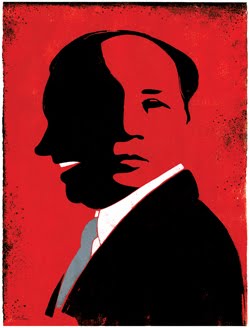
Only the Vancouver Opera could go to (Nixon in) China

By Colton Carothers

Nixon in China is the operatic interpretation of Richard Nixon’s historic visit to China.  Equally historic was Vancouver Opera’s staging of John Adam’s Nixon in China in its Canadian premier for Vancouver’s Cultural Olympiad near the end of March.  With an Olympic sized cast and an Olympic sized budget, you would expect a gold medal.  In selecting this piece itself, Vancouver Opera went for the gold: Nixon is a behemoth of an opera, requiring large orchestrations, costly sets and a large ensemble.  Did it live up to these Olympic sized aspirations?

Continue reading Only the Vancouver Opera could go to (Nixon in) China

The masterpiece by Prokofiev and Sergei Eisenstein

By Philippa Kiraly

How many film directors hope to boast that their movies are being shown and revered more than 70 years after their making? There can be few talking movies in that category before Sergei Eisenstein and Sergei Prokofiev collaborated on the epic “Alexander Nevsky” in 1938, one of the first and arguably the most massive movie production ever at that time and the forerunner of others in similar vein from “Ben Hur” to “Spartacus” and more.

“Nevsky” is black and white and a bit grainy by current standards, but what has helped to keep it high in the category of great films is the musical score by Prokofiev. To his great credit, Eisenstein allowed the composer considerable rein in his musical portrayals of the plot.

Continue reading The masterpiece by Prokofiev and Sergei Eisenstein

Off the shelf: Seattle Symphony, Ehnes, and the Prism Quartet

A number of notable albums have landed on shelves over the past few months. A number of them with local connections. Leading the bunch are two William Schuman releases from Gerard Schwarz and the Seattle Symphony. Schwarz and the local orchestra have been slowly recording all of William Schuman’s published symphonies and assorted orchestral pieces for Naxos. The final two releases in the series, disks featuring the Eighth Symphony and the Sixth Symphony , come coupled with shorter orchestral pieces also played by the SSO. The former includes the ballet score Night Journey and Variations on America; the later, Prayer in a Time of War and the New England Triptych — two patriotic pieces. On both releases, Schuman’s pieces are given heartfelt readings and the recordings are natural, faithful representations of the orchestra and the Benaroya Hall acoustic.

Continue reading Off the shelf: Seattle Symphony, Ehnes, and the Prism Quartet