On the last night of the first complete Ring Cycle at Los Angeles Opera Symbolism took the lead: from the moment the curtain dissolved and the stage lights came up we were presented with an array of symbols from across the whole cycle. Loge: hanging over the stage foreshadowing the inferno to come. The Tarnhelm: reminding us that no one is exactly as they seem. Nothung: a symbol of power that is ultimately impotent. These symbols remained in place all night as a constant reminder of the grand themes of the Cycle. There was a rising tension and a sense of inevitability about this production of Götterdämmerung – it was thrilling to watch. When Act I of Götterdämmerung flies by you know you are in for a great night at the theatre.
The Norns told their tales with minimal fuss and some great singing – my only issue was the rather strange costumes – if one of them fell they wouldn’t have stopped until they took out the cello section in the pit. Continue reading Road report: Twilight of the Gods, LA Ring
Wotan and Erda; LA Ring. Photo courtesy of the Los Angeles Opera.
By Jonathan Caves
Siegfried is a problem child: the character can be one of the most annoying characters in all of opera and all too often this opera is the weak link in a Ring Cycle. This was definitely the case last night at The Chandler Pavilion. After the excellent production of Die Walküre (the more I reflect on this production the more I like it) I was ready for an equally impressive production of Siegfried. Unfortunately I didn’t get what I was expecting and I am still trying to work out exactly why. Continue reading Road report: Siegfried; LA Ring
By Jonathan Caves
Last night’s production of Die Walküre as part of the LA Opera Ring Cycle vividly brought home to me a couple of unique aspects of this production.
Overall I really enjoyed the production and I am glad to say that the masks did not, at least to my ear, interfere with the singing. I also must state up front that this is indeed a very literal production – I did not see anything that wasn’t in the libretto – Wotan didn’t kill Loge, no one sat at a bar drinking martinis – it was werktreue all be it in a very fantastical form.
I won’t describe too much of what I saw (I know some people reading this are attending later performances) but more my impressions.
The stage really is very heavily raked – but it did not seem to impact the singers too much – though, especially in the case of the Gods, they did spend a lot of time standing, or sitting, on small unraked platforms on either side of the central rotating circle. I only noticed one fall and that was by Loge and he quickly recovered – in fact it was so well done I almost thought it might be on purpose.
Our performance Friday night at the Moscow Conservatory was truly a wonderful experience. It was an honor to play at such a venerable institution. Founded in the 1860’s, it has been the training ground for countless great Russian musicians. Tchaikovsky, who presided over the Conservatory for a time, is represented by a gorgeous statue in front of the main entrance to the big hall. We performed in the smaller hall, which seats about 400. This beautiful venue was filled to capacity with musicians and friends of the performers and composers as well as the general public and students. The acoustic is incomparable and it was a joy to make music in a space that just keeps giving back.
This was a two part program, featuring the music of our friend Pavel Karmanov and a man named Sergei Zagney. Zagney’s music is absolutely in the style of the baroque and he had a wonderful ensemble of period instrument specialists, including a small complement of singers along with the strings, sackbuts and organ.
After Pasha Karmanov heard us play our Philip Glass quartet at Dom, he agreed that it really should be performed in the bigger venue, so he substituted the Glass for his own string quartet (a piece we love, by the way, and will be playing in Seattle in October) that we were to have performed at the Conservatory, thereby giving the Glass the real public premiere it deserves. What a mensch. The second part of the program therefore consisted of Karmanov’s “Cambridge Music” for piano quartet and “Innerlichkeit” for two pianos, bass, string quartet and flute, both of which were performed by wonderful Moscow-based musicians, and ODEONQUARTET playing the Glass and the aforementioned “Forellenquintet” albeit without the frying fish. I never did get the story straight as to the fish’s absence.
After the performance I met a composer named Baganov who had evidently played at the Good Shepherd Center last fall. He loved the concert and the Glass and is also a minimalist composer looking to move to the US. He is deciding between New York and Seattle. Let’s hope he chooses our fair city. The world is indeed small.
I am so grateful to everyone who made this trip happen: Pasha, Artur and Gennady, and all the people who run these great performance venues. Thanks, also, to Zach, for inviting me to post to the blog. It has been really fun!
Last night we played at a small venue called “Dom” (means “house”). This is apparently the only place in Moscow where contemporary, avant-garde, or unusual music is performed. Folkloric acts come through and we heard that our friend Carla Kihlstedt, the violinist who improvised with ODEON at Benaroya Hall in November on Wayne Horvitz’ “These Hills of Glory” had also played there. It’s about the size of the Good Shepherd Center Chapel, the big difference being the bar at the back (guarded by a papier mache troll who would have felt quite at home in Fremont). The owner is adamant that it is not a club, but rather a cultural center. We had about 30 or so mainly youngish people show up, which was a nice feel for the size of the space…folks availed themselves of the bar throughout the show, but mostly while the music wasn’t going on. There was definitely the vibe of a concert space, but people were clearly out on the town having a good time with friends. Definitely a concert venue to keep in mind as classical musicians reimagine performance spaces for the 21st century.
Pasha Karmanov announced the program from the stage, translating when necessary our comments about the pieces. Though only one of our works (Philip Glass’ Quartet No. 5) was an official Russian premiere, it was evident that no one had heard any of these pieces before. I think the Golijov “Tenebrae” was especially effective and moving, and the Glass is a real winner. At the end of our program the audience brought us out several times with unison clapping. I’ve never experienced that in the States. It was so sweet.
We also played all three of Karmanov’s pieces, including the two piano quintets (with the spectacular Peter Aidu at the keyboard): Michael Music and Forellenquintet, which are accompanied by film. Forellenquintet is, in fact, a fish story – set in a fish factory, it follows the life and times of a trout whose fate is sealed from the beginning. When we perform it this evening at the Moscow Conservatory, there will be an actual trout being fried on stage as we play. Or maybe in the lobby beforehand. I’m not sure which, but Moscow Conservatory evidently is more lax about such things than Benaroya Hall.
After a very long flight from Seattle to San Francisco to Los Angeles to Moscow, ODEONQUARTET finally arrived in Russia on a rainy Tuesday. We had time the next day before our rehearsal to take the Metro to Red Square and see the incomprehensibly huge square and its famous Basilica as well as the Kremlin. Probably on account of the rain, there was no line to get into Lenin’s mausoleum, so we took the opportunity to view the preserved and rather waxy-looking remains of the revolutionary leader in leisurely fashion. We had heard it would normally involve hours of waiting and we therefore hadn’t counted on visiting Mr. Lenin, but we were glad to have had the opportunity as it rated very high on he strangeness scale.
Following an afternoon of practice and much-needed rest, Pavel Karmanov, composer of three of the works we’ll perform on Friday, came to pick us up at our hotel to drive us to the Moscow Conservatory for rehearsal with our pianist. We had the chance to experience Moscow traffic at dinner hour – evidently there is no such thing as rush hour, the streets are generally packed except in the middle of the night – and arrived at our destination (about 2 miles away) in a brisk 35 minutes or so.
We didn’t know what to expect from pianist Peter Aidu, who is performing Karmanov’s two piano quintets with us, as we’d heard he’d only received the music recently, and we were absolutely delighted with his brilliant playing. In a nice coincidence, after finishing our rehearsal, we went to look at the concert hall and ran into none other than Ivan Sokolov, known to many Seattleites from his collaborations with the Seattle Chamber Players, most recently at On The Boards in February where he premiered a new work with cellist David Sabee. The music world is truly small and is was wonderful to see him on the other side of the planet. Vanya had a complex array of percussion instruments laid out on the stage of the concert hall for his percussion composition that will be premiered tomorrow night. Sadly we’ll miss it as we have our own performance at the House of Music at the same time. Our program will feature the Russian premiere (amazingly, since it was written in 1991) of Philip Glass’ Quartet No. 5, Marcelo Zarvos’ “Nepomuk’s Dances” and Osvaldo Golijov’s stirring “Tenebrae”.
Our Moscow Conservatory performance featuring Pavel Karmanov’s three works will be on Friday evening.
With his characteristic blend of deep research and virtuosic performance, historical accuracy and jazzlike improvisation, Jordi Savall and his band have created in “Jerusalem: City of Heavenly and Earthly Peace” a mesmerizing and troubling contemporary performance piece. Maestro Savall, esteemed creator of over 160 honored recordings of early music, combines ancient instruments, chants, recitations of sacred texts, folk tunes and even a Sufi dance in this concert (based on his 2008 2-CD set of the same name), which I was privileged to see performed on May 5 as the focus of a three-day “Jerusalem” event at New York’s Lincoln Center. I wanted to share with you some impressions and some thoughts about this most unusual Savall project.
Silhouetted against a huge dawn-like screen, a robed man blows an immensely long, grandly twisted shofar, the flawless opening notes of a fanfare that expands to include half a dozen players of these beautiful ram’s horns and as many players of the equally long, impossibly slender Arabic trumpets called annafirs. The shofar, a wake-up call most associated in our time with synagogue High Holiday services, is played by the Israeli virtuoso Yagel Harel, one of a collection of multi-ethnic players Savall has carefully gathered to demonstrate how historic enemies can melt their differences in the warm light of their musical similarities. Continue reading Jordi Savall’s Jerusalem at Lincoln Center
The pre-eminent early-music artist of our time has to be the tireless Jordi Savall, whose combination of scholarship, musicianship, and visionary good will has produced over 150 important recordings. Many of these center on a theme. When this year’s US tour brought Savall and his band, Hesperion XXI, to Seattle (Town Hall, via Early Music Guild) in March, they offered a women-themed program based on their album “Lux Feminae.” Gathering Note’s R.M. Campbell called that concert “a kind of rare adventure.”
New York’s Lincoln Center is hosting Savall and company in another kind of rare adventure, a three-evening series, “Jordi Savall: Jerusalem” part of its Great Performers season. Two of the evenings are concerts based on Savall’s recordings: Sunday May 2, the 2006 album “Orient-Occident,” and Monday, the 2008 2-CD set “Jerusalem: City of Double Peace: Heavenly Peace and Earthly Peace.” It’s my good fortune to be in NY for these, and I want to share with you some of the experience of this series. Continue reading Jordi Savall’s Jerusalem seeks to mend cultural fabric
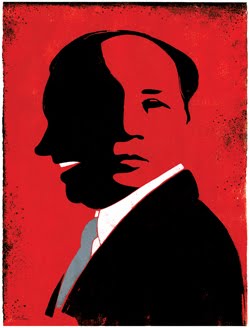
Nixon in China is the operatic interpretation of Richard Nixon’s historic visit to China. Equally historic was Vancouver Opera’s staging of John Adam’s Nixon in China in its Canadian premier for Vancouver’s Cultural Olympiad near the end of March. With an Olympic sized cast and an Olympic sized budget, you would expect a gold medal. In selecting this piece itself, Vancouver Opera went for the gold: Nixon is a behemoth of an opera, requiring large orchestrations, costly sets and a large ensemble. Did it live up to these Olympic sized aspirations?


 Gathering Note