Remembering Charles Ives with the Chicago Sinfonietta

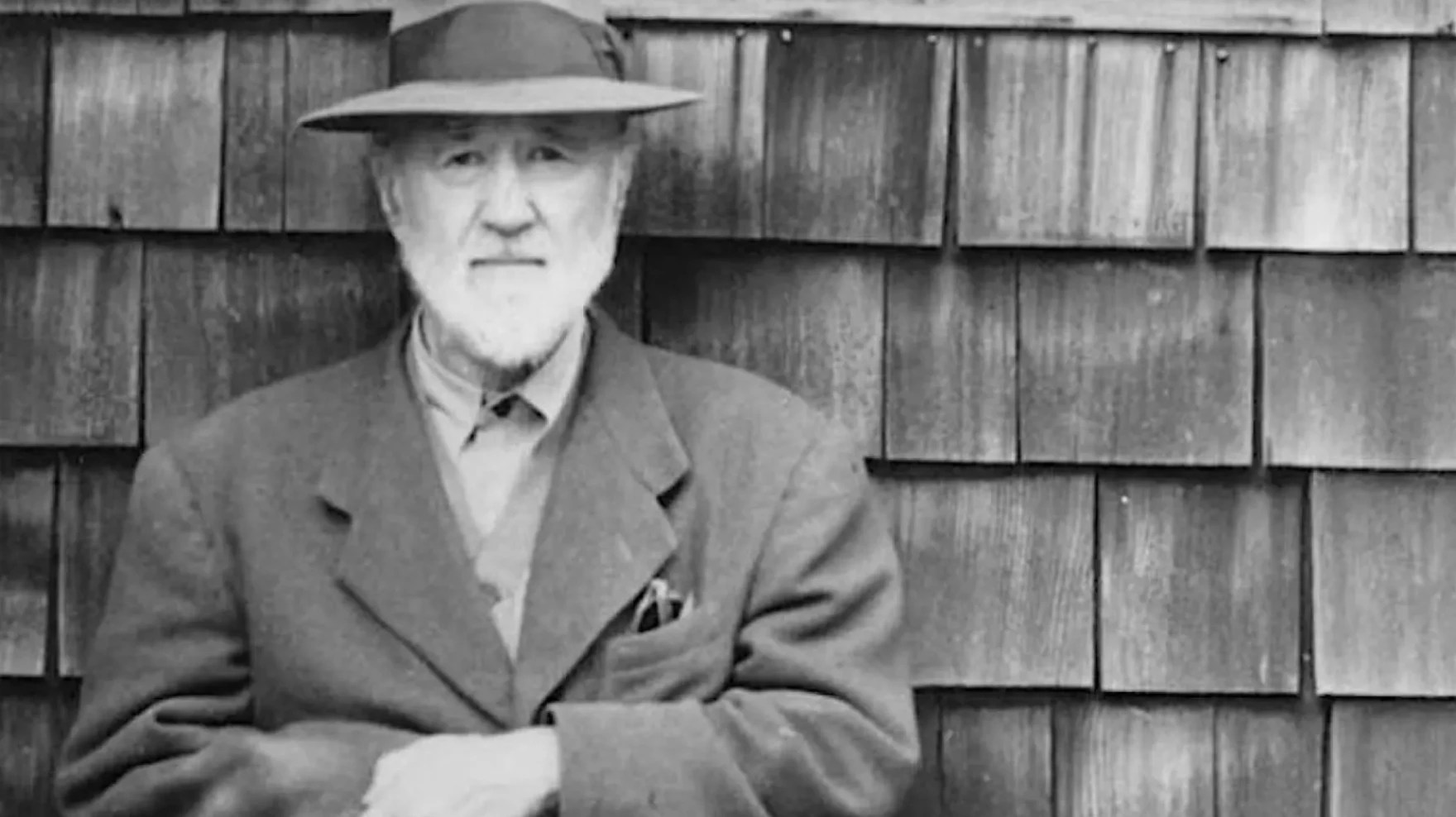
Photo Credit: Charles Ives Society

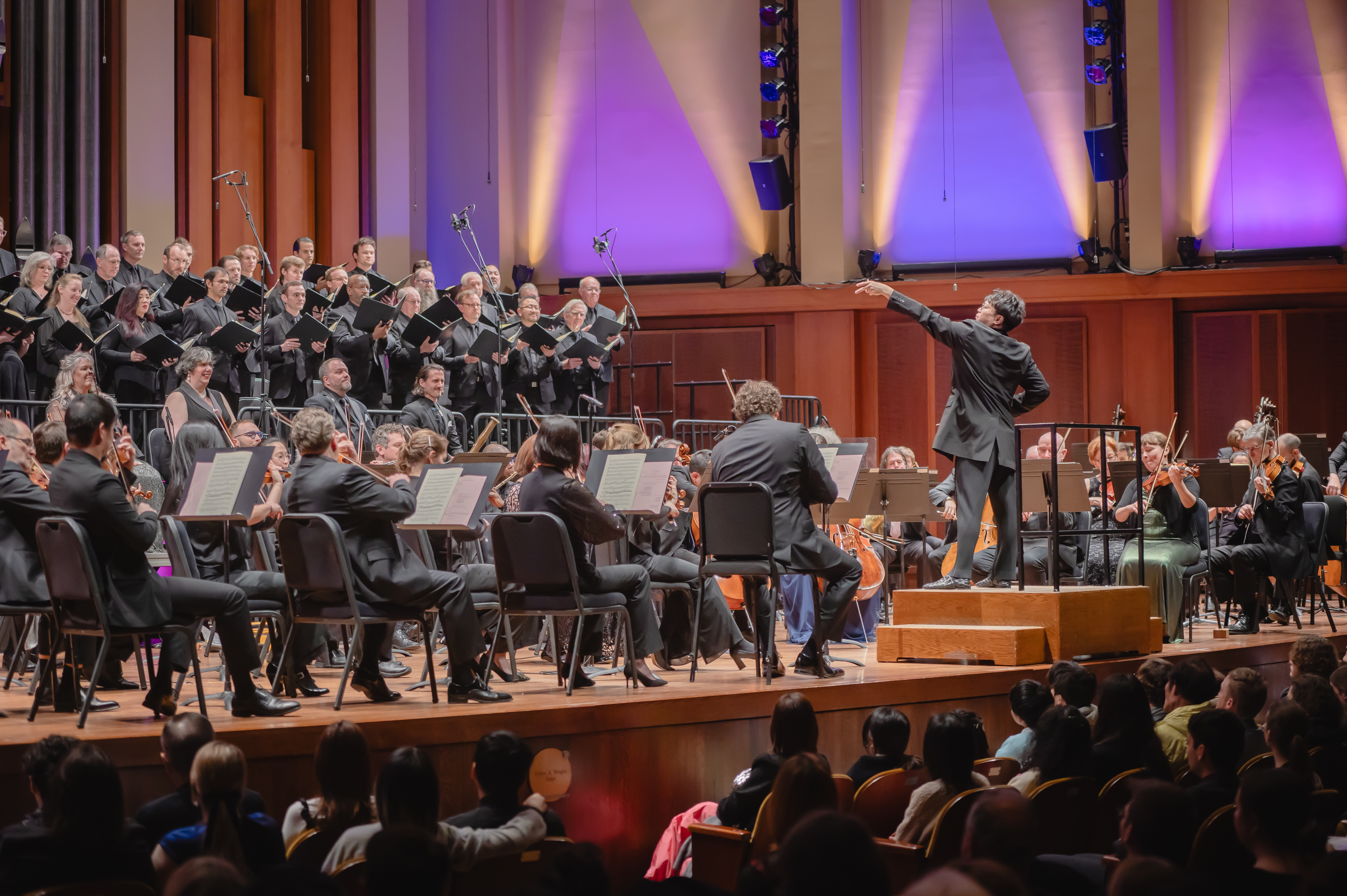
Charles Ives, one of America’s most adventurous composers, pushed the boundaries of classical music with his polytonal chaos, dissonances and American echoes. Yet, despite these innovations, he remains underappreciated compared to figures like Aaron Copland. In celebration of Ives’ 150th birthday last year, historian Joseph Horowitz is leading a campaign to elevate his legacy. Through blog posts, a documentary film, a radio program, and curated festivals, Horowitz is championing Ives’ music near and far. For Chicago audiences, the effort culminates in a special concert at the University of Chicago this weekend.

Continue reading Remembering Charles Ives with the Chicago Sinfonietta
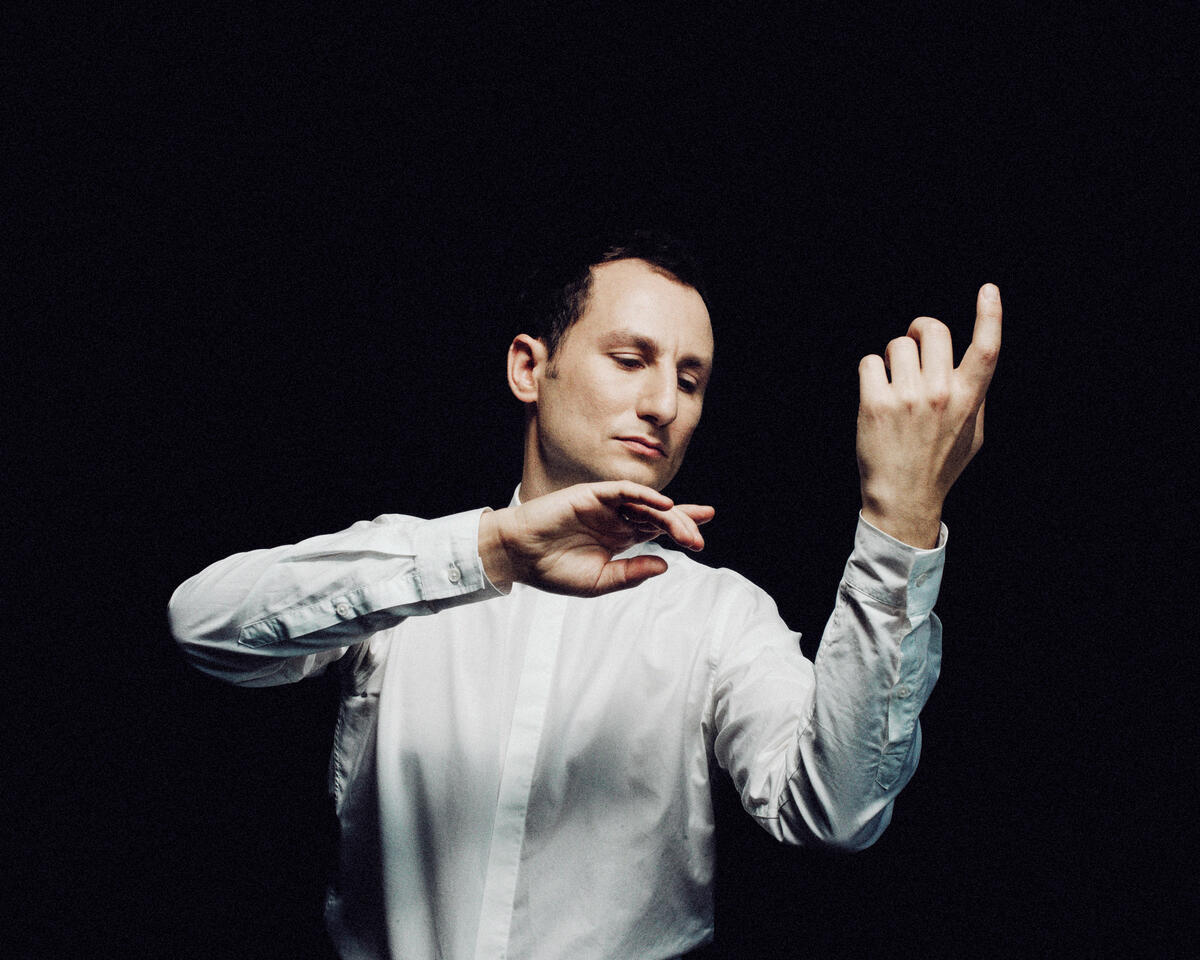
Esa-Pekka Salonen and organist Iveta Apkalna bring Sinfonia concertante to life in Chicago debut

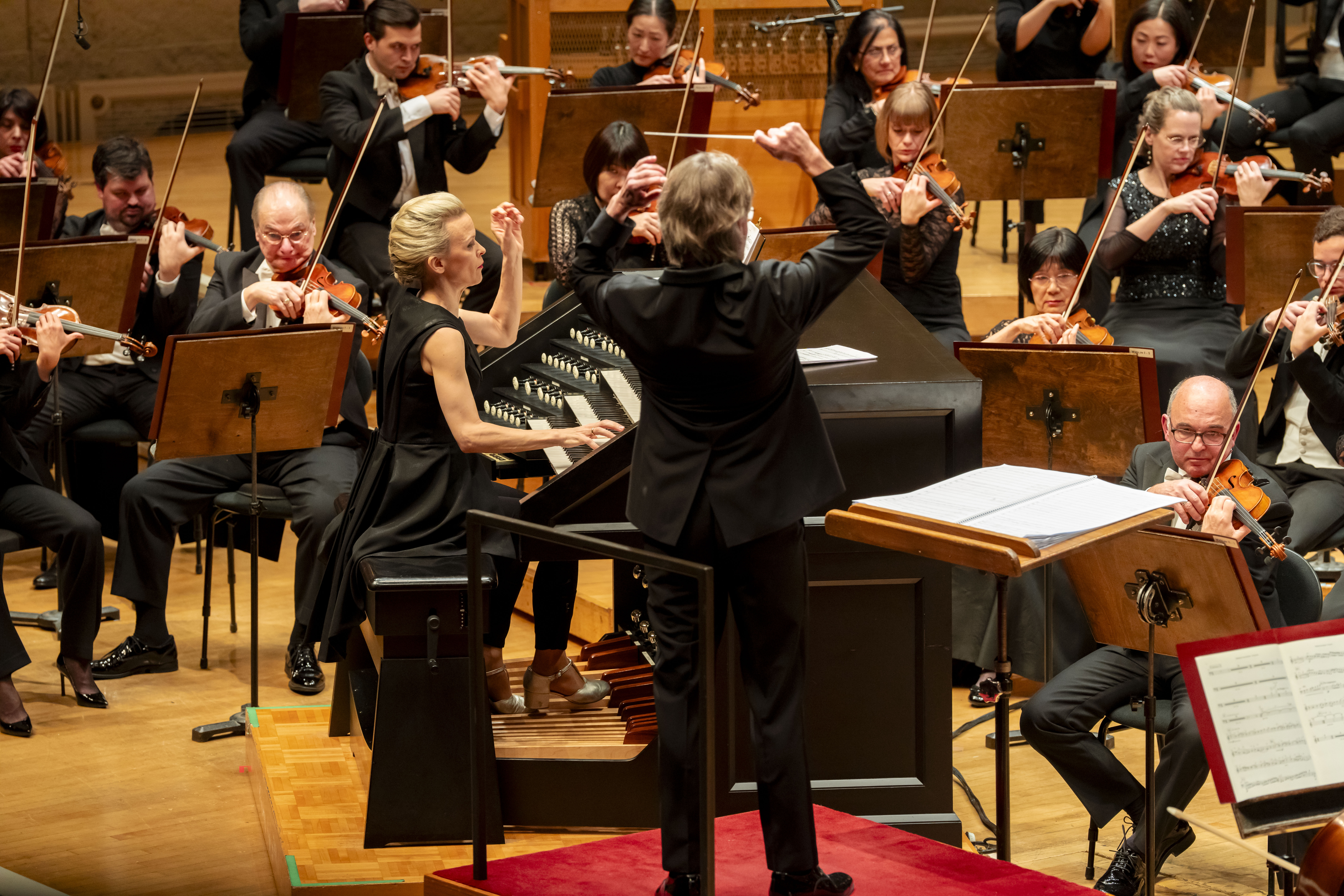
Organist Iveta Apkalna makes her CSO debut in the CSO’s first performance of composer and conductor Esa-Pekka Salonen’s Sinfonia concertante for Organ and Orchestra. Photo Credit: Todd Rosenberg

Originally published on Seen and Heard International

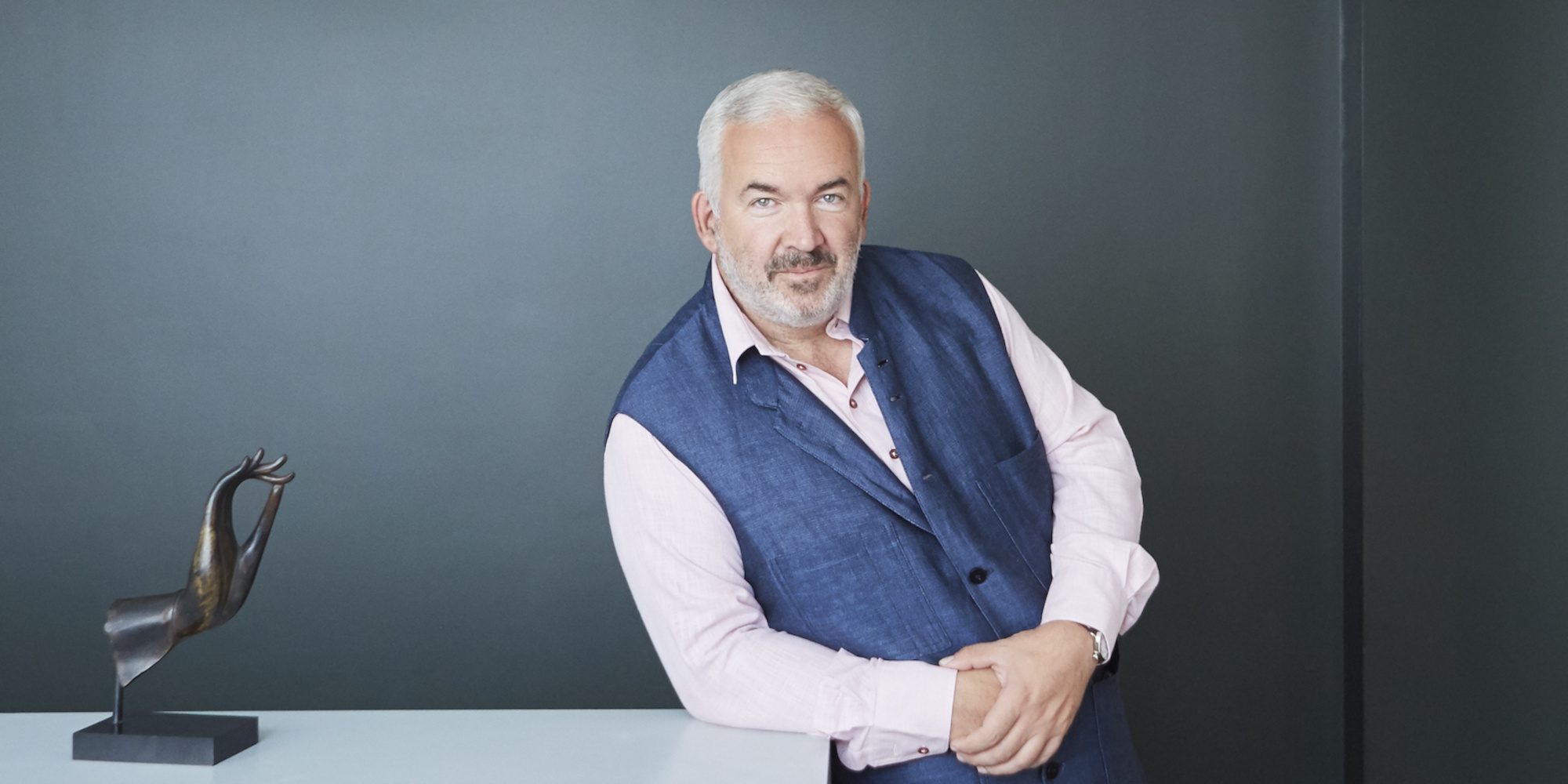
The Chicago Symphony Orchestra has returned home to Orchestra Hall after a successful tour through Florida, New York and Oklahoma, launching an anticipated two-week residency with conductor Esa-Pekka Salonen. Salonen, a dynamic force in contemporary music, steps onto the Chicago podium at a transitional moment in his career, following his well-publicized decision to not seek a new contract as music director of the San Francisco Symphony over creative differences. In his current lineup in the Windy City, the Finnish maestro will guide the CSO through a compelling lineup, including Bartók staples, Beethoven’s buoyant Symphony No. 2, and a performance of Salonen’s own Sinfonia Concertante for organ and orchestra.

The first program of Salonen’s residency focused on three orchestral showpieces, with his own Sinfonia Concertante framed by Richard Strauss’ Don Juan and Béla Bartók’s Concerto for Orchestra. While Salonen’s work was a new addition to the orchestra’s repertoire, the Strauss and Bartók pieces have a storied history with the CSO, particularly through its landmark recordings with Fritz Reiner. The orchestra’s first RCA recording of the Concerto for Orchestra is widely regarded as one of the definitive interpretations. Reiner’s deep understanding of Bartók’s music—coupled with the orchestra’s balance, precision, and virtuosity in the recording—shaped Bartók’s popularity in America and contributed significantly to the CSO’s growing reputation as a world-class ensemble.

Continue reading Esa-Pekka Salonen and organist Iveta Apkalna bring Sinfonia concertante to life in Chicago debut

Minkowski Takes Leap from Baroque to Classical with Jupiter and Les Boréades

Marc Minkowski, Photo Credit: Benjamin Chelly

Originally published on Seen and Heard International

Gods and mythology long influenced music, especially during the Baroque and Classical periods. This era saw a cultural shift, drawing greater and greater inspiration from pre-Christian societies. The larger-than-life characters of mythology offered spectacle and theatricality, especially for Baroque opera. They provided dramatic material for the genre, fueling its growth. But beyond entertainment, these stories also offered allegory and moral lessons, appealing to audiences seeking philosophical themes. This realm of gods, myth, and magic formed a loose programmatic thread through the January program of Chicago’s Music of the Baroque. The evening in Harris Theater off the city’s Michigan Avenue featured three pieces from different music “gods” and Marc Minkowski’s debut with the orchestra.

Continue reading Minkowski Takes Leap from Baroque to Classical with Jupiter and Les Boréades

“Let the door be shut and bolted”

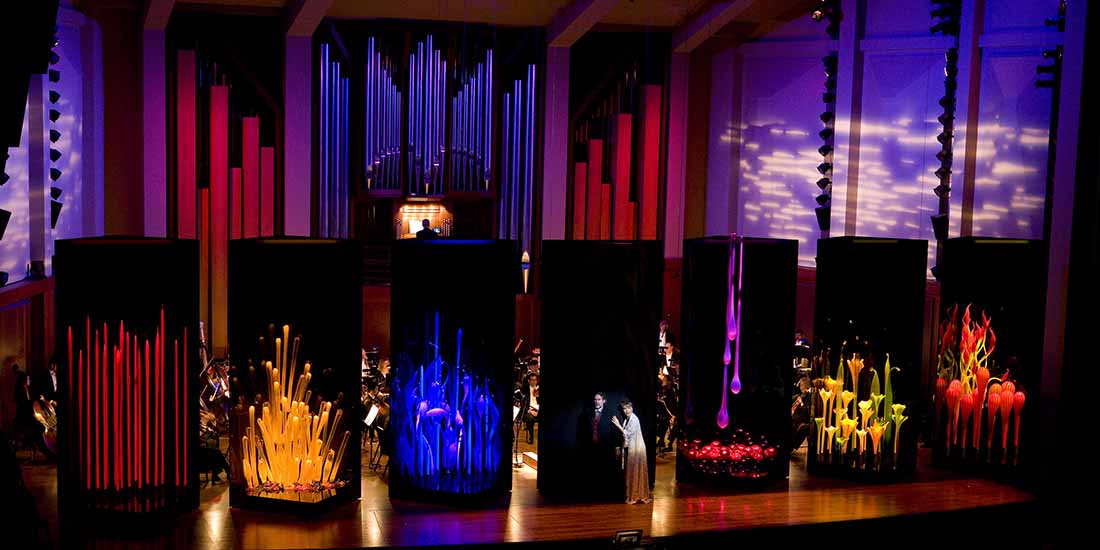
Photo Credit: Chihuly Studios, Terry Rishel 

Esa-Pekka Salonen joins the CSO for a two-week residency focusing on Bartók. In week one, Salonen pairs the Concerto for Orchestra with his own Sinfonia Concertante for organ and orchestra, while in week two Bluebeard’s Castle shares the stage with Beethoven’s Second Symphony. As of this afternoon, there are still ample tickets available for Bluebeard’s Castle, and anyone who can go should.

It is one of the spookier pieces of music out there, and Bartók’s vocal writing is excruciatingly demanding. I’ve seen it staged on a double bill with Schoenberg’s expressionist masterpiece Erwartung. But, it was my first experience with the opera, a semi-staged concert performance in Seattle that is firmly planted in my memory. Gerard Schwarz pulled out all of the stops to make it a memorable evening. Schwarz’s production was unforgettable, partially thanks to Charles Simonyi’s support, which enabled the creation of glass sculptures by Dale Chihuly representing six of the seven doors opened by Judith and Duke Bluebeard. This striking production has since traveled to other venues, undoubtedly thrilling audiences.

While Chicago’s performance won’t feature Chihuly’s vibrant sculptures, it boasts its own impressive draw: Esa-Pekka Salonen conducting, alongside soloists Ekaterina Gubanova and Christian Van Horn.

Mahler, Bruckner, and a nose-picking moment of truth

Kirill Petrenko and the Berlin Philharmonic

If classical music had its own sacred pilgrimage, the Berlin Philharmonic would undoubtedly be its ultimate destination—a place where music reaches its zenith. Attending one of their concerts isn’t just hearing an orchestra; it’s an experience akin to standing in awe at the Vatican or Mecca. No matter what they’re playing, you simply need to hear them. I’ve been fortunate enough to witness their majesty twice, both times in Chicago. The first was Mahler’s 7th Symphony, and more recently, Bruckner’s 5th Symphony.

Bruckner’s 5th is often regarded as one of the composer’s most challenging works to comprehend. It unfolds gradually over three movements, creating the impression of an extended prelude. Much like the nearly two-hour Act I of Götterdämmerung, this prelude seems to build toward something profound and otherworldly. By the time listeners reach the fourth and final movement, the stage is ready for something monumental. Bruckner delivers a masterful synthesis of earlier themes. This is woven into a fusion of forms and structures. It approaches his vision of the heights music can reach.

Continue reading Mahler, Bruckner, and a nose-picking moment of truth

Chicago Opera Theater’s Leonora shines light on overlooked masterpiece

Photo Credit: Michael Brosilow

Originally published at Seen and Heard International

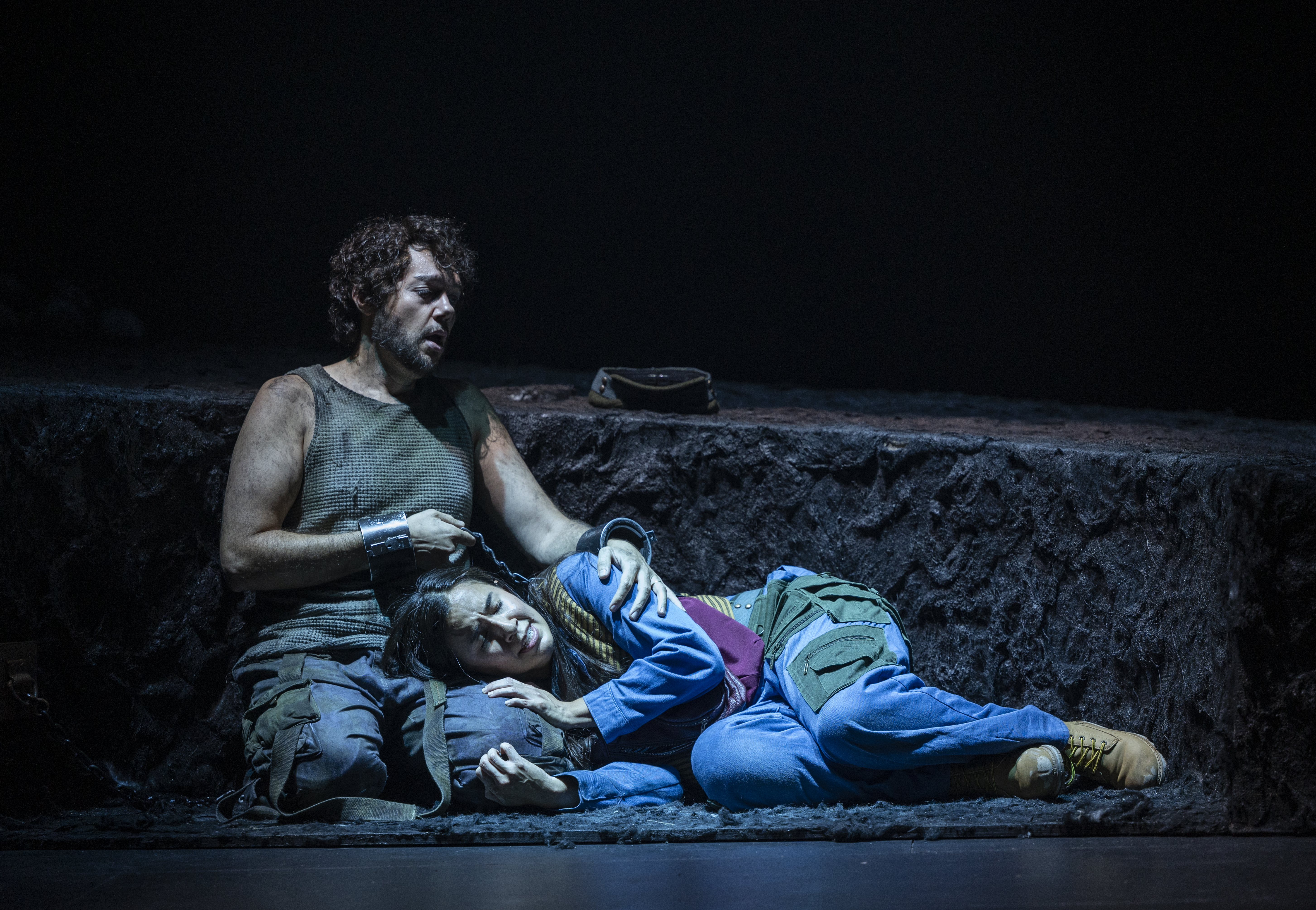
As the overture of Ferdinando Paër’s Leonora filled the historic Studebaker Theater, the audience for Chicago Opera Theater’s opening opera of the season experienced a once-in-a-lifetime opportunity to witness an important – yet sadly overlooked – early 19th century opera. In fact, calling this a once-in-a-lifetime opportunity may understate its rarity. The performances of Leonora that began on October 4th marked the work’s North American premiere. Chicago Opera Theater’s production complements the Lyric Opera’s own run of Beethoven’s Fidelio, not only bringing the story of love and tyranny to life but also showcasing the emotional depth that Paër infused into his music, which stands in contrast to Beethoven’s take on the same story.

Continue reading Chicago Opera Theater’s Leonora shines light on overlooked masterpiece

Tension and drama abound in CSO’s performance of Tchaikovsky’s Fourth and Walton’s Viola Concerto

Antoine Tamestit, Credit: Julien Mignot

Originally published on Seen and Heard International

Having been captivated for years by Tchaikovsky’s Fourth Symphony in F minor, I’ve attended countless performances, each offering their own insights. In my younger years, I found solace in the symphony’s emotionally charged melodies and the struggles against Fate they embodied. Growing older, however, I began to feel that Tchaikovsky’s histrionics sometimes missed their mark in concert. Yet, with the Chicago Symphony season barely a week old, Thursday’s performance, conducted by Nikolaj Szeps-Znaider — a frequent guest at the podium of Orchestra Hall — promised a compelling fresh perspective on this well-trodden classic by juxtaposing it with two seldom-performed works: Ralph Vaughan Williams’ Overture to The Wasps and William Walton’s Viola Concerto.

Continue reading Tension and drama abound in CSO’s performance of Tchaikovsky’s Fourth and Walton’s Viola Concerto

Seattle Opera’s ‘X’ Reflects on Malcolm X’s Legacy, past and present

Photo Credit Philip Newton

X: The Life and Times of Malcolm X was a groundbreaking work. Its 1986 premiere marked a significant moment for both the composer and the opera world. X finally graced the stage of the Metropolitan Opera in late 2023, further – if belatedly – recognizing the opera’s impact. And in early 2024 it was eagerly welcomed by Seattle audiences.

Beyond its artistic merit, X proved to be a powerful social force. Performances in Seattle drew a notably diverse audience, especially for a region of historically lower diversity. This alone suggests that contemporary opera has the potential to go beyond traditional boundaries and engage a wider range of people when tackling relevant and thought-provoking themes. The success of X serves as a beacon of hope, demonstrating that opera can evolve and stay relevant in an ever-changing cultural landscape.

Continue reading Seattle Opera’s ‘X’ Reflects on Malcolm X’s Legacy, past and present

Randall Goosby and Christian Reif shine in Seattle Symphony debut

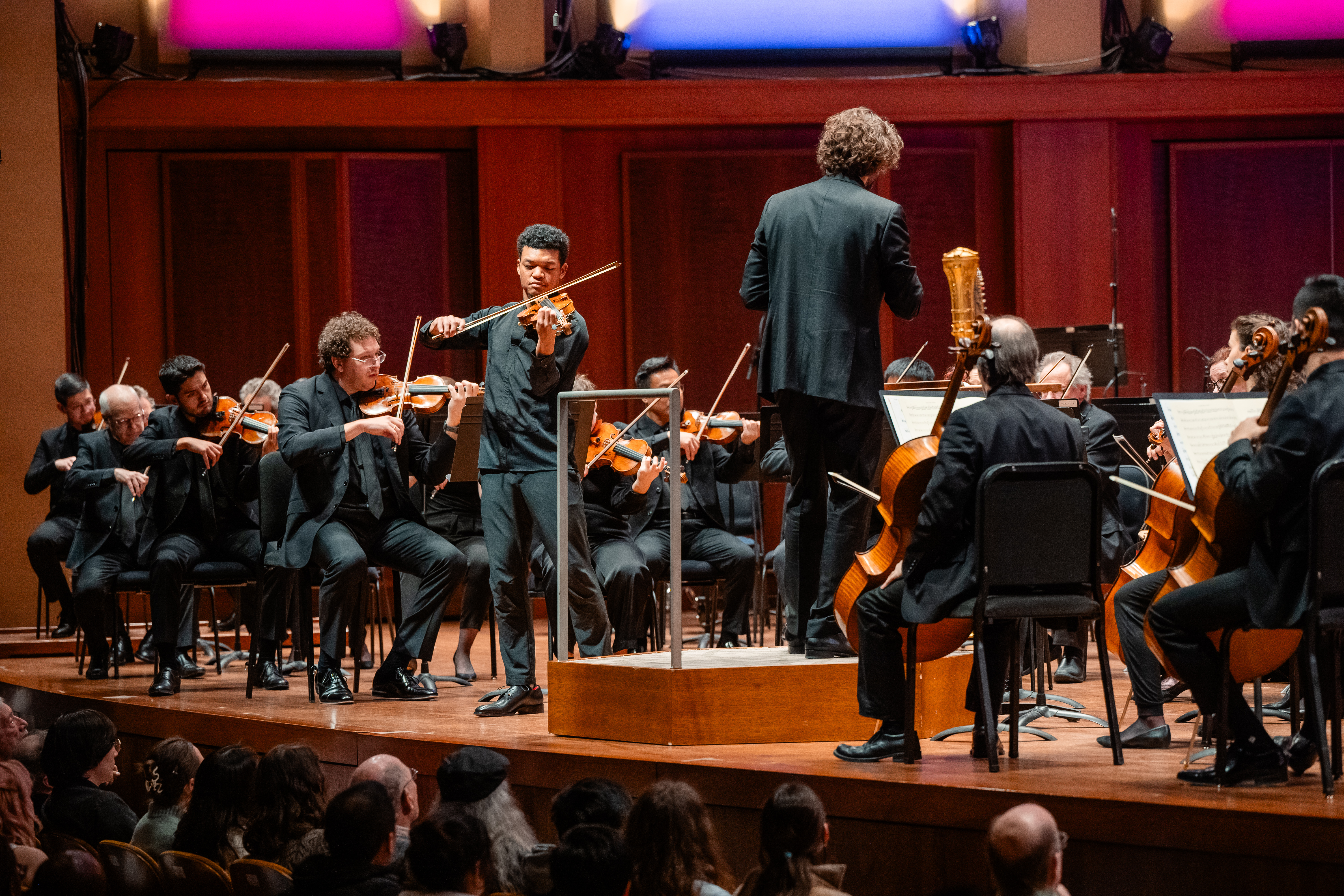
Randall Goosby plays Mozart, Photo Credit: Brandon Patoc

Violinist Randall Goosby, who has been dazzling audiences since his debut with the Jacksonville Symphony at the age of nine, took center stage with the Seattle Symphony for a recent series of concerts.  Goosby’s smooth and warm tone, reminiscent of an earlier era of violin performance – which is not surprising from a former student of Itzhak Perlman’s – has been praised by critics and audiences alike.  His career took a major step forward in 2021 with the release of his first album of Dvorak, Florence Price and other rarities: Roots.  Goosby followed that up in 2023 with a release of Price’s two violin concertos performed with the Philadelphia Orchestra.  

For his Seattle debut, he performed Mozart’s Violin Concerto No. 3 in G Major – sharing the spotlight with another rising star in classical music, guest conductor Christian Reif. After recently taking the helm of the Gävle Symphony, Reif has built up his bona fides in the U.S. this season with engagements in St. Louis, Milwaukee and now Seattle. 

Continue reading Randall Goosby and Christian Reif shine in Seattle Symphony debut

Kahchun Wong’s musical alchemy: Beethoven and Mahler in perfect harmony

Photo Credit: Carlin Ma

Also published at Seen and Heard International

Anticipation crackles in the air, thick like summer lightning before the storm breaks.  A hush descends, settling over an expectant audience.  Every cough or rustling program feels like a desecration. At the podium, conductor Kahchun Wong stands at the edge of creation – shoulders squared, back straight, baton held aloft.  A moment’s pause, pregnant with possibility, his hand dips, slow and deliberate, tracing the first stroke of a masterpiece – Beethoven’s Ninth Symphony.

For sixty minutes Beethoven’s motifs ebb and flow, a struggle between light and shadow, order and chaos.  Wong, a captain at the helm, guides the orchestra through the tempestuous waves.  His every gesture framing the music’s path: joy, anguish, defiance, triumph.  

By the end, Wong succeeded in taking the audience gathered at Benaroya Hall on a journey they would not soon forget.  Wong conducted four performances from December 28th to 31st.  Most years, Seattle’s traditional end-of-December performances of Beethoven’s Ninth are an afterthought for devoted concertgoers.  They’re reliable revenue generators – and who doesn’t like a little uplift and possibility of Beethoven’s Magnum Opus (or one of them) to ring in the New Year?  

Continue reading Kahchun Wong’s musical alchemy: Beethoven and Mahler in perfect harmony