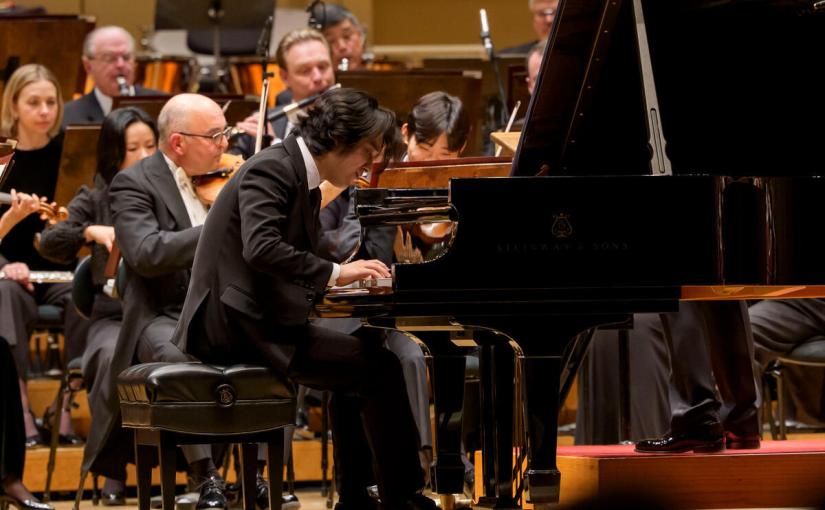
Yunchan Lim finds poetry in Schumann as Mäkelä unleashes Beethoven’s Seventh

Last October, on vacation in Amsterdam, I slipped into the Concertgebouw to hear Klaus Mäkelä lead the Royal Concertgebouw Orchestra. He had not yet assumed his full duties as music director there, but the relationship already felt settled and purposeful. The program paired Andrew Norman’s Play with Richard Strauss’ Don Juan and Rosenkavalier waltzes, a combination that showed both Mäkelä’s ambition and his curiosity. Norman’s sprawling, high-voltage score came off better than expected; the Strauss, lush and heroic by nature, felt less fully shaped. Still, the concert offered a useful snapshot of a conductor in the midst of defining himself, drawn to contrasts and willing to take risks.

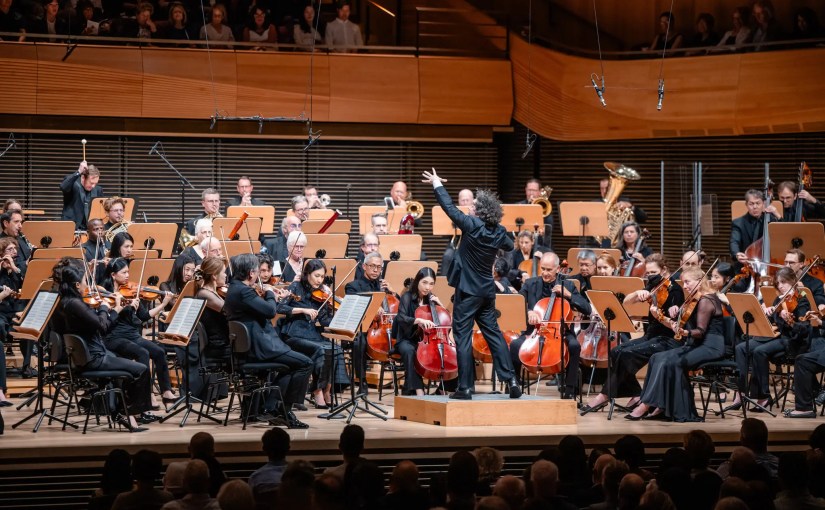
This week, Mäkelä brought a similar philosophy to Orchestra Hall, standing before the Chicago Symphony, another orchestra he is soon to lead. Once again, old and new were placed in close proximity. Schumann and Beethoven formed the spine of the program, flanked by two modern works: Unsuk Chin’s subito con forza and Jörg Widmann’s Con brio – both receiving Chicago Symphony premieres. The effect was not novelty for its own sake but a deliberate attempt to focus Beethoven’s familiar music through a modern lens.

Continue reading Yunchan Lim finds poetry in Schumann as Mäkelä unleashes Beethoven’s Seventh

Classical music’s youth movement grows up, grows wise

Classical music has an uneasy relationship with youth. The very word “classical” suggests age, tradition, dust on velvet seats. Yet the field periodically becomes infatuated with young conductors, as if a twenty-something on the podium might rescue an art form everyone agrees is perpetually dying. The counterargument is equally familiar: conducting requires life experience, the emotional depth that only comes with years. You cannot truly understand Mahler at twenty-five, or so the thinking goes.

I confess to having held both views. As a younger concertgoer, I wanted the gerontocracy swept aside. Now, middle-aged myself, I care less about the conductor’s biography than whether the performance moves me. Still, there’s something instructive about watching how one era’s young lions become the next era’s establishment.

Last September in New York, two evenings illustrated this progression perfectly. At Geffen Hall, Gustavo Dudamel led the New York Philharmonic through Beethoven’s Fifth and John Corigliano’s First. Later that week at the Met, Yannick Nézet-Séguin conducted Mozart’s Don Giovanni.

Continue reading Classical music’s youth movement grows up, grows wise

Fall highlights from Chicago’s 25/26 classical music season

Labor Day has passed, taking with it the last illusions of summer leisure. What follows, as reliably as the shortening days, is the arrival of a new classical music and opera season. Chicago’s 2025–26 offerings promise the usual abundance of repertoire and revivals, along with a handful of events that seem more like occasions than routine schedulings.

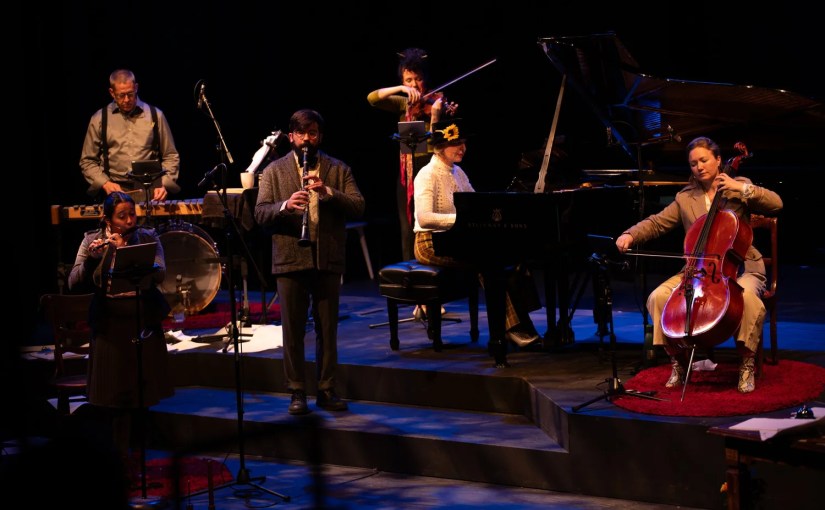
Conrad Tao and Catalyst Quartet, Nova Linea Musica – September 10; December 3

In its second season, Nova Linea Musica continues to make the case that contemporary music deserves a place not at the margins but at the center of Chicago’s concert life. The opening recital belongs to Conrad Tao, a pianist who has built his career less on institutional endorsements than on his own iconoclastic instincts. Tao programs like someone unwilling to pander: a premiere by the Chicago composer Chris Mercer, a piece of his own, and music by Jürg Frey and Ben Nobuto suggest he’s more interested in probing the present than reassuring the past.

Continue reading Fall highlights from Chicago’s 25/26 classical music season

CSO shines under Mäkelä’s baton in trio performance of Brahms, Boulez, Dvořák

Originally published on Seen and Heard International

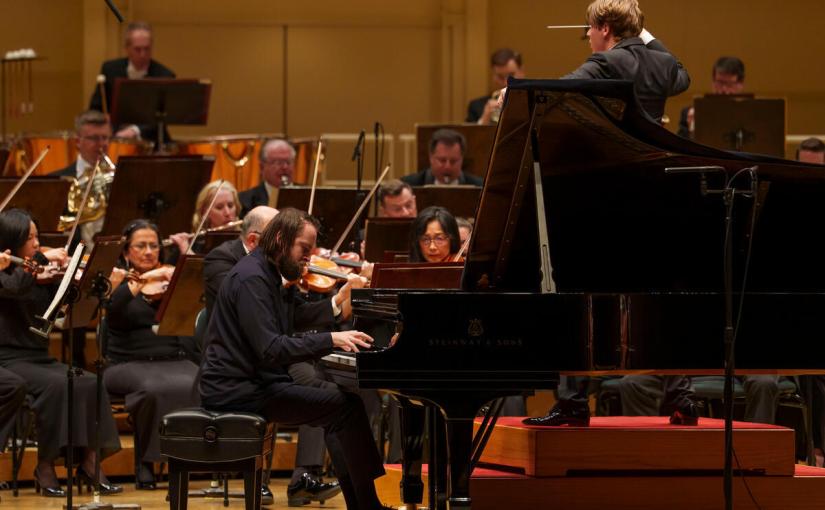
Brahms’ Second Piano Concerto is a meaty work.. It may not be as imposing as Mahler’s Third Symphony, but large enough in musical vision that it places great demand on both soloist and orchestra. Thus, it was an appropriate choice for Klaus Mäkelä’s second week with the Chicago Symphony Orchestra, and an equally fitting farewell for Daniil Trifonov, concluding his season-long role as the CSO’s artist in residence for 2024–25.

Continue reading CSO shines under Mäkelä’s baton in trio performance of Brahms, Boulez, Dvořák

Mahler’s Third Symphony, Mäkelä’s emerging voice, and a thrilled Chicago audience

Mahler’s symphonies are always events. Whether performed in clusters, as they are this year, or—more typically—once or less per season, their size, length, and narrative sweep tend to position them at the beginning or end of something significant. Jaap van Zweden, who is leading the CSO in two Mahler symphonies this season—the Sixth and Seventh—ended his time with both the Dallas Symphony and the New York Philharmonic with the Second. Just last summer, Carlos Kalmar closed his tenure as Director of the Grant Park Music Festival with the Eighth. You get the idea.

This week, Klaus Mäkelä joined the CSO for two weeks of concerts, beginning with a single-work program: Mahler’s mammoth Third Symphony. And they have the feeling of “occasions”: Friday’s performance was nearly sold out, with only a few seats remaining on the main floor.

Continue reading Mahler’s Third Symphony, Mäkelä’s emerging voice, and a thrilled Chicago audience