The election last week has been, to put it mildly, numbing. I made it through about a year of the first Trump administration before the despair set in. It was the Jesuits—thank you, St. Joseph and Seattle University—who helped keep my soul intact, offering me a lifeline of reflection and community. And, surprisingly, Leif Ove Andsnes’ Sibelius recital album also played its part.
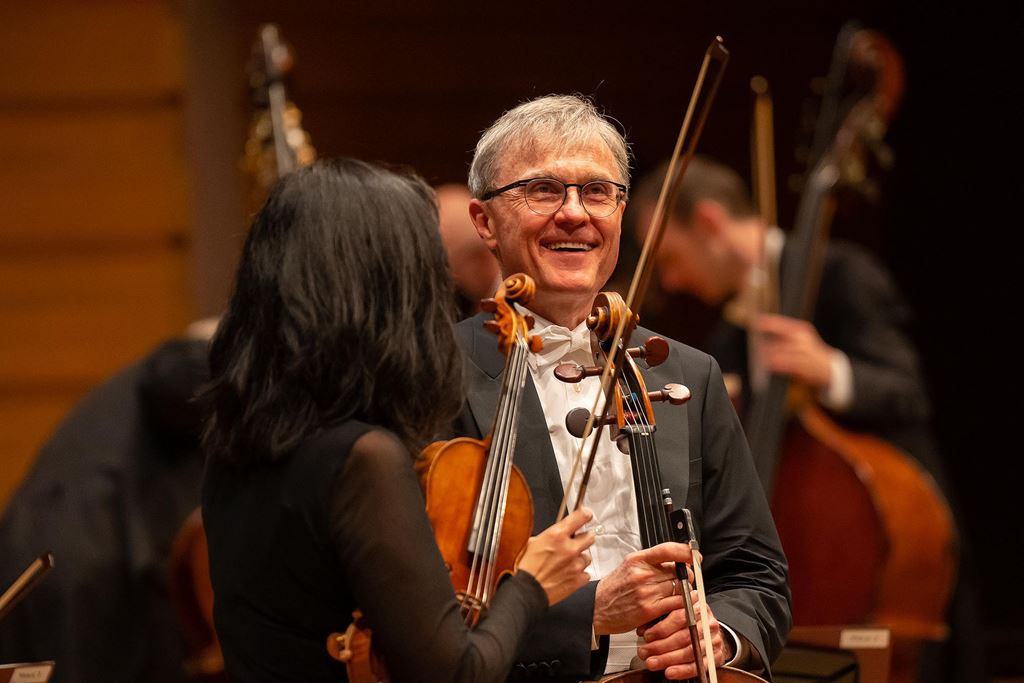
“It was intimidating and it was thrilling. That’s what I remember about my first audition week,” John Sharp says, reflecting on his first moments with the Chicago Symphony Orchestra. “To see Solti conduct and the way the orchestra played—it was really something incredibly exciting.”
Sharp, now the CSO’s principal cellist, began his musical journey far from the concert stage. Growing up in Texas, it was a stroke of luck that led him to the cello. “It was complete chance, really. I raised my hand,” he recalls, thinking back to his early days with the cello. “I was trying all kinds of things and ended up choosing the cello.” That choice propelled him on a professional journey that, starting October 24th, will see him perform Richard Strauss’ Don Quixote with the CSO under the baton of Donald Runnicles.
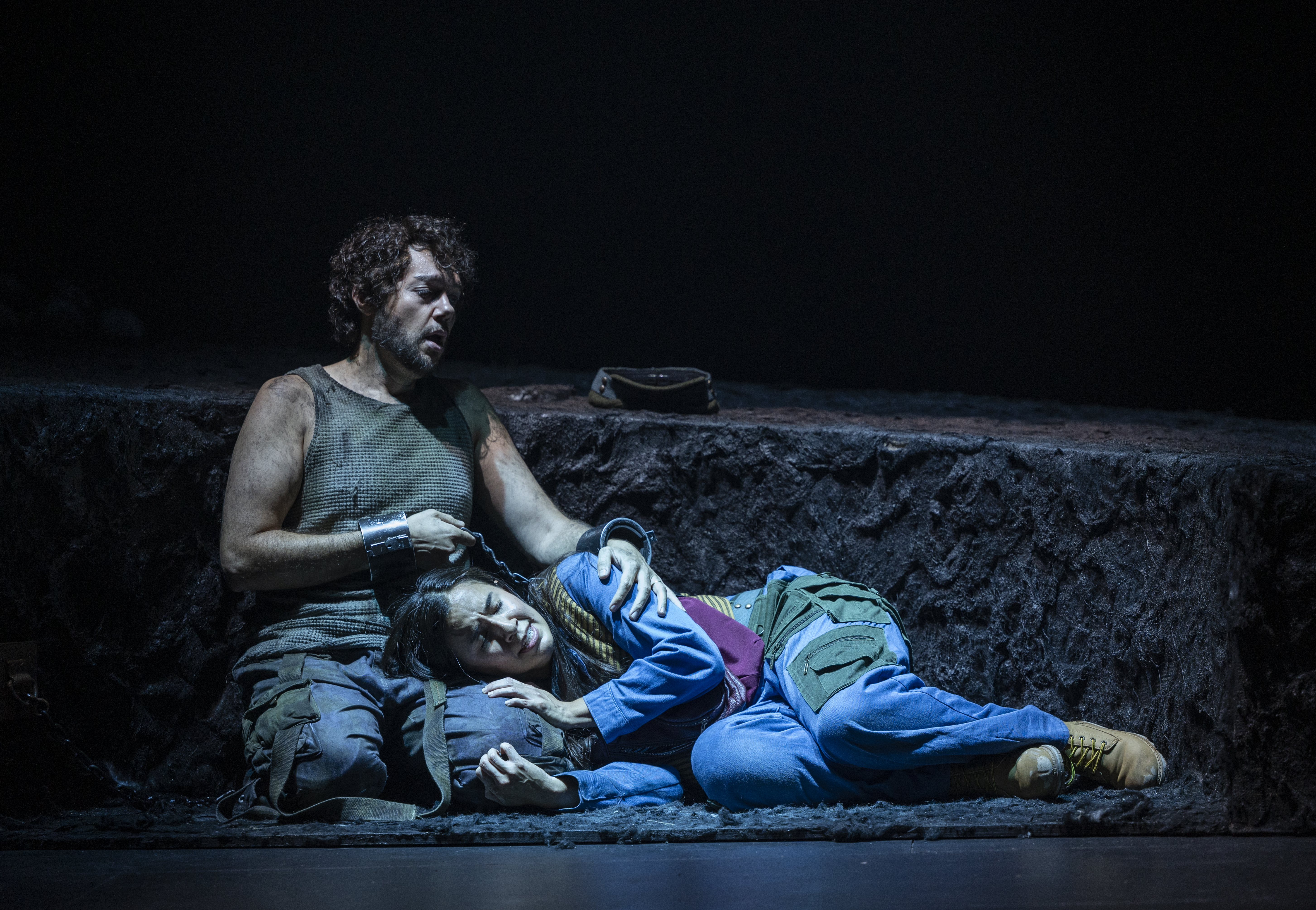
As the overture of Ferdinando Paër’s Leonora filled the historic Studebaker Theater, the audience for Chicago Opera Theater’s opening opera of the season experienced a once-in-a-lifetime opportunity to witness an important – yet sadly overlooked – early 19th century opera. In fact, calling this a once-in-a-lifetime opportunity may understate its rarity. The performances of Leonora that began on October 4th marked the work’s North American premiere. Chicago Opera Theater’s production complements the Lyric Opera’s own run of Beethoven’s Fidelio, not only bringing the story of love and tyranny to life but also showcasing the emotional depth that Paër infused into his music, which stands in contrast to Beethoven’s take on the same story.
Having been captivated for years by Tchaikovsky’s Fourth Symphony in F minor, I’ve attended countless performances, each offering their own insights. In my younger years, I found solace in the symphony’s emotionally charged melodies and the struggles against Fate they embodied. Growing older, however, I began to feel that Tchaikovsky’s histrionics sometimes missed their mark in concert. Yet, with the Chicago Symphony season barely a week old, Thursday’s performance, conducted by Nikolaj Szeps-Znaider — a frequent guest at the podium of Orchestra Hall — promised a compelling fresh perspective on this well-trodden classic by juxtaposing it with two seldom-performed works: Ralph Vaughan Williams’ Overture to The Wasps and William Walton’s Viola Concerto.
X: The Life and Times of Malcolm X was a groundbreaking work. Its 1986 premiere marked a significant moment for both the composer and the opera world. X finally graced the stage of the Metropolitan Opera in late 2023, further – if belatedly – recognizing the opera’s impact. And in early 2024 it was eagerly welcomed by Seattle audiences.
Beyond its artistic merit, X proved to be a powerful social force. Performances in Seattle drew a notably diverse audience, especially for a region of historically lower diversity. This alone suggests that contemporary opera has the potential to go beyond traditional boundaries and engage a wider range of people when tackling relevant and thought-provoking themes. The success of X serves as a beacon of hope, demonstrating that opera can evolve and stay relevant in an ever-changing cultural landscape.
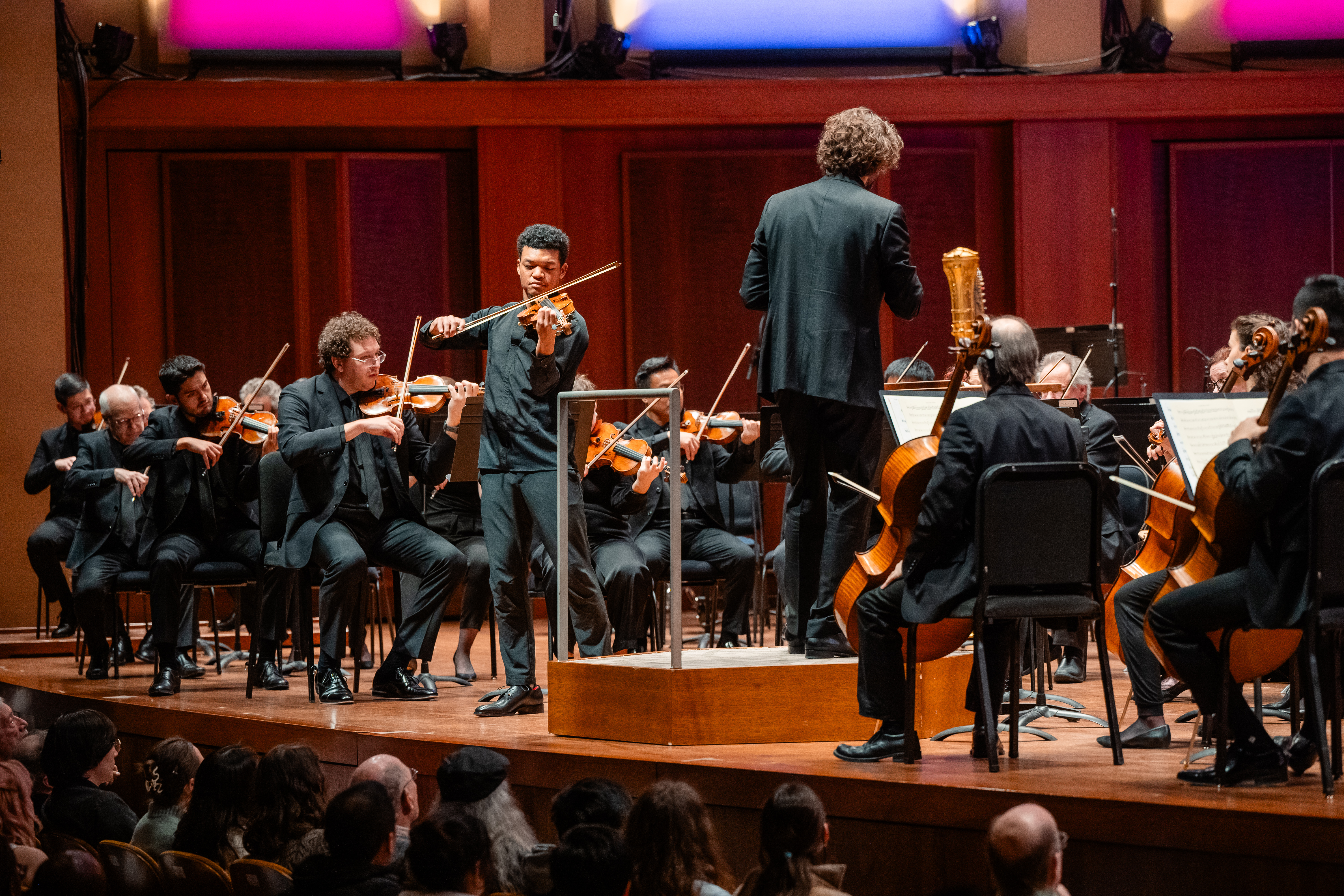
Randall Goosby plays Mozart, Photo Credit: Brandon Patoc
Violinist Randall Goosby, who has been dazzling audiences since his debut with the Jacksonville Symphony at the age of nine, took center stage with the Seattle Symphony for a recent series of concerts. Goosby’s smooth and warm tone, reminiscent of an earlier era of violin performance – which is not surprising from a former student of Itzhak Perlman’s – has been praised by critics and audiences alike. His career took a major step forward in 2021 with the release of his first album of Dvorak, Florence Price and other rarities: Roots. Goosby followed that up in 2023 with a release of Price’s two violin concertos performed with the Philadelphia Orchestra.
For his Seattle debut, he performed Mozart’s Violin Concerto No. 3 in G Major – sharing the spotlight with another rising star in classical music, guest conductor Christian Reif. After recently taking the helm of the Gävle Symphony, Reif has built up his bona fides in the U.S. this season with engagements in St. Louis, Milwaukee and now Seattle.
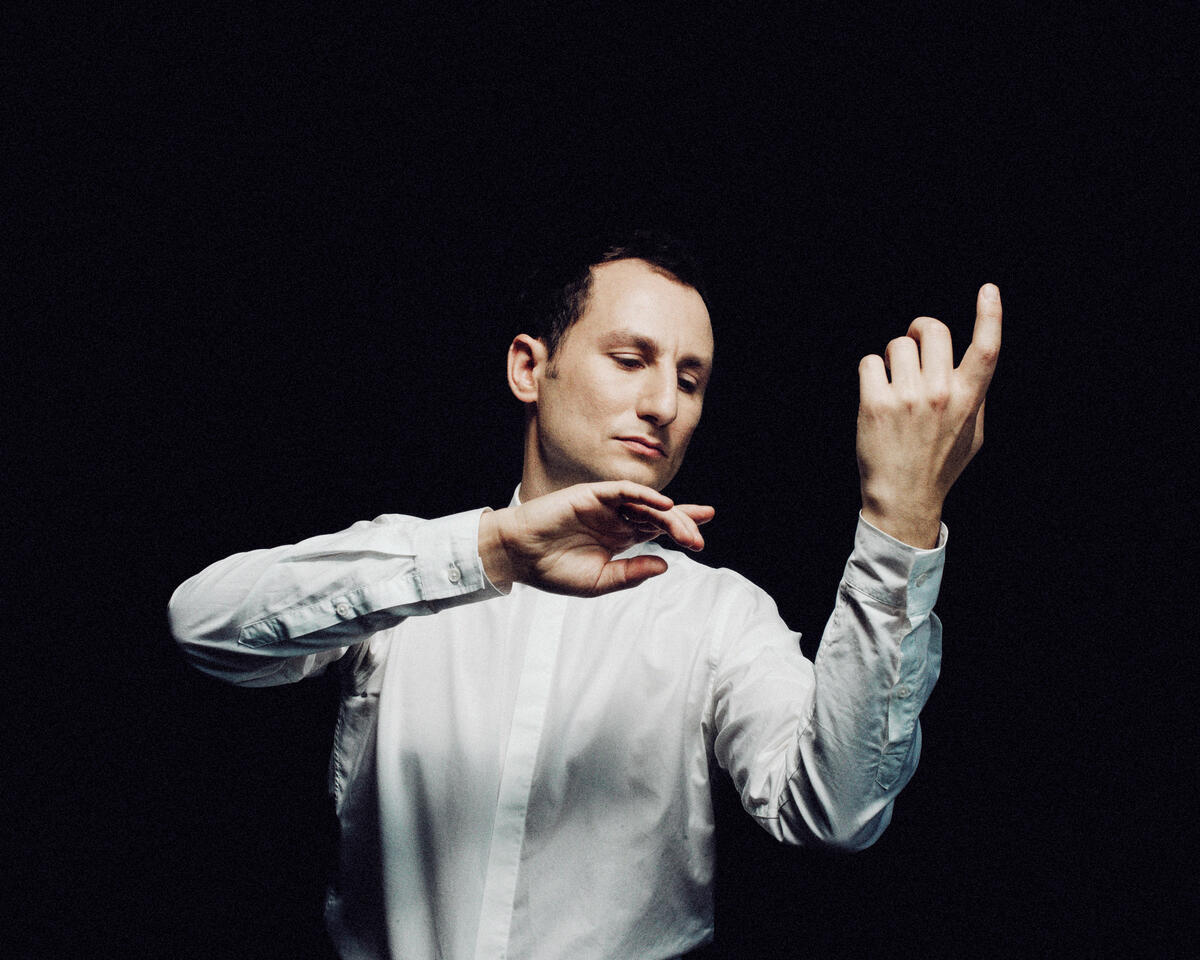
Anticipation crackles in the air, thick like summer lightning before the storm breaks. A hush descends, settling over an expectant audience. Every cough or rustling program feels like a desecration. At the podium, conductor Kahchun Wong stands at the edge of creation – shoulders squared, back straight, baton held aloft. A moment’s pause, pregnant with possibility, his hand dips, slow and deliberate, tracing the first stroke of a masterpiece – Beethoven’s Ninth Symphony.
For sixty minutes Beethoven’s motifs ebb and flow, a struggle between light and shadow, order and chaos. Wong, a captain at the helm, guides the orchestra through the tempestuous waves. His every gesture framing the music’s path: joy, anguish, defiance, triumph.
By the end, Wong succeeded in taking the audience gathered at Benaroya Hall on a journey they would not soon forget. Wong conducted four performances from December 28th to 31st. Most years, Seattle’s traditional end-of-December performances of Beethoven’s Ninth are an afterthought for devoted concertgoers. They’re reliable revenue generators – and who doesn’t like a little uplift and possibility of Beethoven’s Magnum Opus (or one of them) to ring in the New Year?