Mahler’s many voices: how the CSO has shaped and been shaped by his music

Originally published on Seen and Heard International

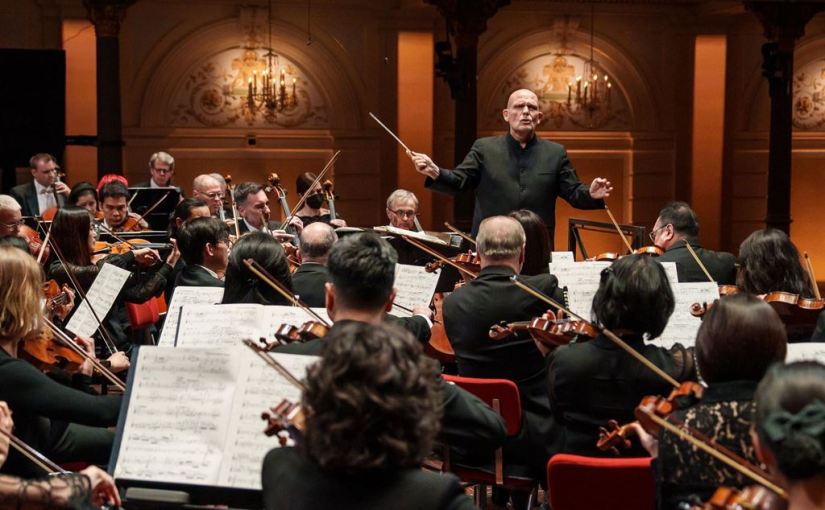
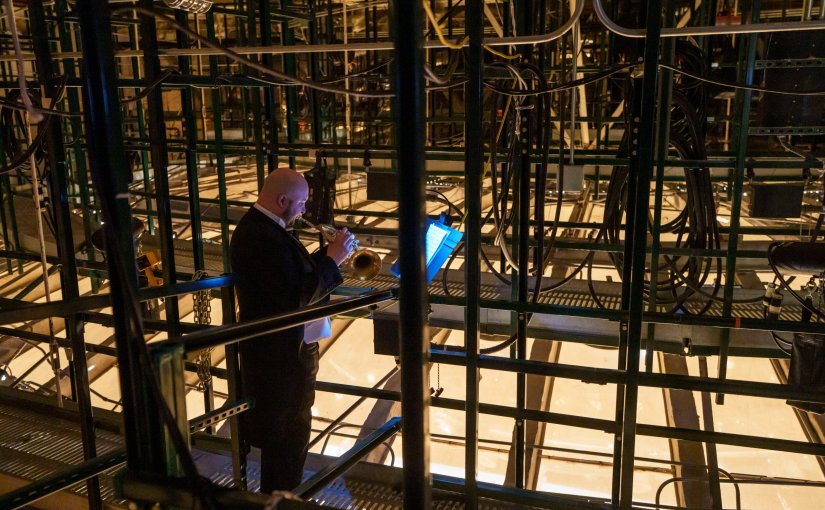
A palpable buzz filled Orchestra Hall on the afternoon of May 9th, as the Chicago Symphony Orchestra, led by Jaap van Zweden, launched into Mahler’s formidable Sixth Symphony. The Friday matinee had drawn a full house, and the performance that unfolded was a gripping study of control, power, and clarity. When the final movement’s infamous hammer blows fell, they did so with unflinching and devastating precision. The performance neither overstated Mahler’s deep ironies nor softened his stark vision.

This concert carried added weight: it marked the CSO’s final performance before their European tour, which included showcasing the Sixth and Seventh Symphonies at the prestigious 2025 Amsterdam Mahler Festival.

Continue reading Mahler’s many voices: how the CSO has shaped and been shaped by his music

Jaap van Zweden returns with a blazing Mahler Sixth

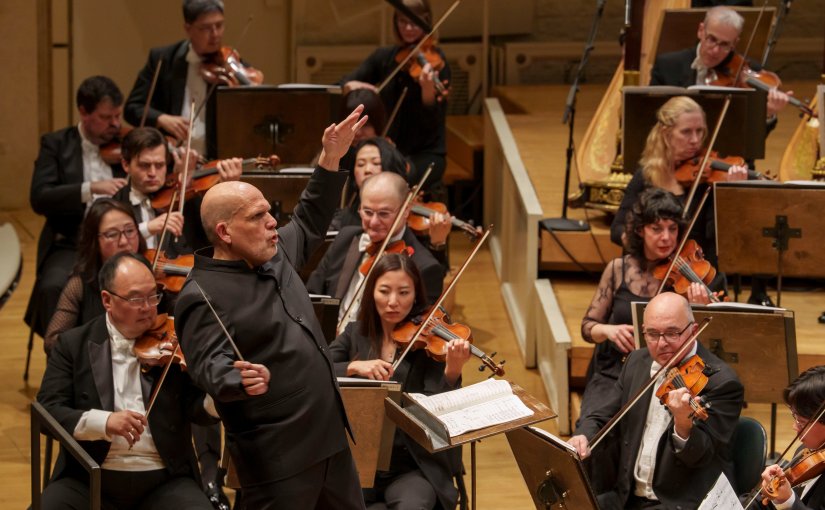
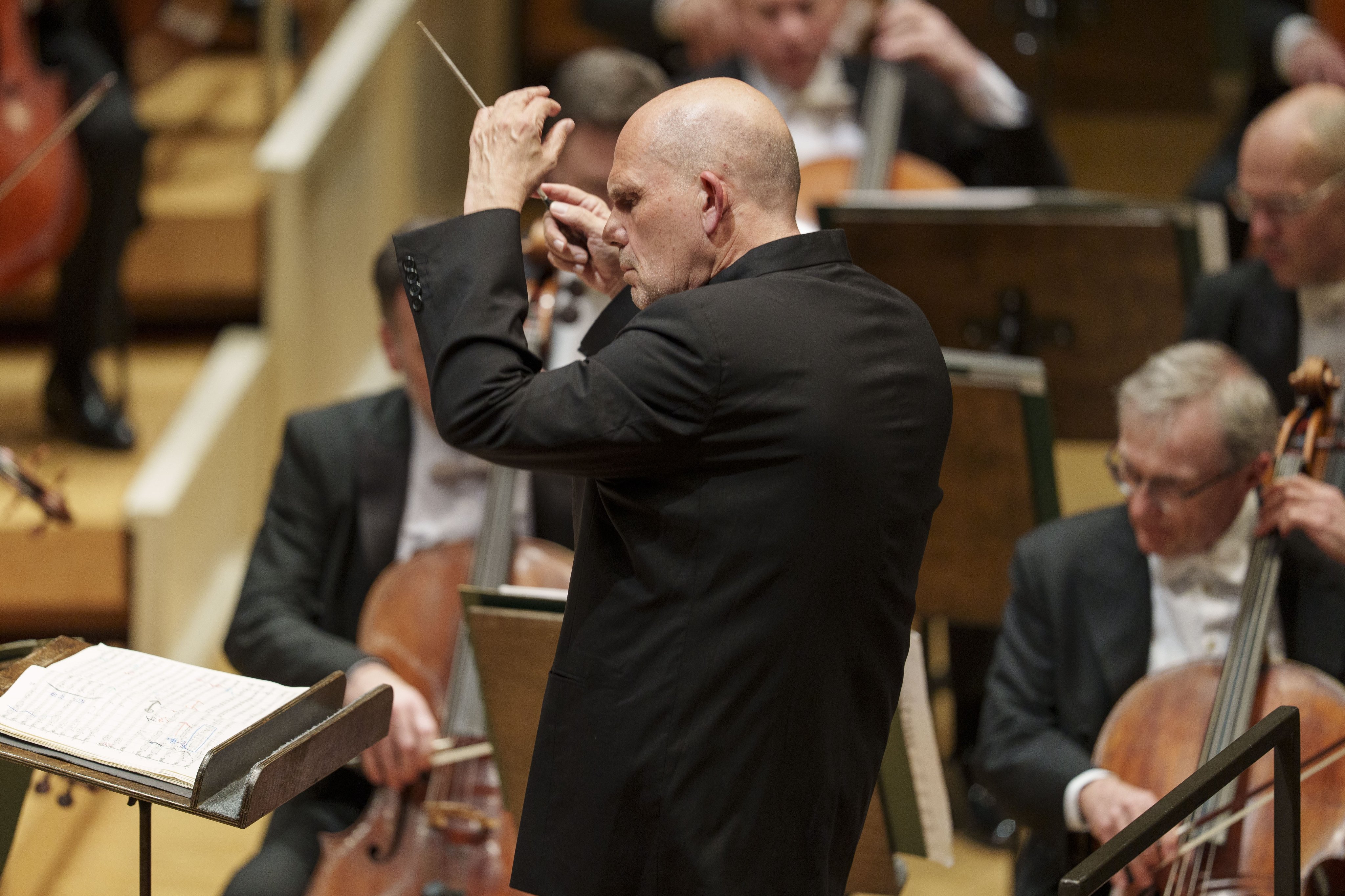
Jaap van Zweden returned to Orchestra Hall this week to lead the Chicago Symphony Orchestra in two commanding performances of Mahler’s Sixth Symphony. Whether by design or coincidence, this symphony has become something of a calling card for the Dutch maestro during his visits to Chicago. Van Zweden was on the podium the last two times the orchestra played the piece, and this time he not only led the work at home, but will also take it on tour to Amsterdam for the third Mahler Festival.

Mahler’s Sixth has long been shrouded in biographical myth—its popularity fed by the image of the composer as a death-haunted artist. This lens, while perhaps oversimplified, finds a potent anchor in the work’s unsettling musical language. The mythology would be nothing without the work’s infamous hammer blows in its final movement—strikes that have become almost synonymous with Mahler’s fatalism.

Continue reading Jaap van Zweden returns with a blazing Mahler Sixth

CSO shines under Mäkelä’s baton in trio performance of Brahms, Boulez, Dvořák

Originally published on Seen and Heard International

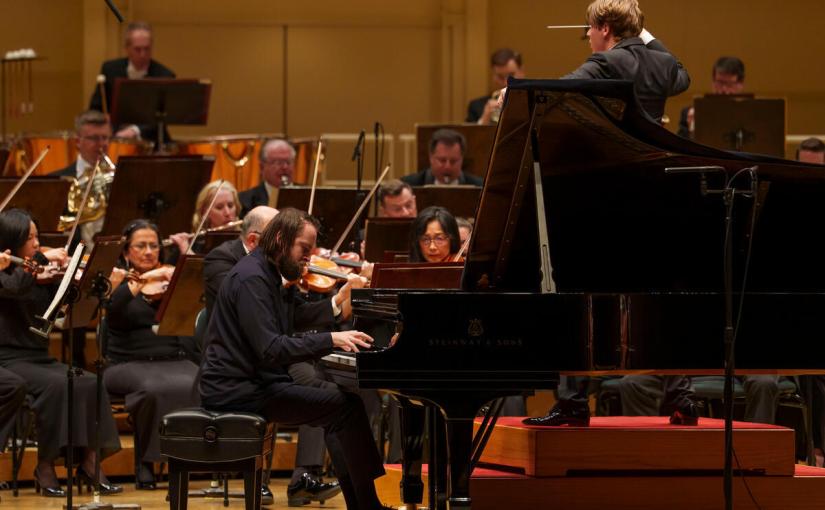
Brahms’ Second Piano Concerto is a meaty work.. It may not be as imposing as Mahler’s Third Symphony, but large enough in musical vision that it places great demand on both soloist and orchestra. Thus, it was an appropriate choice for Klaus Mäkelä’s second week with the Chicago Symphony Orchestra, and an equally fitting farewell for Daniil Trifonov, concluding his season-long role as the CSO’s artist in residence for 2024–25.

Continue reading CSO shines under Mäkelä’s baton in trio performance of Brahms, Boulez, Dvořák

Mahler’s Third Symphony, Mäkelä’s emerging voice, and a thrilled Chicago audience

Mahler’s symphonies are always events. Whether performed in clusters, as they are this year, or—more typically—once or less per season, their size, length, and narrative sweep tend to position them at the beginning or end of something significant. Jaap van Zweden, who is leading the CSO in two Mahler symphonies this season—the Sixth and Seventh—ended his time with both the Dallas Symphony and the New York Philharmonic with the Second. Just last summer, Carlos Kalmar closed his tenure as Director of the Grant Park Music Festival with the Eighth. You get the idea.

This week, Klaus Mäkelä joined the CSO for two weeks of concerts, beginning with a single-work program: Mahler’s mammoth Third Symphony. And they have the feeling of “occasions”: Friday’s performance was nearly sold out, with only a few seats remaining on the main floor.

Continue reading Mahler’s Third Symphony, Mäkelä’s emerging voice, and a thrilled Chicago audience

CSO’s Mahler survey begins with a thrilling Seventh Symphony

Photo Credit: Todd Rosenberg

I keep finding my way back to performances of Mahler’s Seventh Symphony. It started in 2018, with a thrilling rendition by Carlos Kalmar and the Oregon Symphony. That performance roared. No, the Oregon Symphony isn’t a world-class orchestra, and subtlety wasn’t its strength. But they more than made up for it with heart and visible joy, especially as Kalmar and his players surged into the final bars of the fifth movement.

Last night, Jaap van Zweden was in town to open a mini-Mahler festival in Chicago. Over the next month, the Chicago Symphony Orchestra will perform three Mahler symphonies—the Seventh, Third, and Sixth—in a series of concerts. Van Zweden is leading the Seventh and Sixth, while Klaus Mäkelä, the CSO’s music director designate, will take the podium for the Third. Afterward, the orchestra heads out on a spring European tour featuring the Sixth and Seventh, including a stop at the third Mahler Festival in Amsterdam.

Continue reading CSO’s Mahler survey begins with a thrilling Seventh Symphony

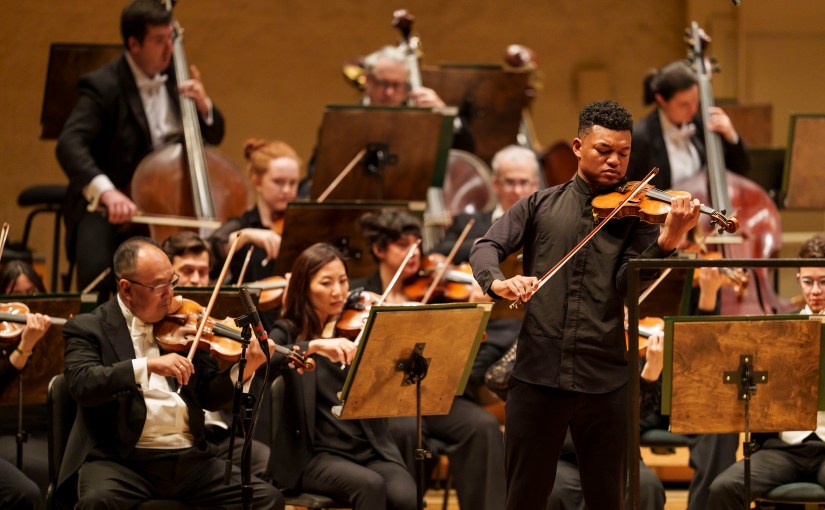
Christian Tetzlaff dazzles in Sibelius Violin Concerto; Afkham and the CSO bring Schoenberg to life

Originally published on Seen and Heard International

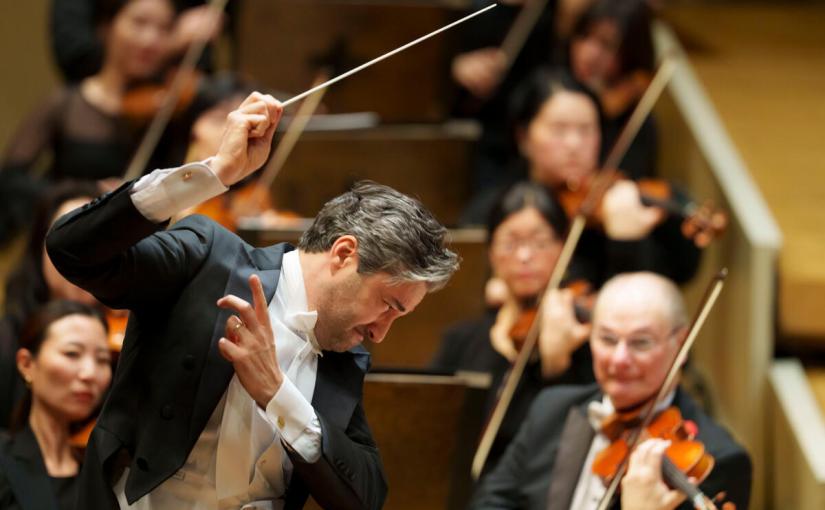
Violinist Christian Tetzlaff and guest conductor David Afkham headlined the Chicago Symphony Orchestra’s concert series this weekend. The German duo presented a program of works by Richard Wagner, Jean Sibelius, and Arnold Schoenberg – three selections that highlight the shifting landscape of classical music at the turn of the 20th century.

Composed just a year apart, Sibelius’ Violin Concerto and Schoenberg’s Pelleas und Melisande reflect two distinct responses to the influence of Richard Wagner. A young Sibelius was deeply affected by Wagner’s music, particularly after experiencing Parsifal at Bayreuth. Although Sibelius initially attempted operatic composition, he shifted to orchestral works and initially retained traces of Wagner’s harmonic language and orchestration. But gradually, he developed a flourish-lite style focused on organic development and austere textures. Schoenberg, too, revered Wagner, particularly Tristan und Isolde. Pelleas und Melisande embodies both the height of late Romanticism and a pivot toward the composer’s more radical innovations. Schoenberg roots the piece with Wagnerian leitmotifs and expansive orchestration. Yet the work’s complex harmonic language hints at dissonances that would later become a staple of the composer’s music.

Continue reading Christian Tetzlaff dazzles in Sibelius Violin Concerto; Afkham and the CSO bring Schoenberg to life

“Let the door be shut and bolted”

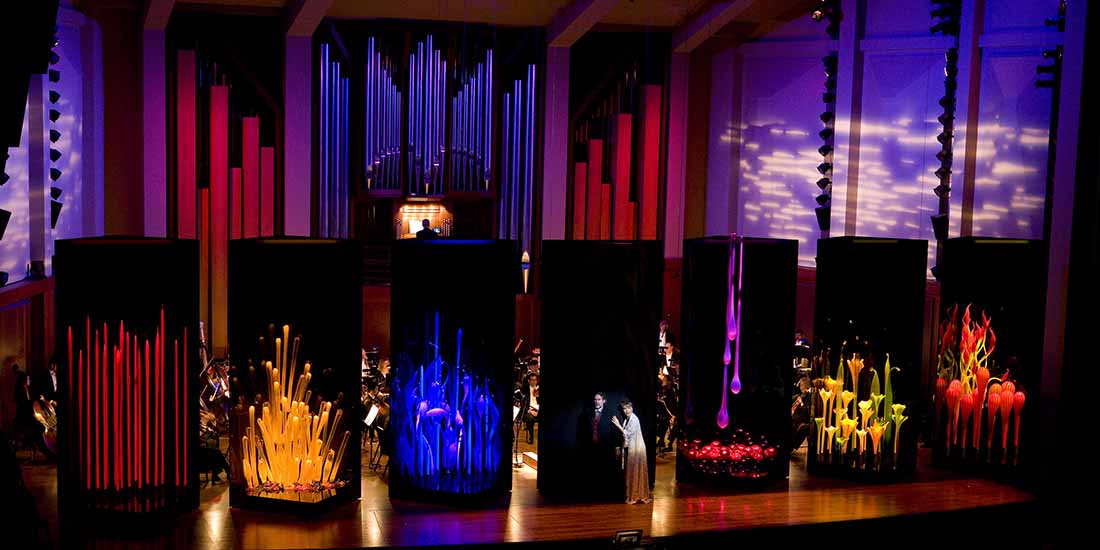
Photo Credit: Chihuly Studios, Terry Rishel 

Esa-Pekka Salonen joins the CSO for a two-week residency focusing on Bartók. In week one, Salonen pairs the Concerto for Orchestra with his own Sinfonia Concertante for organ and orchestra, while in week two Bluebeard’s Castle shares the stage with Beethoven’s Second Symphony. As of this afternoon, there are still ample tickets available for Bluebeard’s Castle, and anyone who can go should.

It is one of the spookier pieces of music out there, and Bartók’s vocal writing is excruciatingly demanding. I’ve seen it staged on a double bill with Schoenberg’s expressionist masterpiece Erwartung. But, it was my first experience with the opera, a semi-staged concert performance in Seattle that is firmly planted in my memory. Gerard Schwarz pulled out all of the stops to make it a memorable evening. Schwarz’s production was unforgettable, partially thanks to Charles Simonyi’s support, which enabled the creation of glass sculptures by Dale Chihuly representing six of the seven doors opened by Judith and Duke Bluebeard. This striking production has since traveled to other venues, undoubtedly thrilling audiences.

While Chicago’s performance won’t feature Chihuly’s vibrant sculptures, it boasts its own impressive draw: Esa-Pekka Salonen conducting, alongside soloists Ekaterina Gubanova and Christian Van Horn.

Palindromic beauty at the CSO with Vilde Frang and Hannu Lintu

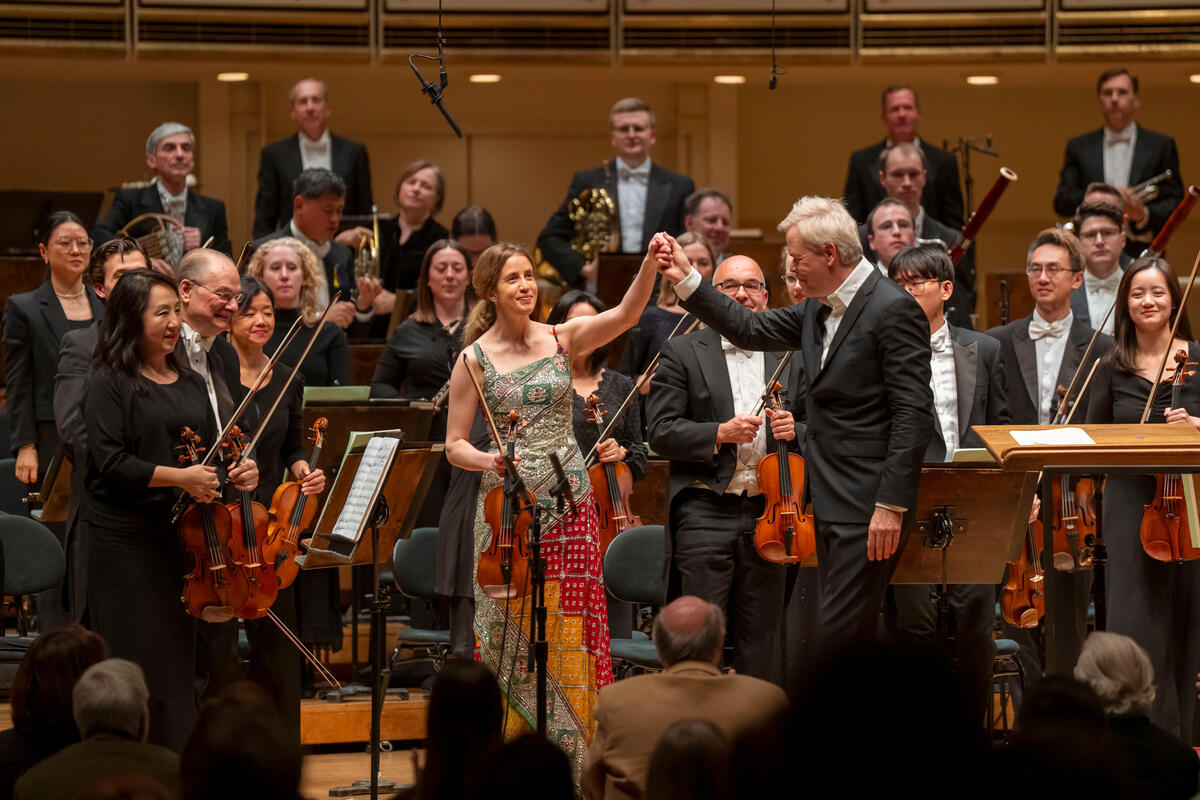
Conductor Hannu Lintu congratulates soloist Vilde Frang following her CSO debut performance of Stravinsky’s Violin Concerto with the Chicago Symphony Orchestra. Photo Credit: Todd Rosenberg

Originally published at Seen and Heard International

Chicago’s first snowfall of the season also marked the return of Hannu Lintu to Orchestra Hall, though an afternoon rise in temperature meant that, by the time the maestro ascended the podium, snow had transitioned to rain and a steady melt. The meteorological pivot in some ways mirrored the contrasts the Finnish conductor was bringing to the Chicago Symphony Orchestra. 

On his earlier visit to Chicago, Lintu balanced the familiar and the unexpected, pairing well-known crowd-pleasers by Shostakovich and Tchaikovsky with seldom-performed works by Saariaho and Mussorgsky. For this current engagement, Lintu—joined by the Norwegian violinist Vilde Frang, a rising star with an already formidable reputation—brought a program just as intriguing, with contrasts between pieces that exuded entertaining push-and-pull tension. 

Continue reading Palindromic beauty at the CSO with Vilde Frang and Hannu Lintu