Mäkelä’s heroic survey in Chicago

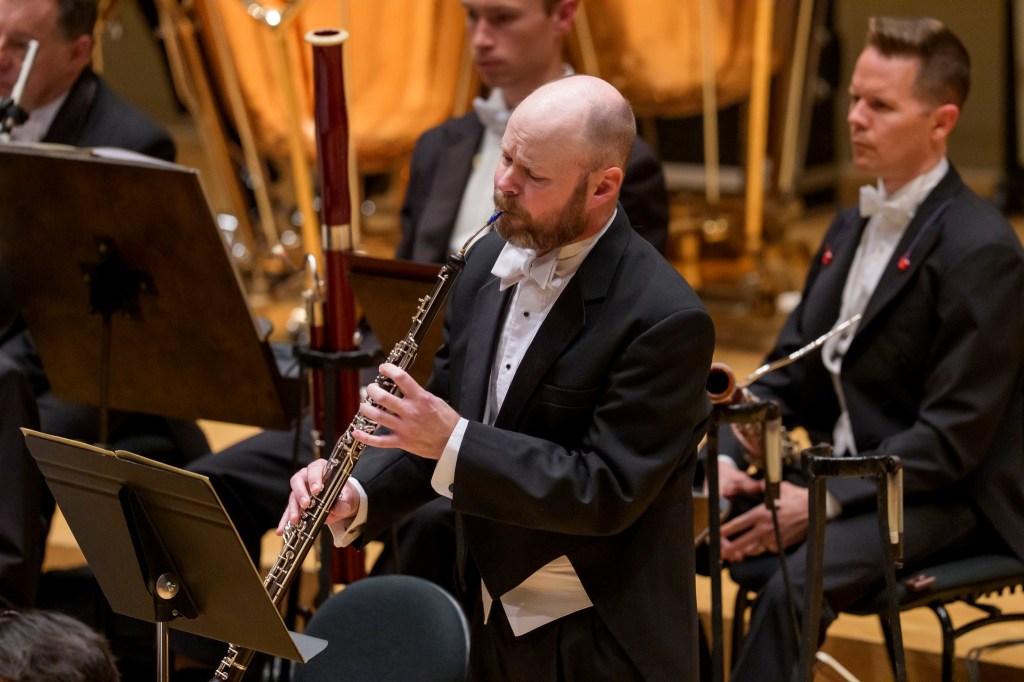
Photo Credit: Todd Rosenberg

Klaus Mäkelä is back in Chicago for one program before taking the orchestra on a week-long tour of the Northeast. A performance at Carnegie Hall—featuring the same program he conducted this weekend, a survey of two heroic depictions in Strauss’s Ein Heldenleben and Sibelius’s Lemminkäinen Suite—anchors the tour.

This isn’t Mäkelä’s first journey to Carnegie Hall with one of his orchestras. He has previously brought both the Orchestre de Paris and the Royal Concertgebouw Orchestra to the storied venue, receiving mixed but always passionate critical responses. Hopefully this next foray into New York’s unforgiving critical landscape fares better.

Based on Friday evening’s performance, it should. Both works chosen by the Finnish conductor hold deep historical connections to the Chicago Symphony. Theodore Thomas led the U.S. premieres of Strauss’s Ein Heldenleben, and both “The Swan of Tuonela” and “Lemminkäinen’s Return” from Sibelius’s suite. And a few years ago, Mäkelä even programmed “The Swan” in one of his early guest appearances here. These scores clearly suit him.

Continue reading Mäkelä’s heroic survey in Chicago
Handel Week Festival opens in Oak Park with concerti and a Roman rarity

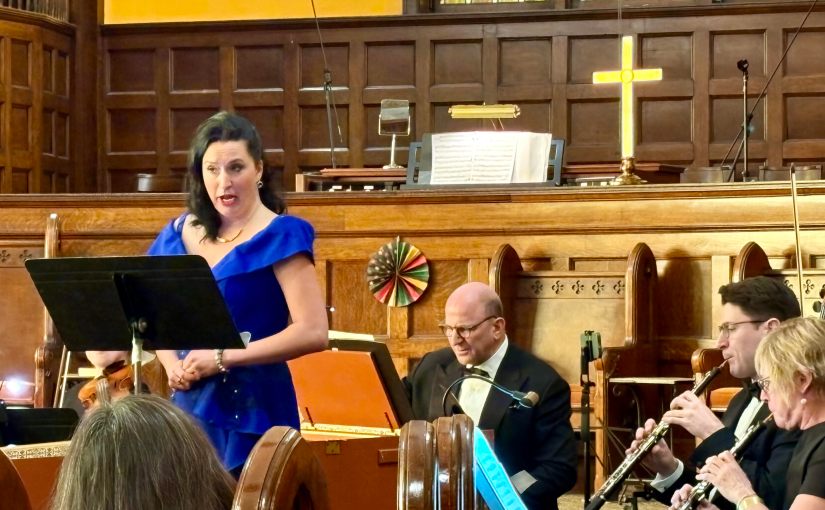
Each February for the past 27 years, Dennis Northway has convened musicians to perform the work of George Frideric Handel in Oak Park. Not the Messiah that appears with metronomic regularity each Christmas, nor even the Water Music or Royal Fireworks that surface on classical radio, but the unfamiliar catalog that gradually receded from public memory after Handel’s death. Even after relocating from Chicagoland to the Pacific Northwest, Northway has returned annually to sustain this unlikely tradition. 

That there is a Handel Week Festival at all feels something like a miracle. The composer who once dominated European musical life now occupies a peculiar position: universally recognized for a single oratorio, largely unknown for everything else. Yet here, in the sanctuary of Pilgrim Congregational Church, the thread holds. 

Continue reading Handel Week Festival opens in Oak Park with concerti and a Roman rarity

Valentine’s Day weekend brings enchanting, intimate Cendrillon to the CheckOut

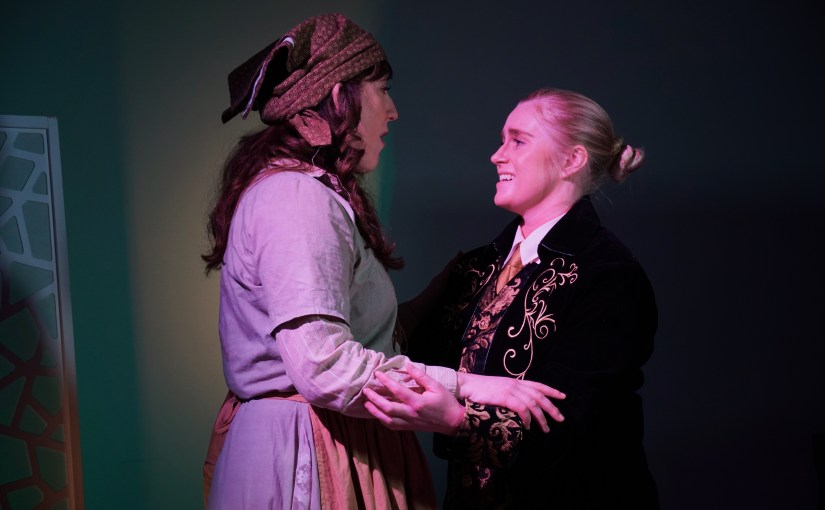
On Valentine’s Day weekend, Chicago City Opera brought Jules Massenet’s Cendrillon (Cinderella) to the CheckOut in Lakeview, proving that you don’t need a proscenium arch to create magic. The CheckOut is a former 7-Eleven on North Clark Street, now revived by Access Contemporary Music and composer Seth Boustead as a venue for chamber music and new music events.

The experiment succeeded. The February 14 performance was nearly sold out, drawing a varied crowd of younger and older listeners. As the venue’s first opera, it felt like a natural extension of salon culture: exclusive in its scale yet welcoming and unfussy.

Continue reading Valentine’s Day weekend brings enchanting, intimate Cendrillon to the CheckOut

New and upcoming

Joyce DiDonato and Time for Three perform Emily — No Prisoner Be this week in Chicago. Kevin Puts composed this evening-length song cycle specifically for these artists, weaving together 26 movements that create a continuous, immersive journey through Emily Dickinson’s poetry. With Puts’ prior collaborations with both DiDonato and Time for Three, this promises to be something truly special. Ticket and concert information.

Oak Park’s Handel Week Festival kicks off this Sunday, February 15, at Pilgrim Congregational Church, just a few blocks from my house. I had no idea this festival existed until recently, and I’m genuinely surprised to find it practically in my backyard. Not sure what to expect from a mid-February dose of baroque music, but I’m counting on it to chase away the winter blues.

The same weekend Chicago City Opera presents Massenet’s Cendrillon at The Checkout. It’s a gem that doesn’t get performed as often as La Bohème or Carmen. Its melodies are accessible and moving, the story is timeless, and it’s a genuine treat for anyone who loves beautiful music.

At the end of the month, Klaus Mäkelä returns for what promises to be a concert you won’t want to miss. Mäkelä’s program pairs Sibelius’s Lemminkäinen Legends with Strauss’s Ein Heldenleben. His approach to Sibelius has divided critics, but having a music director genuinely invested in the Finnish master bodes well for Chicago. Just as Muti shaped the CSO’s lyrical sensibility, Mäkelä’s understanding of Sibelius may bring new shading to the orchestra’s collective sound.

Seattle Opera has announced its 2026/27 season. Staying true to its recent tradition of one concert performance per season, the company will present Léo Delibes’s Lakmé in concert. They’ll also stage Gabriela Lena Frank’s El último sueño de Frida y Diego, an opera that Lyric Opera of Chicago presents this spring. Seattle Opera’s latest concert performance was Strauss’s Daphne, reviewed by Lisa Hirsch here and Thomas May here. Meanwhile, San Francisco Opera’s 2026/27 season brings Verdi’s Simon Boccanegra and Wagner’s Das Rheingold, the latter launching a complete Ring cycle that culminates in 2028.

Hide the moon! Hide the stars!

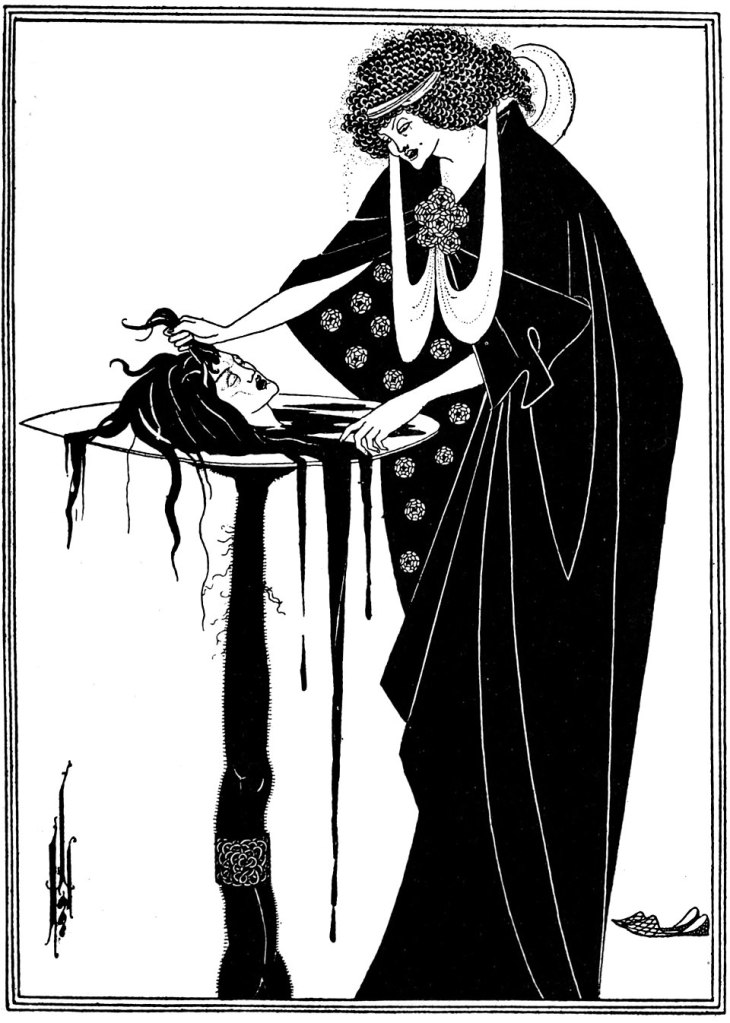
Illustration by Aubrey Beardsley for the first English edition of the play

After finally seeing Lyric Opera’s current Salome, I’m convinced more than ever that this isn’t just a fine opera, it’s riveting theater.

For this run, Lyric is using David McVicar’s darkly disturbing 2008 production for the Royal Opera House, and it works. The upstairs/downstairs staging pits Herod’s decadent elite against quarreling religious factions in a way that percolates with tension. My only quibble? “The Dance of the Seven Veils” felt a touch too abstract. But everywhere else—especially in Salome’s mad, final scene—McVicar’s vision hit its mark.

Continue reading Hide the moon! Hide the stars!

Joseph Horowitz on the Kennedy Center shutdown

The classical music historian, writer and culture critic Joseph Horowitz shared a bitting summary from Jimmy Kimmel on what the announced shutdown of the Kennedy Center means. There are numerous choice bits in the piece, including this one:

It’s the John F. Kennedy Memorial Center for the Performing Arts. It’s part memorial, part national cultural institution, an American symbol that was designed to be bigger than one party, one mood, one ego. And that’s why people reacted so sharply when Trump started calling it the “Trump Kennedy Center.” Not because Americans are allergic to construction. Because Americans can smell a desecration when it shows up wearing gold letters.


More from Horowitz (and Kenneth Woods).