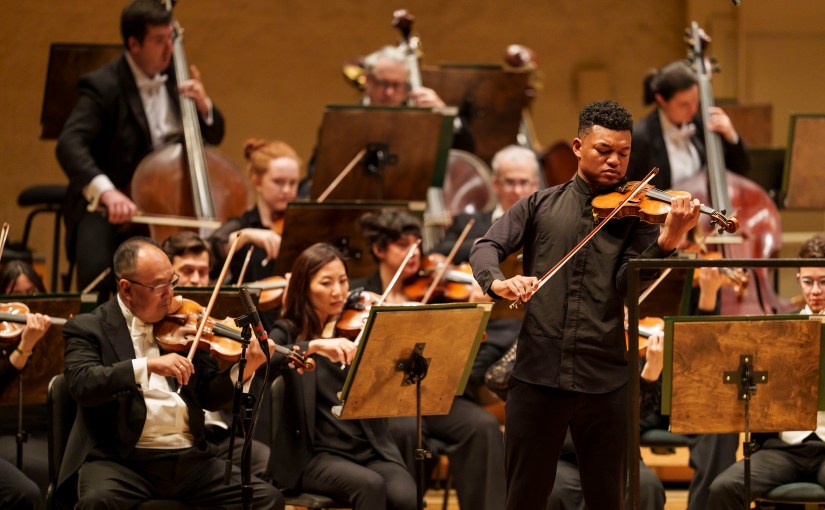
Randall Goosby honors Florence Price in a heartfelt Chicago Symphony performance

Originally published at Seen and Heard International

The life of Florence Price is both remarkable and uniquely American—one of early triumph, quiet persistence, eventual rediscovery and a posthumous, lasting fame.

Born in Arkansas and educated at the New England Conservatory of Music, as a young woman Price moved to Chicago in the 1920s, part of the Great Migration that brought thousands of Black Americans to northern cities in search of opportunity and reprieve from racist violence. In 1933, during Chicago’s World’s Fair, her Symphony No. 1 was premiered by the Chicago Symphony Orchestra, marking the first time a major American orchestra had performed a work by a Black female composer. It was a milestone performance that seemed to herald a long and promising career.

Instead, it became a high-water mark. Despite the significance of the premiere, Price’s career plateaued and then faded into relative obscurity. During her lifetime and for decades after her death in 1953, she remained largely absent from concert halls.

Continue reading Randall Goosby honors Florence Price in a heartfelt Chicago Symphony performance
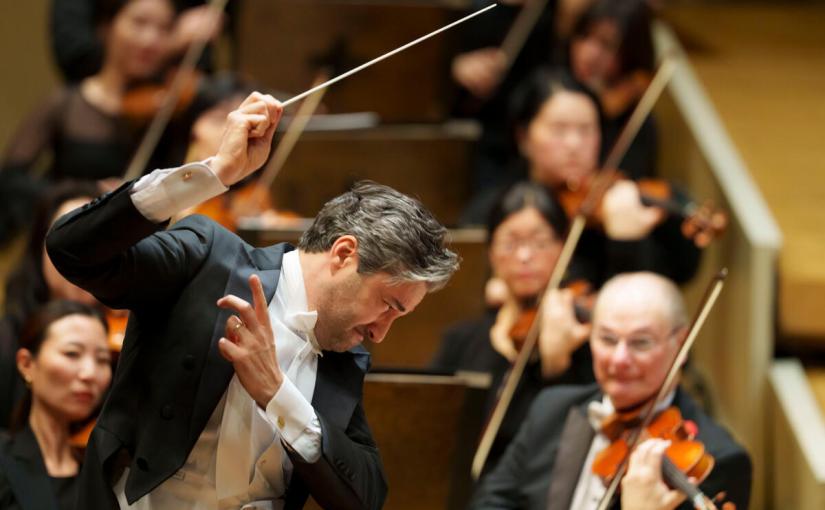
Christian Tetzlaff dazzles in Sibelius Violin Concerto; Afkham and the CSO bring Schoenberg to life

Originally published on Seen and Heard International

Violinist Christian Tetzlaff and guest conductor David Afkham headlined the Chicago Symphony Orchestra’s concert series this weekend. The German duo presented a program of works by Richard Wagner, Jean Sibelius, and Arnold Schoenberg – three selections that highlight the shifting landscape of classical music at the turn of the 20th century.

Composed just a year apart, Sibelius’ Violin Concerto and Schoenberg’s Pelleas und Melisande reflect two distinct responses to the influence of Richard Wagner. A young Sibelius was deeply affected by Wagner’s music, particularly after experiencing Parsifal at Bayreuth. Although Sibelius initially attempted operatic composition, he shifted to orchestral works and initially retained traces of Wagner’s harmonic language and orchestration. But gradually, he developed a flourish-lite style focused on organic development and austere textures. Schoenberg, too, revered Wagner, particularly Tristan und Isolde. Pelleas und Melisande embodies both the height of late Romanticism and a pivot toward the composer’s more radical innovations. Schoenberg roots the piece with Wagnerian leitmotifs and expansive orchestration. Yet the work’s complex harmonic language hints at dissonances that would later become a staple of the composer’s music.

Continue reading Christian Tetzlaff dazzles in Sibelius Violin Concerto; Afkham and the CSO bring Schoenberg to life