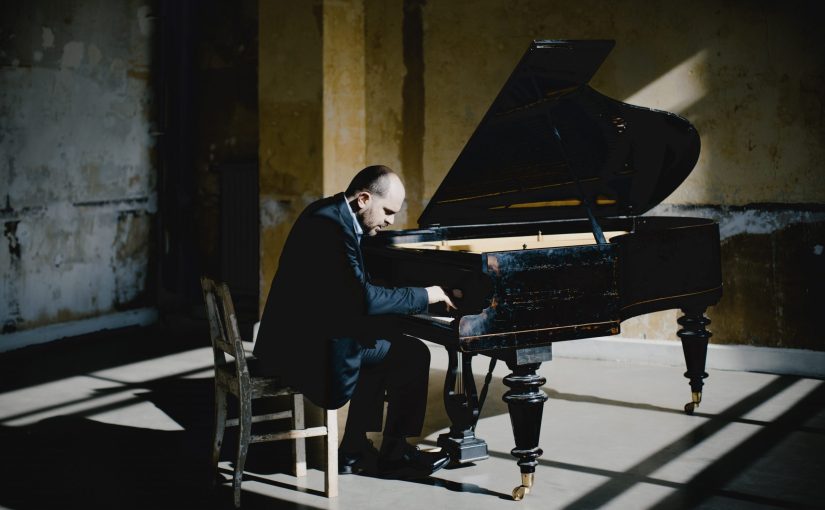
Moments before Kirill Gerstein took the stage Sunday afternoon at Orchestra Hall, the sounds of the city were not those of a typical pre-concert bustle. Along Michigan Avenue, marchers were demanding accountability from ICE for the killing of Alex Pretti in Minneapolis. I’ve seen plenty of protests over the years; I remember Occupy Wall Street supporters taking over a community college campus near my Seattle apartment in 2011, and the summer of 2020 when the Capitol Hill Occupied Protest (CHOP) was established in the heart of Seattle’s Capitol Hill neighborhood in the wake of George Floyd’s murder.
Yet, I cannot recall a moment where the two disparate parts of my life — politics and music — came so close to intermingling. For a brief time, I questioned whether I should abandon Gerstein’s recital to join the march for the justice and fair treatment that remains so elusive in 2026.
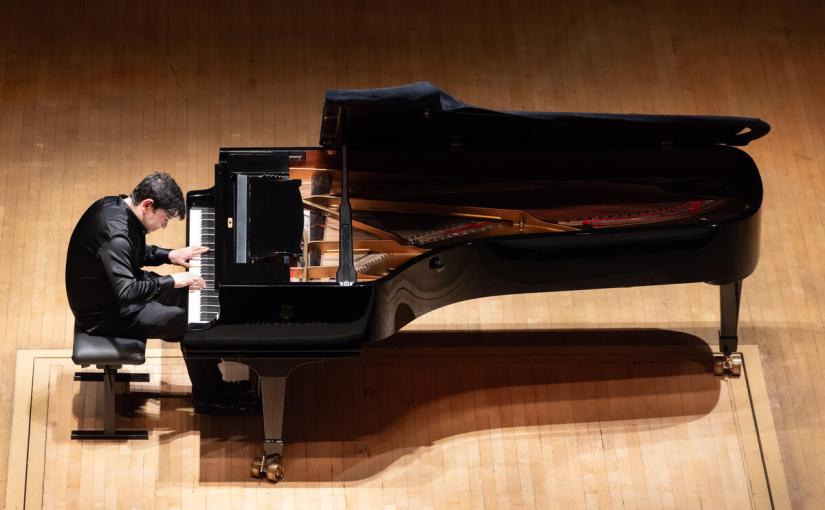
When Beatrice Rana withdrew from the Symphony Center Presents series earlier this Fall, event organizers called upon Behzod Abduraimov to fill this prominent slot in the season. And that decision proved fortuitous for those who attended his recital on Sunday afternoon.
Abduraimov is no newcomer to the international circuit. His victory at the 2009 London International Piano Competition launched a career that has proceeded steadily upward since then. Now 35, the Uzbek-born pianist has established himself among the premier keyboard artists of his generation. He has performed twice at Ravinia and appeared on Symphony Center’s own piano series in 2019. His Chicago Symphony Orchestra debut, delayed by the pandemic, finally materialized in 2024.
On Wednesday evening at Guarneri Hall, Nova Linea Musica opened its 2025–26 season with a recital by Conrad Tao, the pianist-composer who has become something of a shapeshifter in the classical music world. The Illinois native was back by popular demand. Last season featured one of his compositions, and this time he performed a program called “Echoes and Algorithms.” Nova Linea itself has doubled its offerings from last year, a modest sign that Chicago’s appetite for the new and the unexpected is holding steady.
Tao’s title proved apt. What he assembled was less a tidy recital than a set of experiments, blending piano, electronics, and computer interjections and blurring the distinctions between them. The pieces often felt more like commentary instead of argument, collisions more than resolutions. The evening explored the ongoing negotiations between technology and society, artists, and Tao himself.
Pianist Simone Dinnerstein performs this week at the University of Washington.
Zach Carstensen: Bach figures prominently into your repertoire. You recorded the Goldberg Variations with Telarc and have a new recording of Bach keyboard concertos coming out on Sony. Why do you find yourself drawn to Bach?
Simone Dinnerstein: Bach has been my favorite composer since I was a teenager. For me, his music is the perfect synthesis of the cerebral and the spiritual.
ZC: How does your playing of pieces like the Goldberg Variations change from performance to performance?
SD: Over the years, my interpretation has grown freer. I take more time both within the Variations and between the Variations.
ZC: Is there a right way to play Bach?
SD: Definitely not! I think that is the beautiful thing about music – there are no absolutes.
ZC: Even though Bach’s music is a significant part of your repertoire, you’ve also played Webern, Copland and for your upcoming recital in Seattle you are playing Schubert and Schumann in addition to Bach. Do you every worry about being cast narrowly as just a Bach specialist?
SD: Not really, you’re right that I play music by a wide variety of composers. But if I was going to be associated with one composer – I don’t think Bach is a bad choice!
ZC: Your dad is a visual artist. I am wondering if your playing and how you approach music has a visual component? Are there images particular pieces conjure for you? Do you hope the audience “sees” something too?
SD: When I was growing up, my dad (the painter Simon Dinnerstein) used to talk to me a lot about line in drawing, and sometimes when he would listen to me play he would say, “I don’t hear the line.” It made me think about phrasing in a particular way. I often think about light and dark, and texture in my playing. I don’t think of particular images, but I think of techniques used by artists.
ZC: Are there any pianists active today that you admire?
SD: Yes, of course. Some of today’s pianists that I admire include Awadagin Pratt, Natasha Paremski, Orion Weiss, and Gloria Cheng.
Simone Dinnerstein performs as part of the University of Washington’s Presidents’ Piano Series January 12, 2011 at 8 PM.
Jeremy Denk is no stranger to a Seattle audience. For more than ten years he has been one of the Seattle Chamber Music Society’s regular pianists. In the summer, you could find Denk at the Lakeside School, and in the winter, Nordstrom Recital Hall. Local music lovers also know Denk from his long association with the violinist Joshua Bell. In fact, Bell and Denk last performed in Seattle in February.
Followers of Denk’s career commend his fearlessness regarding repertory and an authentic, intellectual approach to playing that is as much for him as it is for the audience. Though Denk is familiar to Seattle audiences, one might be surprised to know that the pianist only made his local recital debut on March 31st of this year, as part of the President’s Piano Series at the University of Washington. Continue reading Denk, Schumann, and Ives: so happy together
Some consider Beethoven’s thirty-two sonatas for piano to be the “New Testament” of piano literature. (The “Old Testament” is the forty-eight Preludes & Fugues of J.S. Bach’s Well-Tempered Clavier). When viewed as a whole, the sonatas serve as a microcosm of Beethoven’s life, containing some of his finest musical ideas and enabling us to trace his development as a composer. These pieces play a role of biblical proportions in the world of piano repertoire and serve as one of the cornerstones of Western classical music. It’s no wonder these works have been so widely studied and discussed. Recently, the lecture-recital has become a popular method for pianists to share their ideas about the Beethoven piano sonatas. In the past few years, several notable and high-profile pianists have presented lecture-recitals on these works. In 2006, Andras Schiff gave an outstanding series of lectures on the entire cycle of Beethoven sonatas. Although the great Alfred Brendel retired from concert performance in 2008, he toured the United States last year to present his lecture-recital on musical character in the Beethoven sonatas. Continue reading Local pianist Dainius Vaicekonis presents Beethoven sonatas at UW
The last time Jean-Yves Thibaudet played in Seattle was as soprano Renee Fleming’s pianist. He was a genuine partner to her and she, in addition, gave him some solo time. a rare gesture from a singer. Still, he was second banana. On Sunday afternoon, also at Benaroya Hall, part of the Seattle Symphony’s Distinguished Artists Series, he was first banana and what a banana.
It is something of a commonplace to say the French pianist is a musician of great accomplishment. But after Sunday’s performance, it seems like an understatement. He has always been a pianist of elegance and authority and subtlety. More so on Sunday, with technical brilliance and probing musicianship.
Garrick Ohlsson’s first of two concerts devoted solely to Chopin — to celebrate the 200th anniversary of his birth and Olhsson’s 40th anniversary of winning the prestigious Chopin competition in Warsaw — was a brilliant affair, what one has come to expect from this pianist in his long and distinguished career. His second concert Tuesday night at Meany Hall was even more remarkable.


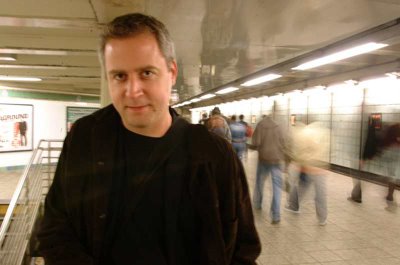 Jeremy Denk is no stranger to a Seattle audience. For more than ten years he has been one of the Seattle Chamber Music Society’s regular pianists. In the summer, you could find Denk at the Lakeside School, and in the winter, Nordstrom Recital Hall. Local music lovers also know Denk from his long association with the violinist Joshua Bell. In fact, Bell and Denk last performed in Seattle in February.
 Gathering Note