Seattle Symphony offers dramatic range with Stravinsky, Mozart, and a local premiere

Photo Credit: Jim Holt

Originally published on Seen and Heard International

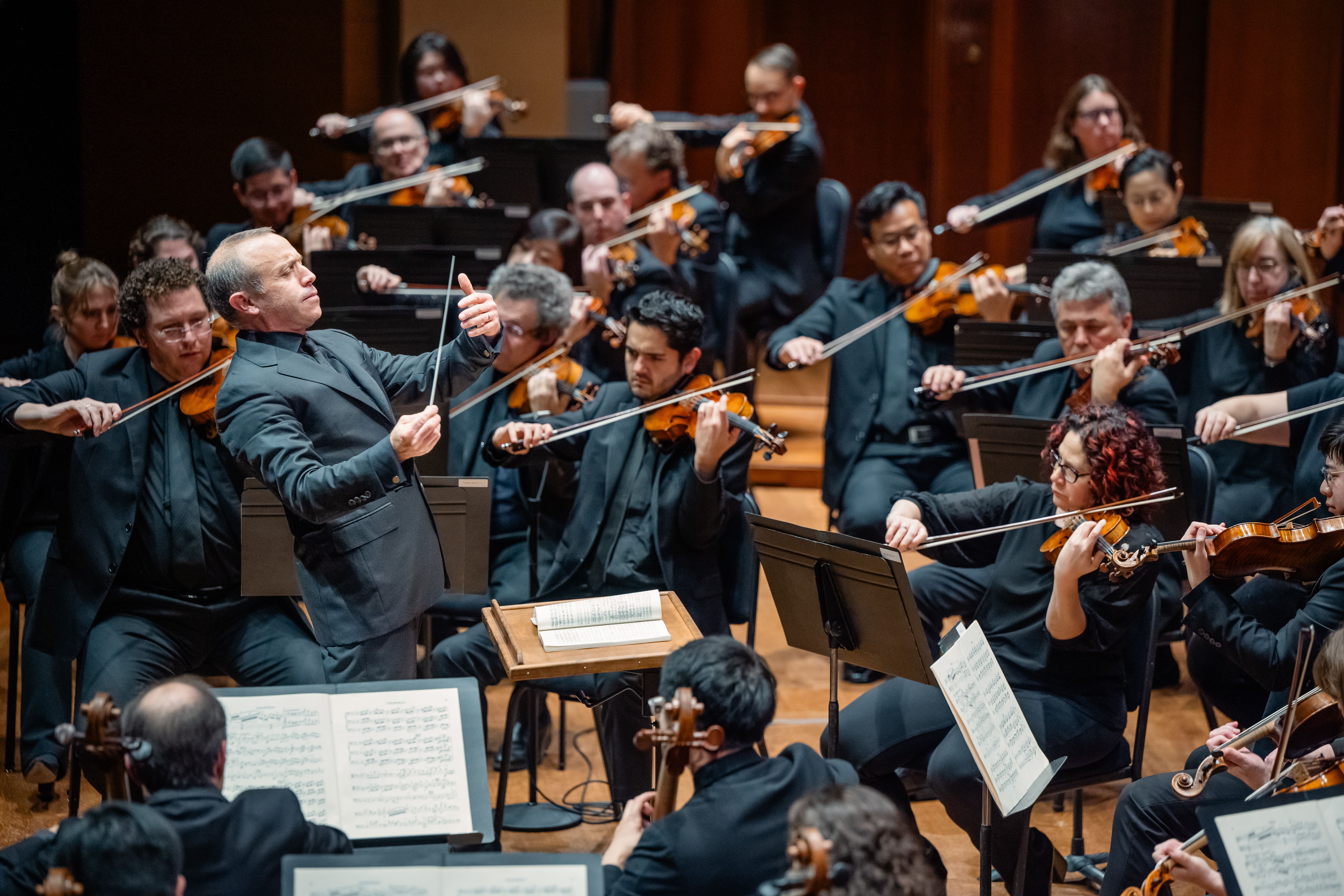
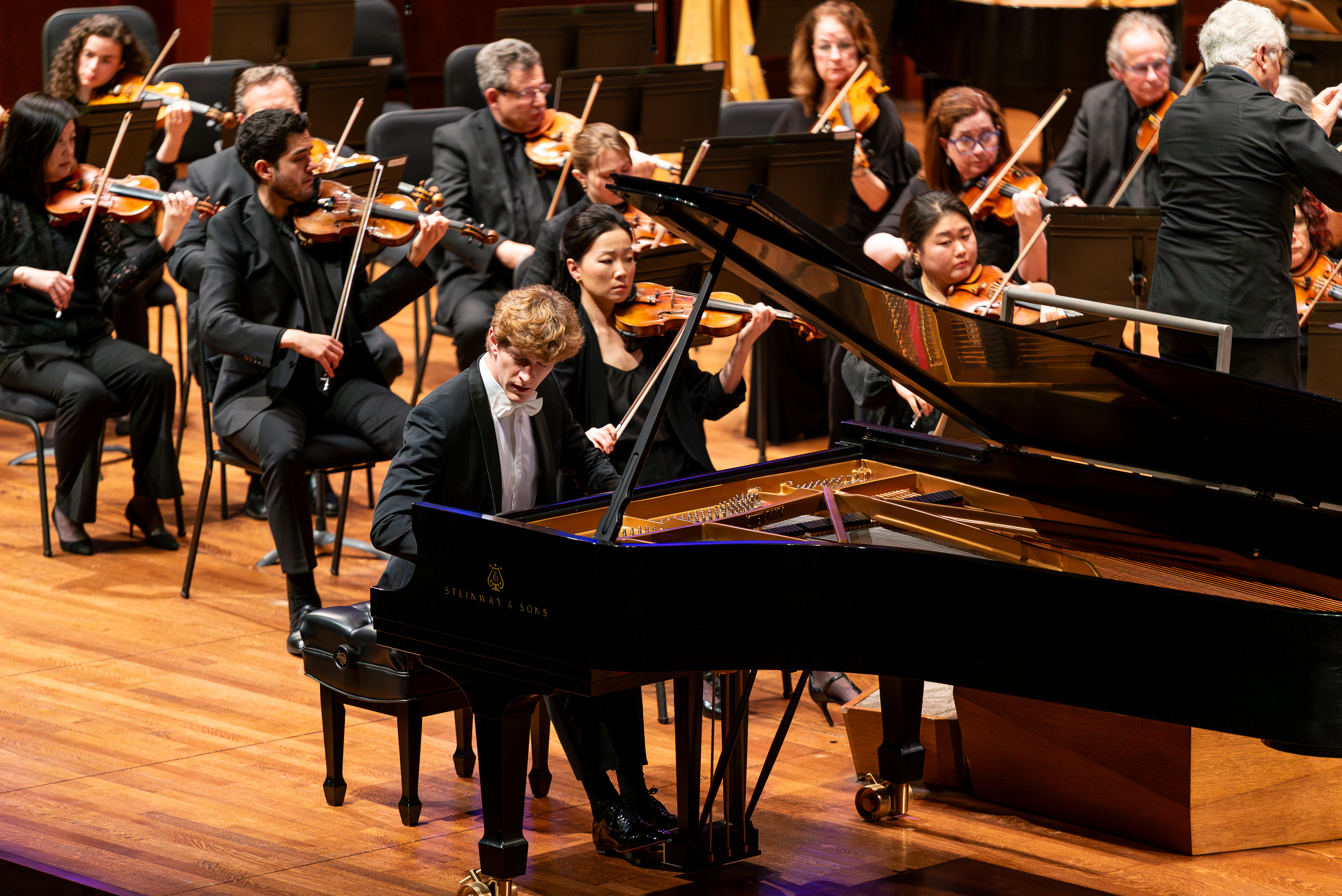
I have heard the Seattle Symphony perform Stravinsky’s The Rite of Spring countless times. This includes at least one performance each under the baton of its  permanent music directors over the past two decades—from Gerard Schwarz’s unrelenting drive to Ludovic Morlot’s textural brilliance and Thomas Dausgaard’s focus on the Rite’s folk influences and form. Last week, guest conductor Peter Oundjian brought his own vision of the work to Benaroya Hall, offering an interpretation that braided Morlot’s detailed approach with Dausgaard’s emphasis on shape.

Continue reading Seattle Symphony offers dramatic range with Stravinsky, Mozart, and a local premiere
Elena Dubinets heads to the Concertgebouw

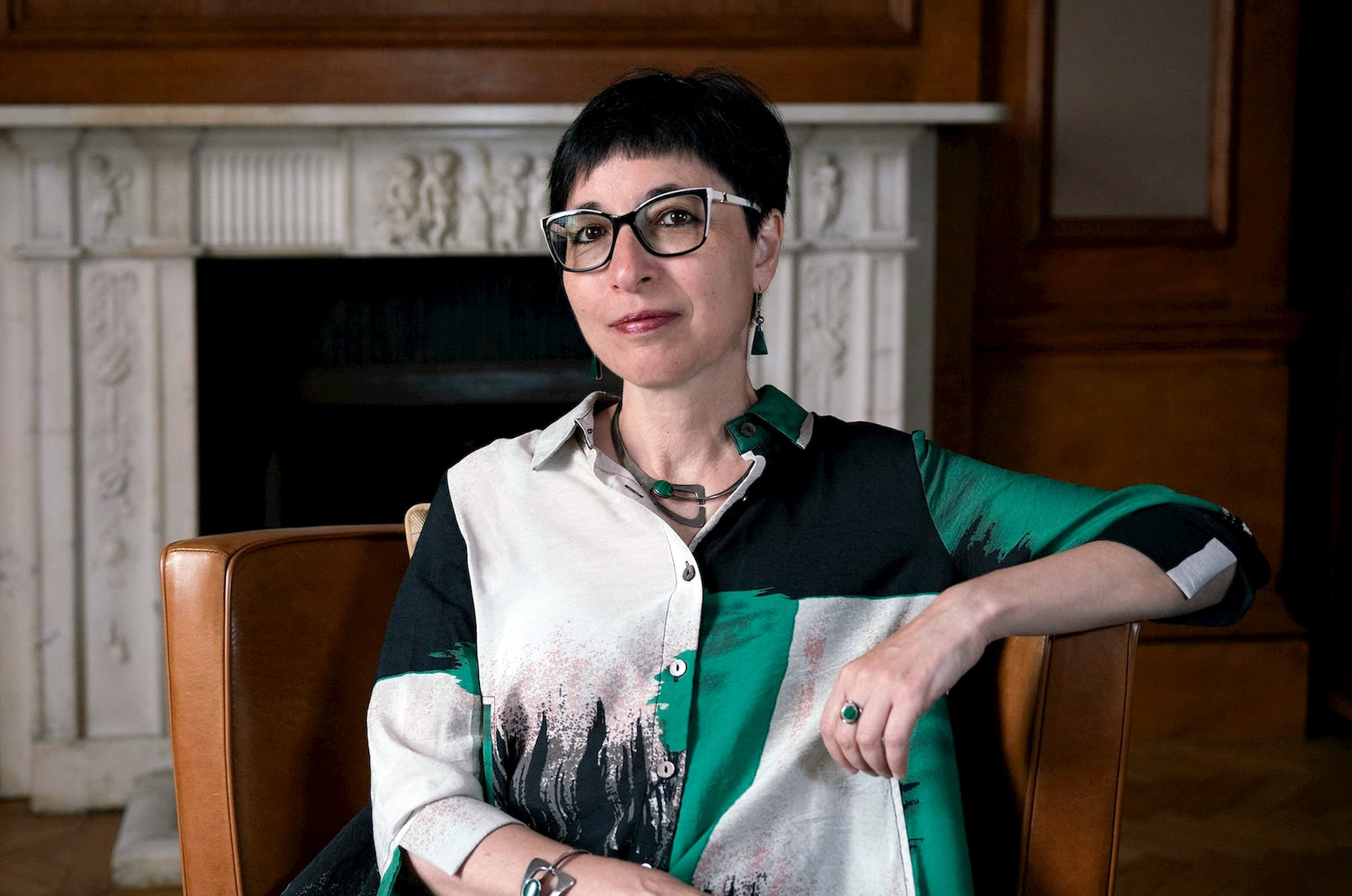
Fantastic news from the Netherlands: Elena Dubinets has been named Artistic Director of the Concertgebouw Orchestra. Dubinets was a transformative force during her time at the Seattle Symphony, and now Amsterdam is about to see why.

During her Seattle days, Dubinets brought fresh ideas to programming that made the Symphony not just good but great. Remember when they commissioned John Luther Adams’ Become Ocean? That wasn’t just any new piece—it won the Pulitzer Prize and it helped reestablish the Seattle Symphony’s relevance.

I first encountered Dubinets’ work during my time as a student at the University of Iowa, though I didn’t realize it then. In the fall of 2000, she curated a Russian contemporary music festival, which Taruskin covered for The New York Times. I sat in the audience, captivated and wide-eyed, as I absorbed the unfamiliar sounds. Our paths crossed again years later when I briefly served on the board of the Seattle Chamber Players and later assisted her and the Seattle Symphony with visa applications for a group of artists who had limited experience performing in the United States.

She left Seattle during the pandemic—a loss for Seattle—and spent the last few years doing brilliant work with the London Philharmonic. Now, she’s heading to Amsterdam to work with Klaus Mäkelä, the Concertgebouw’s incoming music director. Mäkelä is already being hailed as one of the most exciting young conductors in the world and pairing him with Dubinets feels like a good match.

Seattle Opera’s ‘X’ Reflects on Malcolm X’s Legacy, past and present

Photo Credit Philip Newton

X: The Life and Times of Malcolm X was a groundbreaking work. Its 1986 premiere marked a significant moment for both the composer and the opera world. X finally graced the stage of the Metropolitan Opera in late 2023, further – if belatedly – recognizing the opera’s impact. And in early 2024 it was eagerly welcomed by Seattle audiences.

Beyond its artistic merit, X proved to be a powerful social force. Performances in Seattle drew a notably diverse audience, especially for a region of historically lower diversity. This alone suggests that contemporary opera has the potential to go beyond traditional boundaries and engage a wider range of people when tackling relevant and thought-provoking themes. The success of X serves as a beacon of hope, demonstrating that opera can evolve and stay relevant in an ever-changing cultural landscape.

Continue reading Seattle Opera’s ‘X’ Reflects on Malcolm X’s Legacy, past and present

Randall Goosby and Christian Reif shine in Seattle Symphony debut

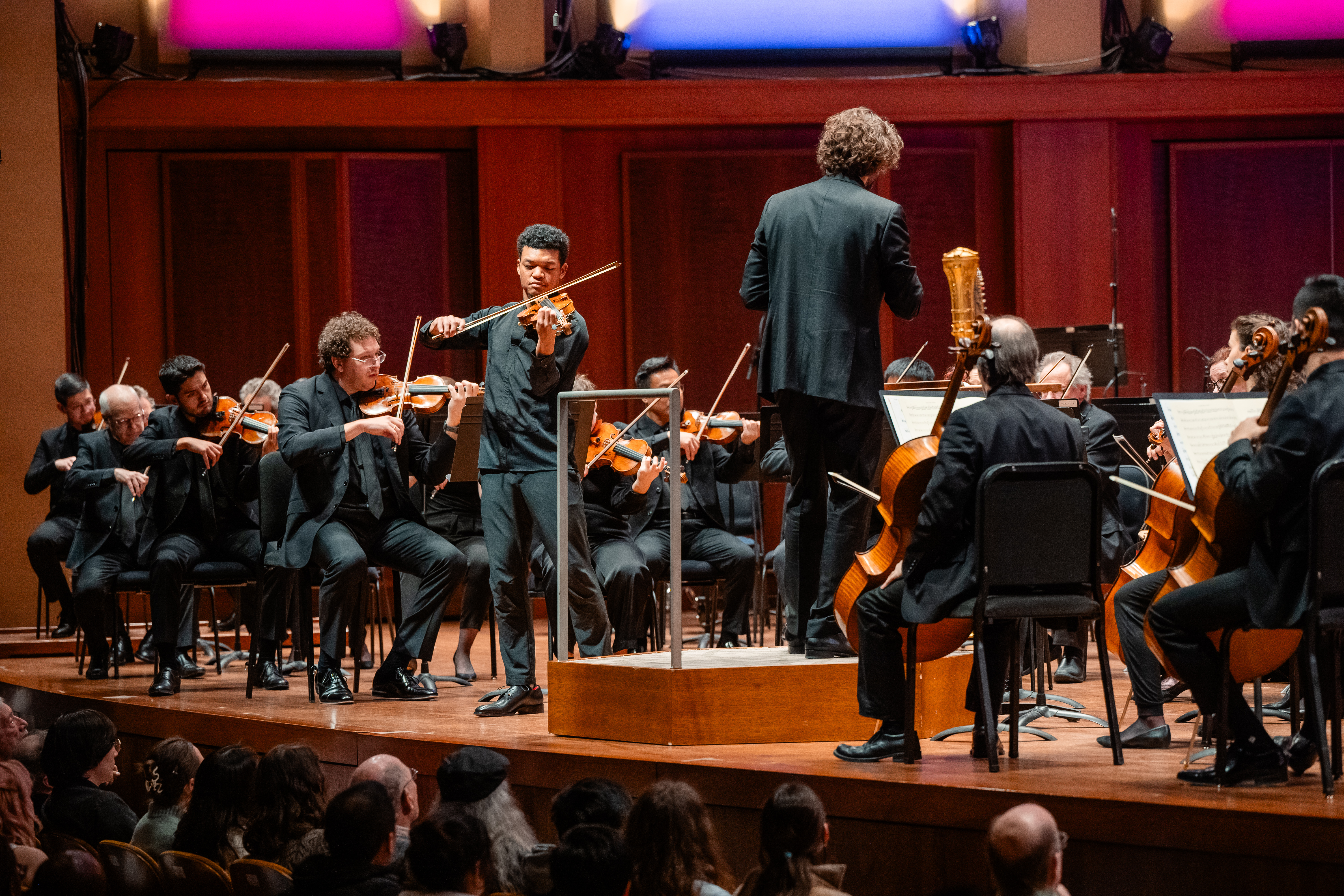
Randall Goosby plays Mozart, Photo Credit: Brandon Patoc

Violinist Randall Goosby, who has been dazzling audiences since his debut with the Jacksonville Symphony at the age of nine, took center stage with the Seattle Symphony for a recent series of concerts.  Goosby’s smooth and warm tone, reminiscent of an earlier era of violin performance – which is not surprising from a former student of Itzhak Perlman’s – has been praised by critics and audiences alike.  His career took a major step forward in 2021 with the release of his first album of Dvorak, Florence Price and other rarities: Roots.  Goosby followed that up in 2023 with a release of Price’s two violin concertos performed with the Philadelphia Orchestra.  

For his Seattle debut, he performed Mozart’s Violin Concerto No. 3 in G Major – sharing the spotlight with another rising star in classical music, guest conductor Christian Reif. After recently taking the helm of the Gävle Symphony, Reif has built up his bona fides in the U.S. this season with engagements in St. Louis, Milwaukee and now Seattle. 

Continue reading Randall Goosby and Christian Reif shine in Seattle Symphony debut

Kahchun Wong’s musical alchemy: Beethoven and Mahler in perfect harmony

Photo Credit: Carlin Ma

Also published at Seen and Heard International

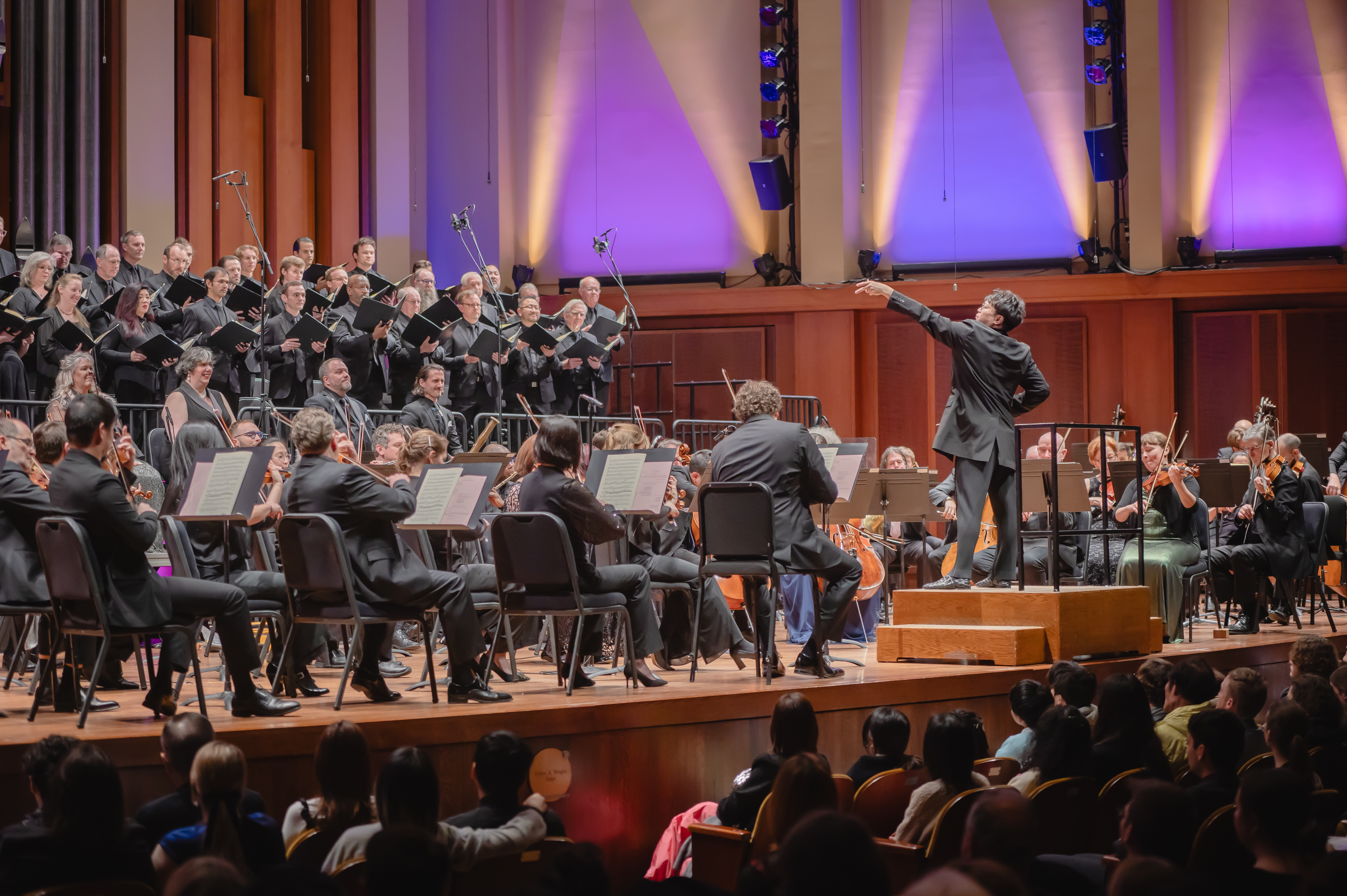
Anticipation crackles in the air, thick like summer lightning before the storm breaks.  A hush descends, settling over an expectant audience.  Every cough or rustling program feels like a desecration. At the podium, conductor Kahchun Wong stands at the edge of creation – shoulders squared, back straight, baton held aloft.  A moment’s pause, pregnant with possibility, his hand dips, slow and deliberate, tracing the first stroke of a masterpiece – Beethoven’s Ninth Symphony.

For sixty minutes Beethoven’s motifs ebb and flow, a struggle between light and shadow, order and chaos.  Wong, a captain at the helm, guides the orchestra through the tempestuous waves.  His every gesture framing the music’s path: joy, anguish, defiance, triumph.  

By the end, Wong succeeded in taking the audience gathered at Benaroya Hall on a journey they would not soon forget.  Wong conducted four performances from December 28th to 31st.  Most years, Seattle’s traditional end-of-December performances of Beethoven’s Ninth are an afterthought for devoted concertgoers.  They’re reliable revenue generators – and who doesn’t like a little uplift and possibility of Beethoven’s Magnum Opus (or one of them) to ring in the New Year?  

Continue reading Kahchun Wong’s musical alchemy: Beethoven and Mahler in perfect harmony

Seattle Symphony shines in Brahms and Elgar, courtesy of Wigglesworth and Hough

Mark Wigglesworth and the Seattle Symphony, Photo Credit Brandon Patoc

Also published at Seen and Heard International

After an arguably slow start to its 2023-24 season, the Seattle Symphony is gearing up for a packed schedule of concerts in November and December highlighting works by Brahms, Beethoven, Sibelius, Elgar, and Mahler.  For the first concert of this ramp-up, the orchestra deftly tackled two major works with guest conductor Mark Wigglesworth’s first turn at the podium: Brahms’ Second Piano Concerto — featuring soloist Stephen Hough — and Elgar’s Second Symphony..

Hough has frequently performed in Benaroya Hall over the years, often playing crowd-pleasing works by Rachmaninov.  This time, he traded in Rachmaninov for Brahms, taking on challenging work composed during a productive time in Brahms’ life, which also yielded his Second Symphony and Violin Concerto.  Brahms’ First Piano Concerto dazzles with youthful bravura.  But in contrast, the composer fills his Second Concerto with a varied and lyrical journey: The first two movements feature bracing moments, the somber third movement includes longing paragraphs of music and affecting cello and horn solos. And if that wasn’t enough, the piece concludes with a playful, catchy closing movement.  

Continue reading Seattle Symphony shines in Brahms and Elgar, courtesy of Wigglesworth and Hough

Seattle Opera makes a rare foray into Baroque opera with Handel’s Alcina

Vanessa Goikoetxea (Alcina), Randall Scotting (Ruggiero), and Ginger Costa-Jackson (Bradamante) in Alcina. Photo Credit: Sunny Martini.

After a successful run of Wagner’s Das Rheingold in August, Seattle Opera is back with Handel’s Alcina.  From its premiere at Covent Garden in 1735, Alcina was one of Handel’s most successful operas, with a record 18 subsequent performances.  But Alcina’s early success wasn’t enough to keep it on stage. Performances were scarce until it emerged in the 1950s as a vehicle for soprano Joan Sutherland.  This marks the first time the Seattle Opera has staged Alcina.  Despite the Emerald City’s vibrant early-music community, Alcina’s arrival also marks one of only a handful of times the company has attempted an opera by one of the Baroque masters. 

Along with Ariodante and Orlando, Alcina is based on Ludovico Ariosto’s epic poem Orlando Furioso.  Stocked with magical elements, chivalry and sometimes raw emotion, it is ideal source material for Baroque opera.  Alcina begins with Melissa and Bradamante (disguised as her brother Ricciardo) arriving on Alcina’s enchanted island looking for Bradamante’s lover Ruggiero, who has gone missing.  Ruggiero appears soon enough, bewitched by one of Alcina’s spells.  From this point forward, the six principal characters weave their numerous plights together through multiple da capo arias and vocal acrobatics.  Eventually, Ruggiero is freed from Alcina’s spell and returns to Bradamente – and in the end Alcina accepts losing Ruggiero as her powers fade.         

Continue reading Seattle Opera makes a rare foray into Baroque opera with Handel’s Alcina

A tale of two composers: Emanuel Ax explores Beethoven and Schoenberg in Seattle recital

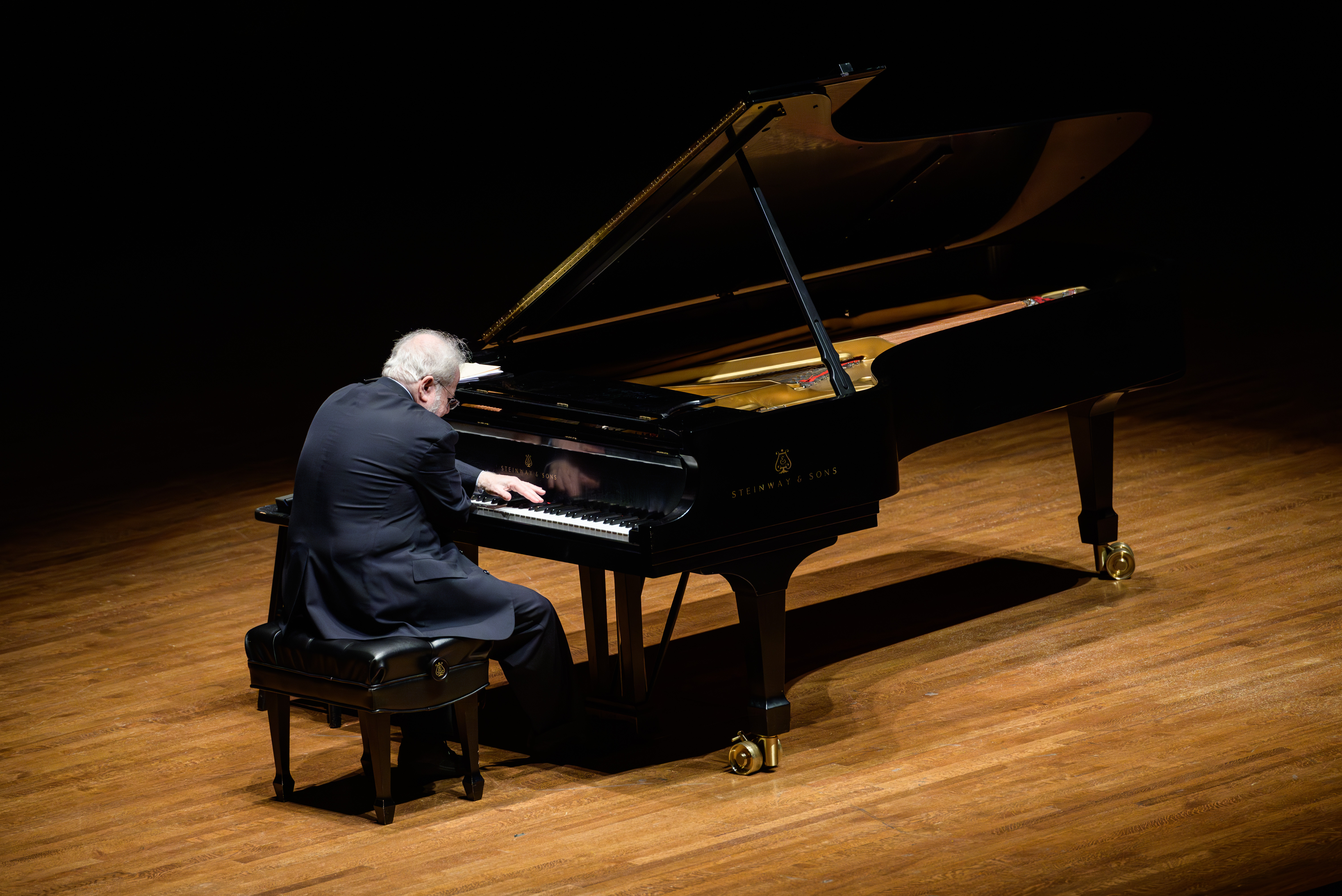
Emanuel Ax performs in Seattle, Photo Credit: Nick Klein

In late 2020, I decided to listen to Beethoven’s 32 sonatas in chronological order.  Consider it my take on one of those pandemic-era “deep dives” – sourdough bread, birding – that we all took.

My love for Beethoven dates back to 1996, when a dear friend introduced me to classical music for the first time.  In the years that followed, I listened to individual sonatas on and off, but never in order. But my pandemic-era exploration showed them in a new light.  Over the course of two weeks, and with the help of a dozen different pianists, I listened to them all.  As a body of work, they are profound, humorous, elegant, and, of course, transformatively inventive.

Continue reading A tale of two composers: Emanuel Ax explores Beethoven and Schoenberg in Seattle recital

Music on the Strait returns for 6th season

Now in its sixth year, Music on the Strait has become a cherished event for music enthusiasts on the Olympic Peninsula. This hidden gem of a music festival may not receive as much attention as some of its counterparts, but it certainly deserves recognition for the incredible performances it brings to this part of the Pacific Northwest year after year.

Continue reading Music on the Strait returns for 6th season

Seattle Opera’s Rheingold a triumph, with strong cast and ingenious staging

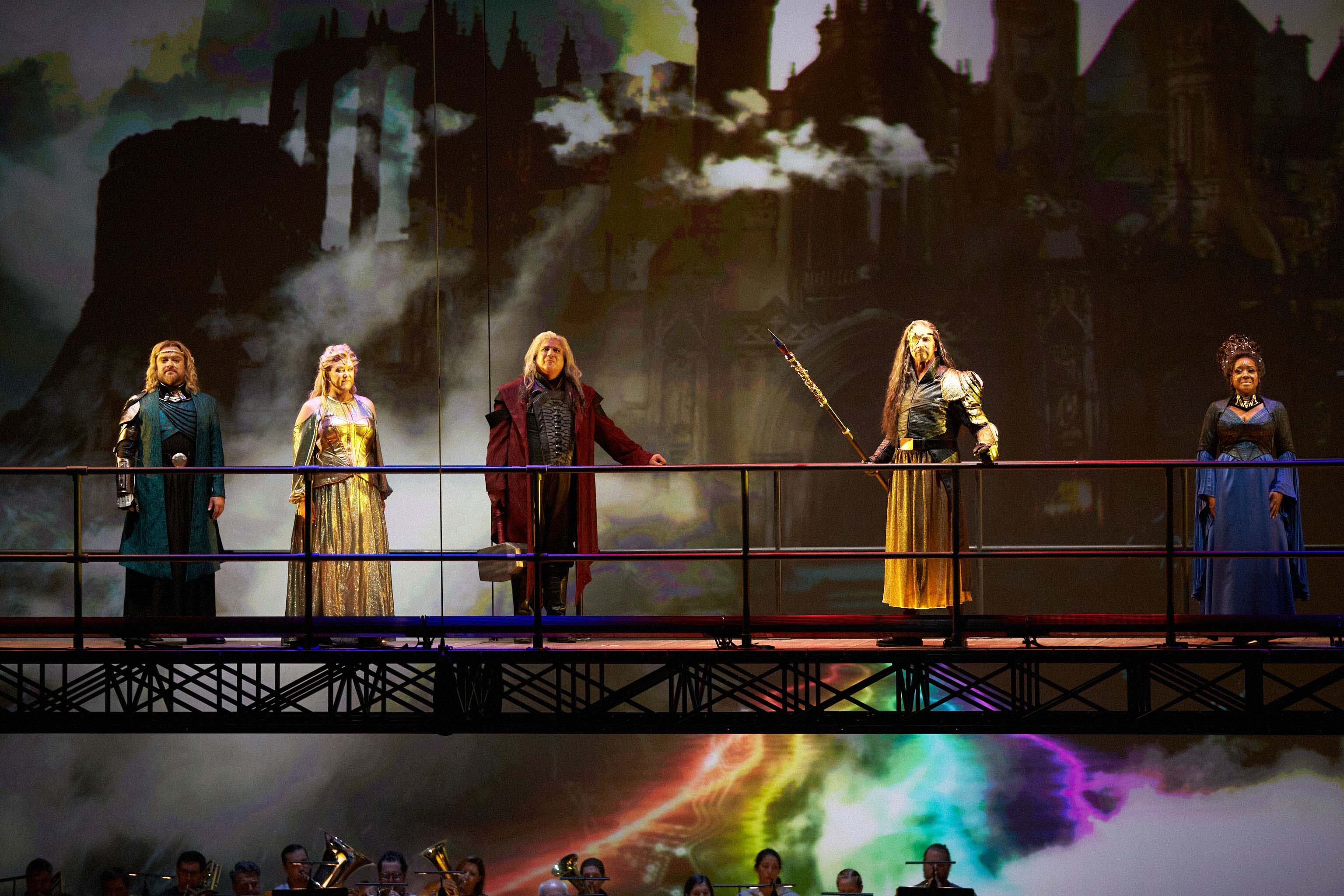
The gods Froh (Viktor Antipenko), Freia (Katie Van Kooten), Donner (Michael Chioldi), Wotan (Greer Grimsley), and Fricka (Melody Wilson) in Das Rheingold at Seattle Opera. © Philip Newton.

Review published on Seen and Heard International

Not long ago, staging Das Rheingold at the Seattle Opera usually meant that the other three operas in Richard Wagner’s Ring Cycle would soon follow.  The company was once a Wagnerian destination in the U.S., though not on the same level as the renowned Bayreuth.  For decades, when the lights dimmed and the famous chord of E-flat major emerged from the orchestra, slowly at first and then transforming into the flowing Rhine, Seattle audiences and visitors from around the world settled in for a cycle-full of leitmotifs.

That was then. Seattle audiences have not seen Rheingold in ten years.  This concise story of power, hubris and consequence is a fanciful two-and-a-half hours of gods and giants; castles and contracts; and of course a subterranean bad guy with an ax to grind.  Rheingold sets the whole Ring Cycle in motion, its story serving as the seed of the original sin growing through Wagner’s ambitious four-part drama.  But even staged alone – as it was here – there is much to enjoy in this tale of mythic gods with human failings.

Continue reading Seattle Opera’s Rheingold a triumph, with strong cast and ingenious staging