On a September morning in 1973, Chile’s turbulent political reality pivoted into a nightmare, with a coup that brought General Augusto Pinochet to power inaugurated nearly two decades of repression. For many Chileans, the brutality unfolded in darkness. Secret police agents arrived at homes in unmarked cars. People vanished from doorways and street corners, becoming rumor. Some were taken to clandestine detention centers, interrogated, and tortured. Many were killed, their bodies discarded in rivers, lakes, and mass graves, or pushed from helicopters into the Pacific. It was terror designed not only to erase opponents but to erase evidence of their existence.
One of the young men swept up in the regime’s crackdowns was the poet Raúl Zurita. Detained, tortured, and released under a ban that forbade him from entering bookstores, he would later respond to the dictatorship’s violence through poetry. More than a decade after the regime ended, the truth about bodies dropped from helicopters entered public view. The revelation stunned Zurita. He responded with INRI, a book-length poem imagining those lost lives rising from sea and mountains—a memorial and vision, anchored in grief but turned toward rebirth.

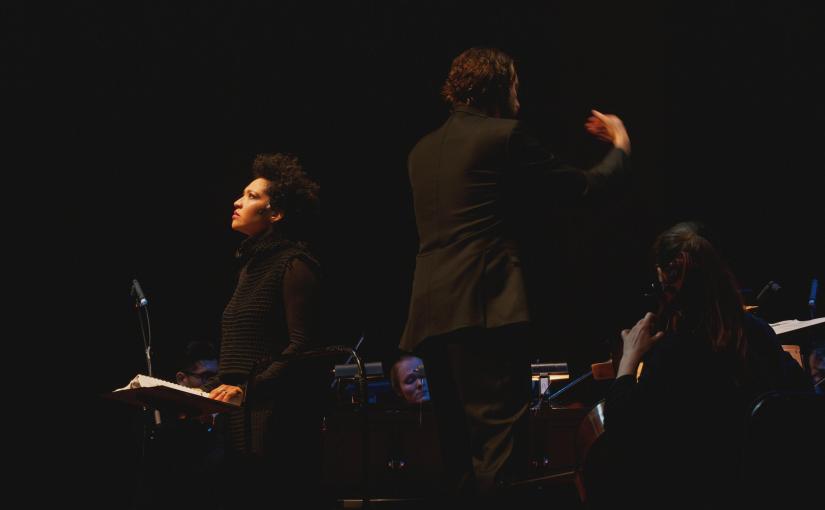
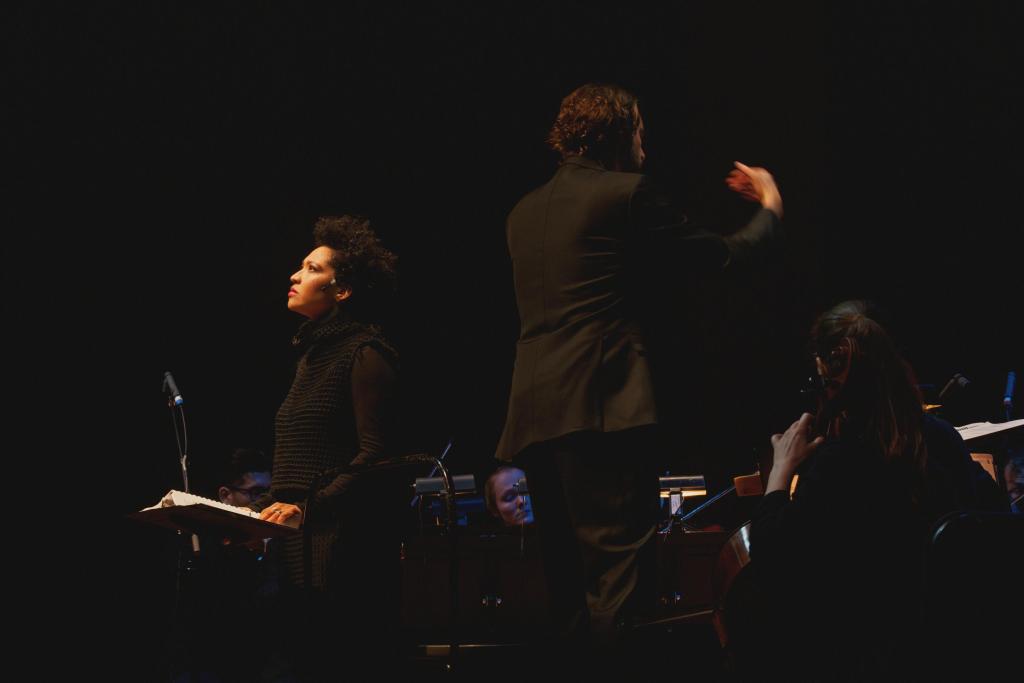
INRI is the source material for Song of the Reappeared, a new work by composer and conductor Matthew Aucoin, receiving its world premiere with the Chicago Symphony Orchestra December 4-7, 2025. Written for the soprano and self described “classical singer” Julia Bullock and commissioned by the CSO, the piece draws its emotional gravity from Zurita’s poetry and its urgency from the present moment. The title itself suggests return: of bodies, memories, and political truths that refuse to remain buried.
In today’s Chicago, those resonances carry weight. The city is reckoning with the effects of ICE’s prolonged “Operation Midway Blitz,” in which nearly 700 people were detained, only a handful of whom were actually found to pose genuine threats. For families and communities across the city and region, the consequences were immediate and intimate. Parents disappeared from jobs or homes while their children were in school, unaware. Neighborhoods suddenly felt unfamiliar. The city that prides itself on resilience is grappling with a sense that the ground has shifted underfoot.
Bullock understands that feeling on a personal level. For the premiere, she has decided for the first time to return to her native U.S. – Bullock resides in Germany – without also bringing her young child. She feels today’s circumstances are shaped by the same type of national mood hovering over Song of the Reappeared. Bullock speaks cautiously about the fear accompanying her travel. “I won’t pretend like I don’t have fear every time I return to the United States. I won’t pretend I’m not uncomfortable because I am,” she said. Living overseas while watching events unfold in the U.S. can make her feel helpless. “It’s just devastating to witness. And being here in Germany, not really knowing what to do other than share the stories being put out there.”
Bullock’s collaboration with Aucoin has deep roots. The two met at Juilliard and built their early careers within the orbit of the American Modern Opera Company. Their most significant past collaboration was The No One’s Rose, a staged work built around poems by Paul Celan, Johann Mayrhofer, Théophile Gautier, and Jorie Graham. Aucoin originally imagined expanding the Celan material into a larger song cycle, but when he encountered Zurita’s poetry, the shift was instantaneous. The discovery, Bullock described, landed like a “thunderbolt” with the composer. The poems altered the project’s scale and clarified its political stakes. The piece he began writing reflected rising cultural unease and a growing awareness of the precarity of daily life for many people.
In his note for the work, Aucoin describes Song of the Reappeared as a concerto for voice and orchestra, conceived for Bullock’s unmistakable voice and the full force of the Chicago Symphony. The work unfolds in three movements and draws on qualities that have come to define Aucoin’s voice: lush, post-Romantic lines frequently fractured by restless rhythms or flashes of dissonance.
Bullock believes Aucoin is entering a new phase in his creative life. “He has found a balance between this almost more popular sound of vocal writing that people can relate to immediately, counterbalanced by this really intricate orchestral writing,” she said. The vocal lines often float above orchestral passages that surge or contract with dramatic precision. She describes some of the orchestral writing as the most exciting Aucoin has produced. The piece, she suggests, carries a timeless quality rooted in Zurita’s poetry while reflecting the present with clear-eyed honesty.
Approaching any premiere requires particular focus for Bullock. “My role, I feel, is to find the clearest and most transparent, the clearest reading of the text and the music that I am responsible for, so that people feel that they will find some sort of path of entry,” she said.
Bullock also rejects the idea that socially conscious work is a departure from tradition, noting that earlier artists have done the same. “Many works of art that have stayed with us over decades or even centuries, usually have a universal message or a very pointed message that is critiquing the time,” she said. “The sad reality is that those messages are ones that we have to hear over and over again, because we’re not making enough changes for us to move into a healing state of being.”
After the Chicago performances, there are no additional set plans for the piece. Bullock hopes that will change. She imagines future performances—and perhaps a recording—that might allow the work to circulate more widely. What matters most to her is that Aucoin has created something that she feels is built to last, something that speaks to the moment but can resonate far beyond it.
For Bullock, the act of singing before an audience creates a moment of connection that transcends the uncertainties—from decades past to today— though they may press in from all sides. In that brief space, transformation is not merely possible but present. It brews from a communion between voice, orchestra, and listener: What those who disappeared could not speak, the reappeared must now sing.
Originally Published on Seen and Heard International
Further reading:
Song of the Reappeared composer note and information
Matthew Aucoin limns the music of language in his Song of the Reappeared
Review: Shape-shifting No One’s Rose at Stanford captures a snapshot of our moment in history
Discover more from Gathering Note
Subscribe to get the latest posts sent to your email.
 Gathering Note