Mahler’s symphonies are always events. Whether performed in clusters, as they are this year, or—more typically—once or less per season, their size, length, and narrative sweep tend to position them at the beginning or end of something significant. Jaap van Zweden, who is leading the CSO in two Mahler symphonies this season—the Sixth and Seventh—ended his time with both the Dallas Symphony and the New York Philharmonic with the Second. Just last summer, Carlos Kalmar closed his tenure as Director of the Grant Park Music Festival with the Eighth. You get the idea.
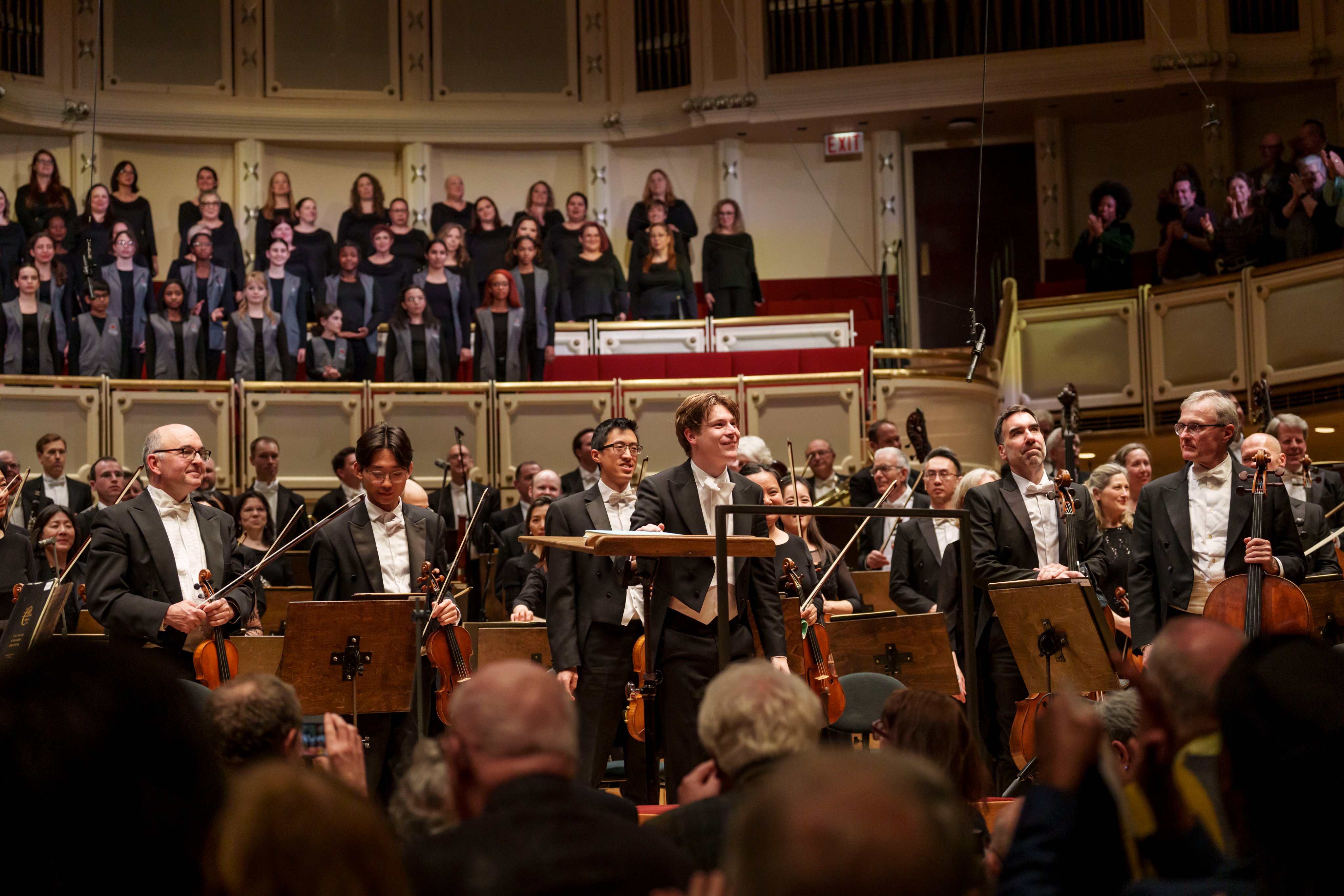
This week, Klaus Mäkelä joined the CSO for two weeks of concerts, beginning with a single-work program: Mahler’s mammoth Third Symphony. And they have the feeling of “occasions”: Friday’s performance was nearly sold out, with only a few seats remaining on the main floor.
Mahler’s longest symphony is also his most imaginative. For Mahler fans, loving the Third is a deep cut—it is the purest embodiment of his famous (and often quoted) exchange with Sibelius: “A symphony must be like the world. It must contain everything.” The quote fits, but I prefer the image David Vernon offers in Beauty and Sadness: Mahler’s 11 Symphonies, in which he opens his chapter on the Third with an anecdote: Bruno Walter steps off the ferry at Steinbach to visit Mahler’s summer residence. Awestruck by the breathtaking surroundings, he’s met by Mahler, who simply says, “No need to look up at that—I’ve already composed it all.”
I prefer this scene to Mahler’s quote alone because it captures more fully what he’s doing in the Third Symphony. Mahler’s Third doesn’t just contain everything; it is his most serious attempt at world-building—a musical creation story. As a listener, the full impact only reveals itself with repeated hearings. The first time I heard it in concert, I was overwhelmed by its scope. Like Walter arriving in Steinbach, my attention was drawn everywhere and nowhere at once. Experiencing this symphony in concert is thrilling, but it feels different from his more popular symphonies.
Part of the challenge of “getting” the piece lies in its episodic nature. Each movement acts like its own musical tableau, building upon the last without a clear linear path. Mahler’s music is by turns sumptuous (the sixth movement), playful (the third), introspective (the fourth), and elemental (the first)—everything we expect from him. But we mere humans, living in the moment, often struggle to comprehend the whole from its individual parts.
Mäkelä has been taking this piece with him around the world, conducting it at least twice before with the Cleveland Orchestra and the Oslo Philharmonic. It’s an interesting choice for such a young conductor, but one that plays to his budding strengths.
On Friday, Mäkelä didn’t drive the performance with the raw force that van Zweden brought to the Seventh (and likely will again when he returns for the Sixth). Instead, Mäkelä approached the symphony with exacting reverence for Mahler’s score.
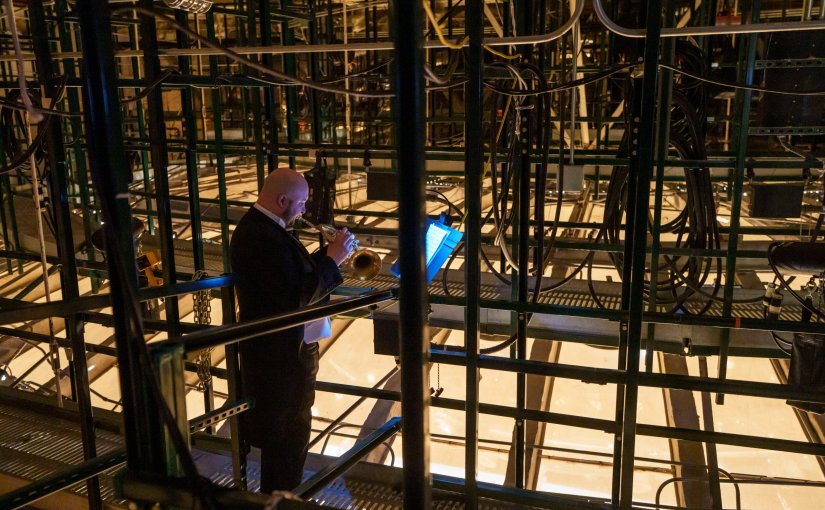
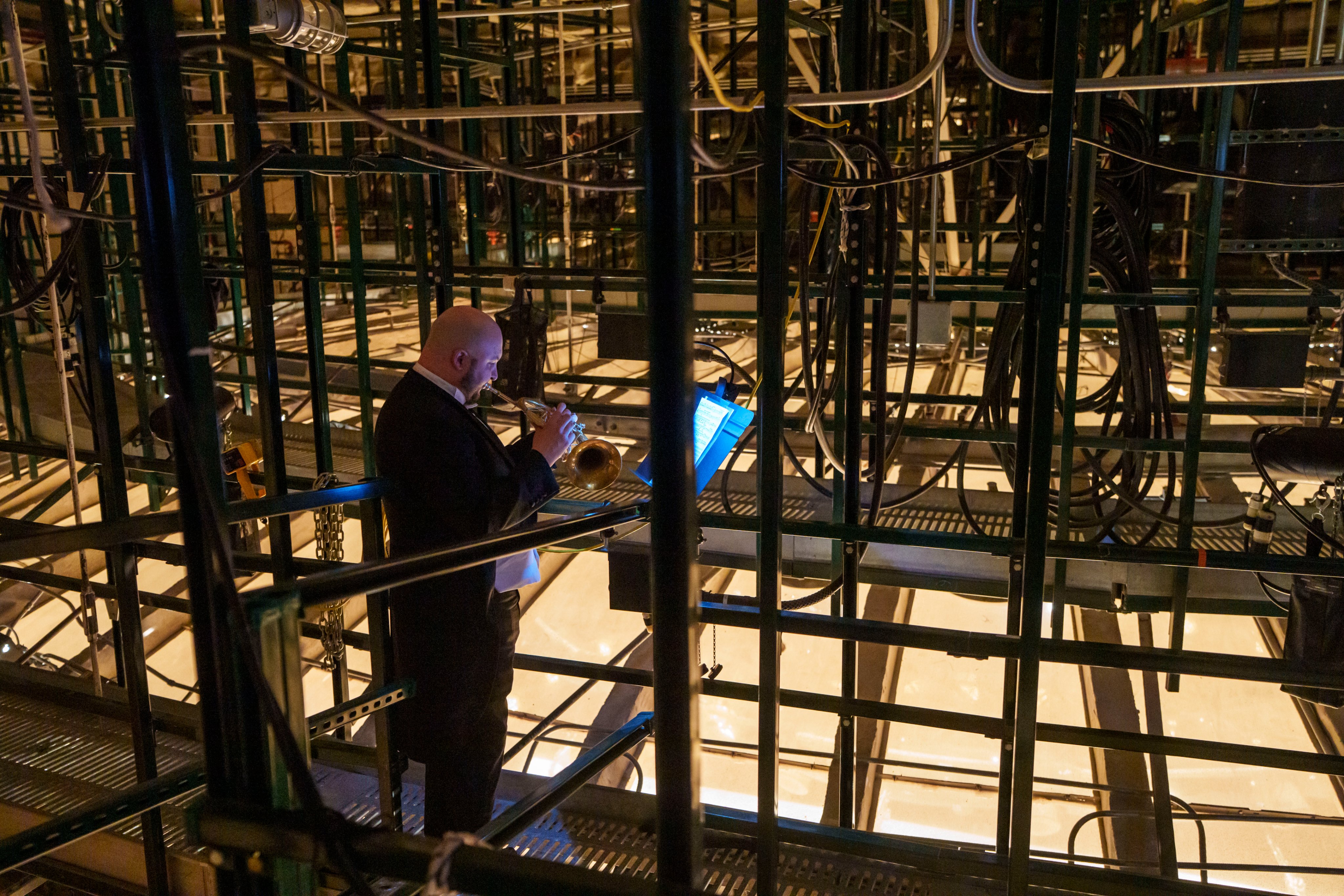
No detail was overlooked. In the first movement, the dynamics, orchestral balances, and textural clarity combined to create a profound listening experience. No one was in finer form than trombonist Tim Higgins, whose extensive solo contributions stood out. The orchestra’s playing grew even more brilliant as the work progressed, especially in the third movement, which featured an eloquent offstage solo by Esteban Batallán. My personal favorite, the fourth movement, saw the orchestra perform with bracing sensitivity as they accompanied Wiebke Lehmkuhl. The final movement was beautifully shaped as well, with Mäkelä maintaining careful balances while crafting a radiant, deeply spiritual atmosphere.
If the performance lacked an overarching conceptual arc, it’s almost forgivable given the scope of the piece. Mäkelä’s moment-by-moment approach left me both excited about his evolving interpretive vision and impatient to see the final result. How lucky for us, the audience, that we get to watch his growth as a conductor, partnered with an orchestra as magnificent as the Chicago Symphony.
Elsewhere:
Lawrence A Johnson at Chicago Classical Review:
On Thursday night Mäkelä was an even more dynamic podium presence than in previous CSO stands—not in a show-offy or performative way, but to better lead and drive the musical narrative. The 29-year-old Finnish conductor was consistently on top of the mammoth score’s myriad challenges, cueing entrances, encouraging, coaxing and communicating the big moments with his energetic body language.
Kyle MacMillan at the Chicago Sun Times:
The CSO musicians had an important voice in choosing Mäkelä, and they were clearly with him Thursday, delivering involved, even impassioned playing that was particularly evident in some of the strongest individual performances of the season across the ensemble.
One noteworthy example of the latter were the searching, introspective backstage solos in the third movement by principal trumpeter Esteban Batallán, who will return permanently in 2025-26 from a one-year leave. Another came in the first movement — the reflective, subtly rendered solo work of Timothy Higgins, principal trombonist of the San Francisco Symphony, who reports say has been hired for the same position with the CSO. He will be a very welcome addition.
Graham Meyer at Bachtrack:
Mäkelä showed deliberate choices at every turn in the 90-plus-minute symphony. In folk-music-evoking sections, phrases were rounded off with slight ritardandos. Unusual orchestrations such as flutes with tremolo strings were expertly balanced. He comped for gorgeous solo playing, especially Principal Trumpet Esteban Batallán’s off-stage posthorn solo. And reassuring the worriers, the stentorian fortissimos were as powerful as ever, with pulse-quickening crescendos to get there.
ML Rantala at Hyde Park Herald:
Off-stage music can often be a tremendous disappointment if it sounds too muffled or too distant. Here, first trumpet Esteban Batallán was amazing, with a bright and clarion sound that easily penetrated into the hall. The sweet and intriguing declaration was played with warmth and polish, while the rest of the orchestra exhibited a sense of mischief and animal energy. Mäkelä guided the music into a very gentle softness before ending with a burst of bold and boisterous sound.
Miss the concert? You can watch Mäkelä perform the piece with the Oslo Philharmonic.
Discover more from Gathering Note
Subscribe to get the latest posts sent to your email.
 Gathering Note
2 thoughts on “Mahler’s Third Symphony, Mäkelä’s emerging voice, and a thrilled Chicago audience”