I keep finding my way back to performances of Mahler’s Seventh Symphony. It started in 2018, with a thrilling rendition by Carlos Kalmar and the Oregon Symphony. That performance roared. No, the Oregon Symphony isn’t a world-class orchestra, and subtlety wasn’t its strength. But they more than made up for it with heart and visible joy, especially as Kalmar and his players surged into the final bars of the fifth movement.
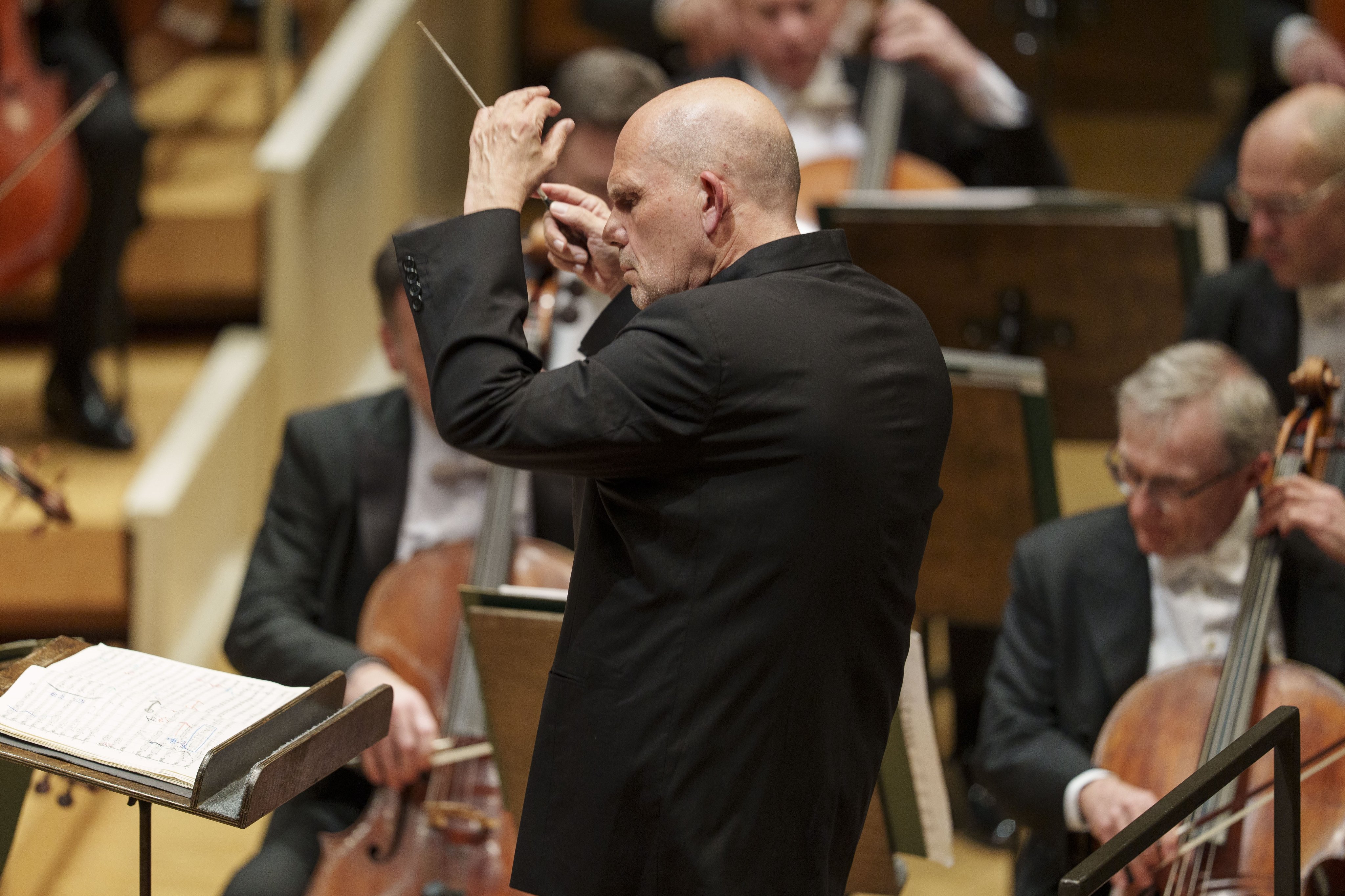
Last night, Jaap van Zweden was in town to open a mini-Mahler festival in Chicago. Over the next month, the Chicago Symphony Orchestra will perform three Mahler symphonies—the Seventh, Third, and Sixth—in a series of concerts. Van Zweden is leading the Seventh and Sixth, while Klaus Mäkelä, the CSO’s music director designate, will take the podium for the Third. Afterward, the orchestra heads out on a spring European tour featuring the Sixth and Seventh, including a stop at the third Mahler Festival in Amsterdam.
After hearing what felt like a definitive live performance of the Seventh by the Berlin Philharmonic in 2022, I was hesitant to revisit it. That concert was unforgettable. The Berliners leaned into every eccentricity of Mahler’s most elusive symphony. It’s a curious work—meticulously structured but without a clear program. Two mysterious Nachtmusiken and Mahler’s most shadowy scherzo are woven between towering outer movements, with a finale that bursts out in almost comic triumph. The Berliners captured it all with kaleidoscopic color and surgical precision. No detail was left behind.
Still, after some internal debate, I bought a pair of tickets and headed downtown for opening night.
To my surprise, the Chicago Symphony may have topped the Berliners. A major reason was van Zweden’s contrasting approach. I hadn’t heard him live before. In most of his recordings—official or otherwise—his style tends toward the driven, almost aggressive, reminiscent of Georg Solti, who famously demanded everything from his musicians. That same intensity was on display here, and it worked.
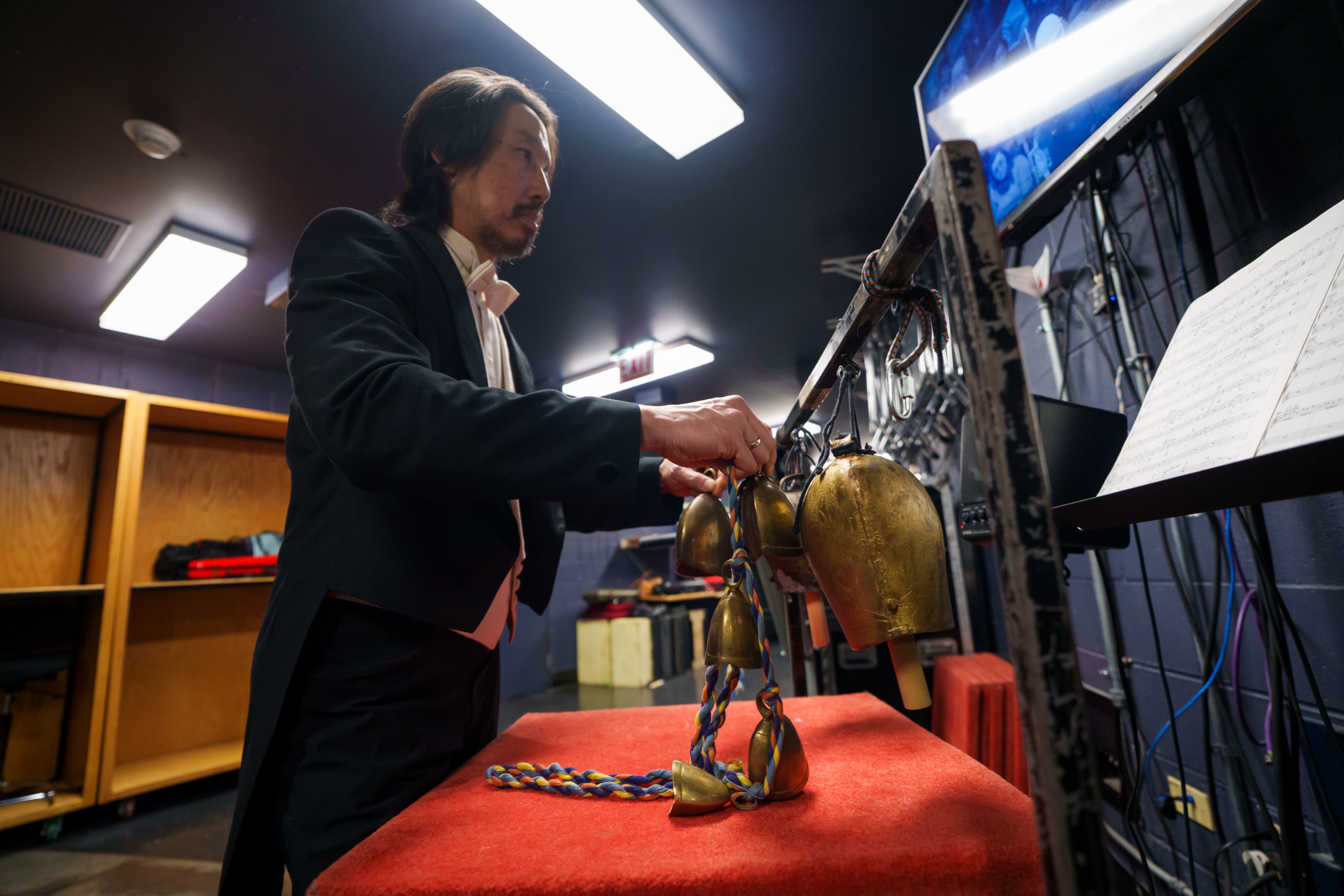
This performance wasn’t especially vivid in terms of color, nor did it lean into the eerie, surreal side of the piece. Instead, van Zweden favored propulsion. The sound was more blended, the momentum steady and insistent. In this symphony, of all Mahler’s works, that approach pays dividends.
The Seventh, more than any other, benefits from a firm hand at the wheel. Where other Mahler symphonies might suffer from relentless pacing, the Seventh thrives on it. In van Zweden’s hands, the music didn’t linger—it surged.
There is still one more chance to hear the CSO and van Zweden perform Mahler’s Seventh Symphony.
Elsewhere:
Lawrence A. Johnson at Chicago Classical Review writes:
To call this Seventh “soulless” would be too harsh. Yet time and time again, Mahler’s wild and extreme contrasts—in dynamics, timbres and material—were ironed out and oversimplified. Dynamics consistently leaned toward the loud side with pianissimo markings either underplayed or ignored. Col legno bow taps and pizzicatos that are supposed to be violently snapped had little edge or intensity. Music that cries out for some space to make full impact—the lyrical theme of the opening movement or the second Nachtmusik—felt merely rushed through at van Zweden’s impatient tempos.
Debra Davy at Splash Magazines writes:
Van Zweden, lauded around the world, who will lead the CSO next month performing Mahler in Europe, held a tightly-controlled Orchestra in a highly structured reading that nonetheless was permeated with light and a rare beauty. In the two outer movements, with their dramatic ascensions, transitions and challenge to the very notions of symphonic structural continuity, the Maestro was confident enough not to belabor or overly manage every phrase. Particularly in the opening, with its strong and twisty finale, van Zweden met the abrupt changes head-on.
Christopher Hill at EarRelevant writes:
What kind of performance did Jaap van Zweden and the Chicagoans give the Seventh Symphony? To this reviewer’s ears, one immensely consistent and coherent. For example, the sonata-form recapitulation in the first movement made perfect narrative sense in this reading; in seven or eight other performances I’ve heard or attended there has always been an unresolved tension between formal coherence and narrative coherence in the recap. It’s no small feat to bring something like this off in a completely natural way, as van Zweden and the Chicagoans did Saturday. Similar examples could be adduced in the inner movements. The ‘Scherzo’ was remarkably lean and lithe, the second ‘Nachtmusik’ ravishing, particularly in its dying final pages.
James Zychowicz at Seen and Heard International writes:
Without exaggerating the dynamic levels as some conductors do with Mahler, the volume levels emerged easily within the focus that van Zweden brought to the score. The performance evinced precision and intensity as the movement developed with keen attention to the tone colors that distinguish it. Van Zweden brought out the musical logic which found a final expression in the coda that brought the movement to a conclusion.
Discover more from Gathering Note
Subscribe to get the latest posts sent to your email.
 Gathering Note
One thought on “CSO’s Mahler survey begins with a thrilling Seventh Symphony”