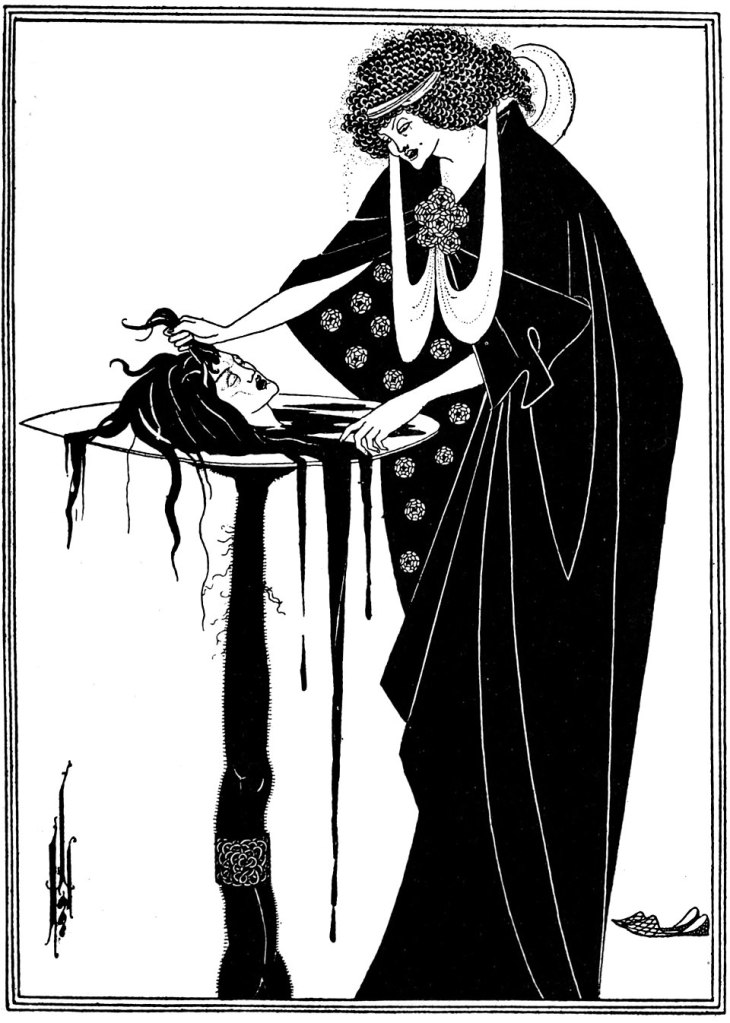
After finally seeing Lyric Opera’s current Salome, I’m convinced more than ever that this isn’t just a fine opera, it’s riveting theater.
For this run, Lyric is using David McVicar’s darkly disturbing 2008 production for the Royal Opera House, and it works. The upstairs/downstairs staging pits Herod’s decadent elite against quarreling religious factions in a way that percolates with tension. My only quibble? “The Dance of the Seven Veils” felt a touch too abstract. But everywhere else—especially in Salome’s mad, final scene—McVicar’s vision hit its mark.
Tomáš Netopil is making his Lyric debut on the podium, and what a debut. Known as one of the finest interpreters of Czech repertoire (particularly Janáček), Netopil had me curious: could he bring that same insight to Strauss? The answer is yes. Strauss’s Salome is detailed, richly colored, emotionally restless and dissonant in the best possible way. Netopil drew every ounce of color and menace from the score, making the most of what was in front of him.
Jennifer Holloway’s Salome started shakily. Her voice struggled to cut through Netopil’s overheated orchestral textures early on. But either she was pacing herself through one of Strauss’s most punishing roles, or she saved her powder for where it counts, because by the final scene, she was gloriously, lusciously mad. Nicholas Brownlee provided the perfect foil as Jochanaan, commanding from the moment he emerged from his cistern prison. He was proud, serious, immovable—everything Holloway’s Salome was not.
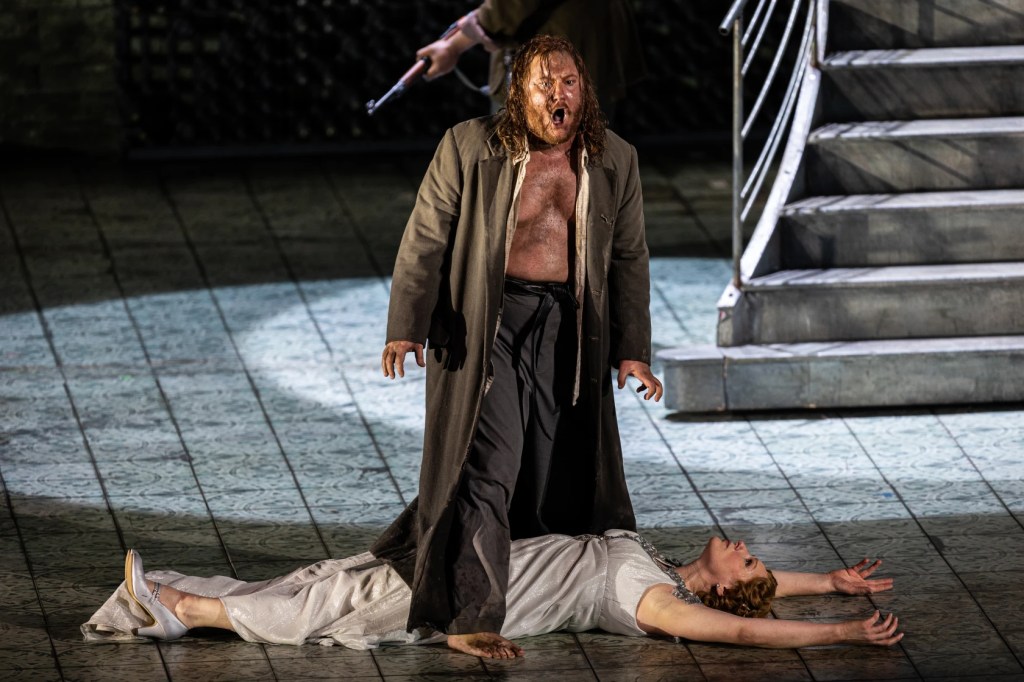
But what really grabbed me was the theatrical power of it all. This Salome pulled me into its Biblical world like no other production has managed. Think about the timeline: Herod is here, negotiating with his stepdaughter over a severed head, while somewhere across Jerusalem, Jesus is teaching, healing, moving inexorably toward his own fate. That shadow hangs over everything, and McVicar knows it.
Elsewhere
Lawrence A Johnson, Chicago Classical Review
“Holloway, who sang the title role in Samuel Barber’s Vanessa with the Boston Symphony Orchestra earlier this month, proved an admirable exponent of the demanding title role. Ideally, the role calls for a voice of greater power than Holloway possesses, and that lack of tonal opulence (and a fitfully wide vibrato) was felt at times in the long final scene. Still, the soprano largely displayed vocal strength and flexibility, and was able to ride the punishing lines of Strauss’s score with facility. Holloway handled the dramatic demands of the staging capably and brought uninhibited relish to the final scene with her uninhibitedly lascivious kissing of Jochannan’s head.”
“Bass-baritone Nicholas Brownlee makes a smashing Lyric debut as Jochanaan. He is first heard offstage where the holy man is being held prisoner. Brownlee’s voice projects to the rafters, even though it’s heard offstage. Every note is full and clear without a hitch in the lower range. I have to commend Brownlee’s physical prowess as Jochanaan is thrown about the stage like a child’s toy.”
Chris Jones, Chicago Tribune
“Holloway spills out Salome’s all-consuming pain even as she explains why she loves it, and thus has to have him, so much. And the actions of these players have observers: a disempowered domestic staff, forced only to watch in a kind of trembling horror, like Palm Beach waiters seeing altogether too much, linking this work based on Oscar Wilde’s famously controversial play to classic Greek tragedy.”
Kyle MacMillan, Chicago Sun Times
“The real star of this opera, though, is Strauss’ extraordinary score, which gives complexity and dimension to this gritty tale. The music can be eerily tender and unexpectedly uplifting at times, but what comes across more often are its jagged edges, blunt dissonances, extended harmonies and ominous rumblings with star parts for unlikely low instruments like the bass clarinet (Susan Warner and Wagner Campos) and rarely heard bass oboe (Margaret Butler).”
“The Dance of the Seven Veils in this production does not show Salome seducing Herod with undulance and striptease. Instead, Salome and Herod pass through a series of rooms illustrating the development of an abusive relationship between stepfather and stepdaughter. It’s a theatrical coup, with the walls passing from left to right and allusive, wordless storytelling, bold images following one after another.”
A few performances remain. Information and tickets here.
Discover more from Gathering Note
Subscribe to get the latest posts sent to your email.
 Gathering Note