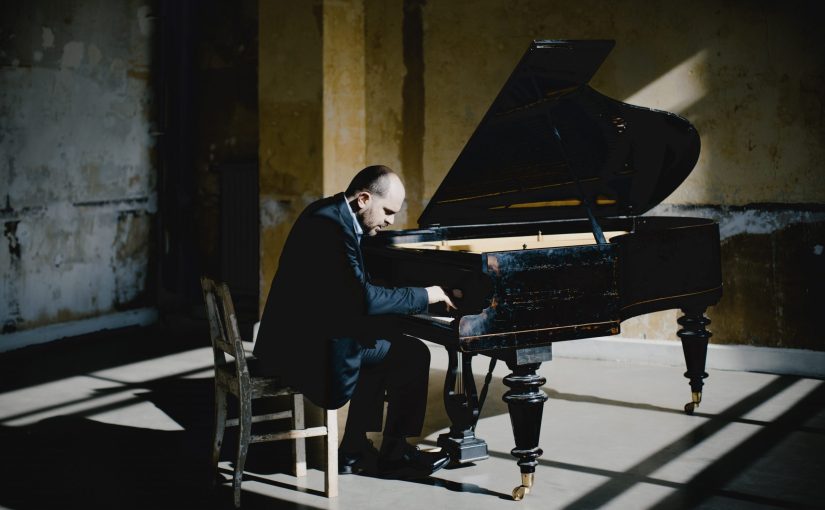
Moments before Kirill Gerstein took the stage Sunday afternoon at Orchestra Hall, the sounds of the city were not those of a typical pre-concert bustle. Along Michigan Avenue, marchers were demanding accountability from ICE for the killing of Alex Pretti in Minneapolis. I’ve seen plenty of protests over the years; I remember Occupy Wall Street supporters taking over a community college campus near my Seattle apartment in 2011, and the summer of 2020 when the Capitol Hill Occupied Protest (CHOP) was established in the heart of Seattle’s Capitol Hill neighborhood in the wake of George Floyd’s murder.
Yet, I cannot recall a moment where the two disparate parts of my life — politics and music — came so close to intermingling. For a brief time, I questioned whether I should abandon Gerstein’s recital to join the march for the justice and fair treatment that remains so elusive in 2026.
I found my resolve in a memory of an interview Gerstein gave recently. He recounted his journey from the collapsing Soviet Union to the United States with a faith in the artistic process that felt particularly grounding. He spoke of a chance encounter with a jazz musician, the youthful hope of playing jazz piano, and bootleg cassette tapes purchased on the streets of Poland. These small, human encounters helped forge Gerstein into the artist he is today. The more I considered his path, the more I felt a need to take shelter in his performance from the chaos of the world outside.
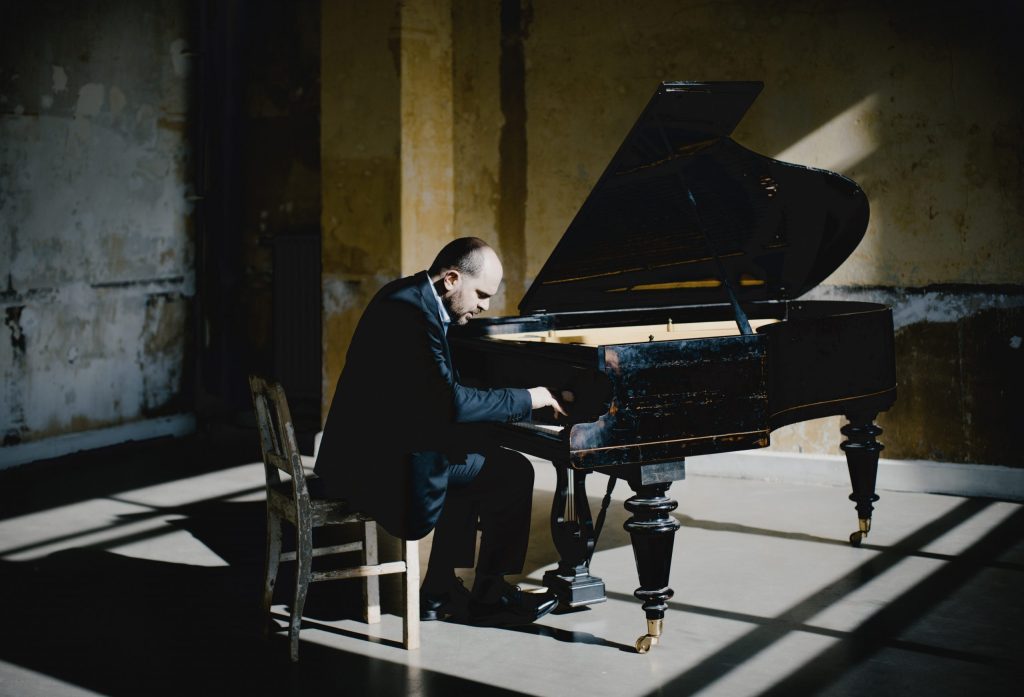
The program featured cornerstone works by Franz Liszt and Johannes Brahms. The first half featured Liszt’s Three Petrarch Sonnets and the Après une lecture du Dante: Fantasia quasi Sonata (‘Dante Sonata’) while the second half consisted of Brahms’ Scherzo in E-flat minor and the Sonata No. 3 in F minor.
The selection highlighted a fascinating dialogue between ‘programmatic’ and ‘absolute’ music. Liszt, who coined the former term, drew inspiration from the works featured that frigid Sunday afternoon from 14th-century Italian poetry. Brahms is remembered as the champion of the abstract absolute style. However, as Gerstein noted in an interview about his Chicago program, these lines are often blurred. The young Brahms of the third sonata included poetic quotations about intertwined hearts, while Liszt’s programmatic works bear the ‘traces of Beethoven.’
Gerstein’s Liszt began with a flowing, natural interpretation of the Petrarch Sonnets. He channeled the source poetry with a sustained sense of direction, allowing Liszt’s ideas to settle on the ears with a rare combination of ardor and sensitivity. Admittedly, I did not expect to be so moved. My previous understanding of Gerstein was framed by his advocacy for contemporary composers who often prioritize color and effect over sensibility, but he dispelled that bias quickly.
The ‘Dante Sonata’ followed with a different energy. Gerstein harnessed a broad dynamic range, creating stark contrasts in a boldly played rendition. Where another performance I heard recently was elegant but lacked the overt drama the piece really needs to make its points. Gerstein, by contrast, embraced the work’s inherent theatricality. His technical mastery was obvious, but it never felt analytical; it was visceral.
After intermission, Gerstein turned to early Brahms. The Scherzo in E-flat minor and the Sonata No. 3 are both works of a young man. They were instrumental in launching Brahms’ career, and stand in contrast to the autumnal ruminations of his later years. Gerstein tackled the Scherzo’s scampering figures effortlessly, relishing the eight-minute work’s sharp contrasts and revealing a heart-on-sleeve romanticism.
The Sonata No. 3 is grand and innovative: a five-movement work of symphonic scope. It was the last sonata Brahms wrote before submitting his work to Robert Schumann, shortly before the latter’s mental collapse. Gerstein romped through the blustery first movement before turning his sensibilities toward the second movement Andante. His playing here had a singing, lyrical quality that perfectly matched the lines by the poet C.O. Sternau. This same sensitivity returned in the fourth movement Intermezzo, which, alongside the Andante, served as the highlight of the evening.
In the subsequent Scherzo and Finale, Gerstein returned to the large keyboard gestures that defined the earlier portion of the recital. Brahms’ design is famously symphonic, his ideas often exceeding the physical limits of the piano. Gerstein, however, kept the architecture intact, providing a memorable and grounding encounter with a cornerstone of the literature.
Gerstein rewarded the audience with two encores. The first was Schumann’s Blumenstück followed by Chopin’s Waltz in A-flat Major, Op. 42. They served as a generous thanks to an audience that braved weather and protest to attend.
As Chopin’s final notes rang out, the distance between the hall and the street felt slightly diminished. We hadn’t ignored the chaos outside; but through Gerstein’s sensitivity and technical force, we had examined the very human impulse to find order and hope within it. I walked back out onto Michigan Avenue feeling that the pursuit of justice and the pursuit of art are, at their best, two sides of the same restless spirit.
Originally published on Seen and Heard International
Kirill Gerstein and Gary Burton interview for WRTI
Discover more from Gathering Note
Subscribe to get the latest posts sent to your email.
 Gathering Note