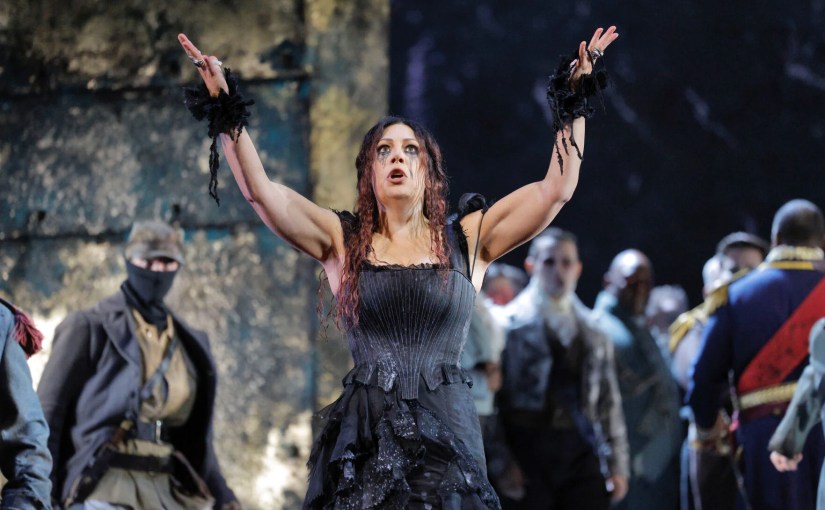
I had hoped to write something longer about Medea, which opened a week ago at the Lyric Opera. Time and circumstance have conspired against me, but this production demands to be acknowledged, even if briefly. Suffice it to say, the performance and production is not to be missed.
Luigi Cherubini’s Medea remains one of opera’s most unjustly neglected masterworks. A magnificent, proto-Romantic affair that bridges classical restraint with the full-throated passion that would define the nineteenth century. The score crackles with intensity, its dramatic architecture built on a foundation of inexorable tension that tightens with each scene until the inevitable, devastating conclusion. It’s a work that demands everything from its performers, particularly its title role.
Sondra Radvanovsky rises to meet those demands with a performance that can only be described as revelatory. She is one of the most dynamic, emotional singers on stage today, and her portrayal of Medea’s descent from wounded dignity to vengeful fury is nothing short of mesmerizing. Her voice carries the full weight of Medea’s rage and anguish yet never sacrifices beauty for dramatic effect. This is singing that cuts to the bone.
Equally crucial to the evening’s success is the presence of conductor Enrique Mazzola, a committed advocate for this work who understands its every contour. Under his baton, the Lyric Opera Orchestra played with a precision and fervor that matched the intensity unfolding onstage. The production itself serves the opera well, allowing the drama to unfold with clarity and power.
It all adds up to the most memorable opera experience for me of the last five years. If you have any opportunity to see this production before it closes, seize it. Performances of this caliber are rare, and Medea is an opera that deserves to be experienced in the theater, where its full power can be felt. The Lyric has given us something special.
Here is a roundup of critical opinions.
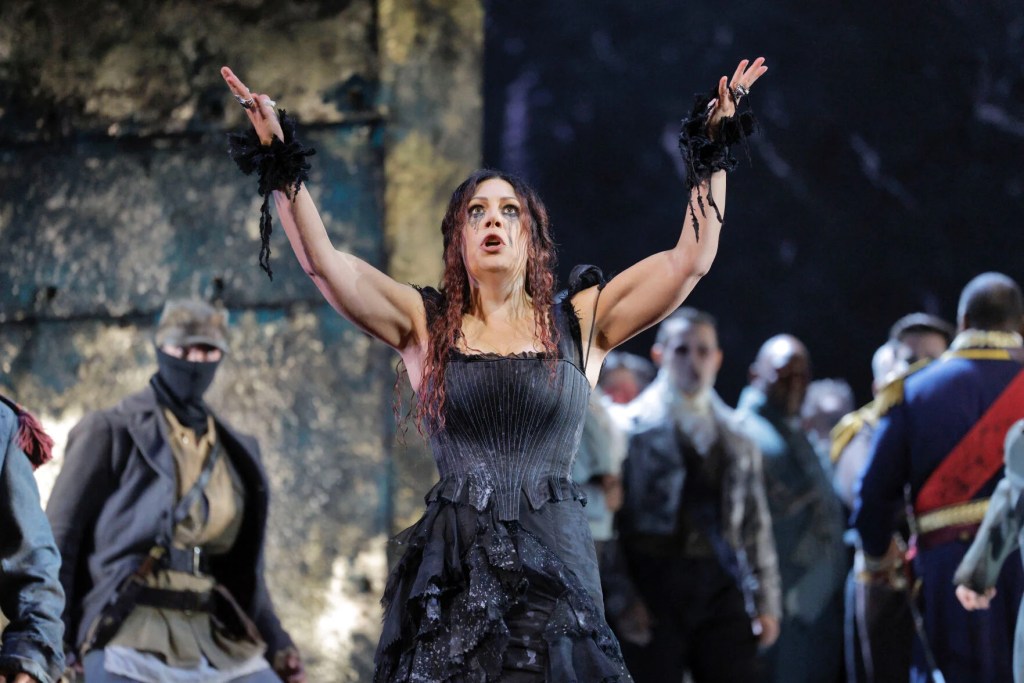
“All of this rides on Cherubini’s rich and surprisingly modern-sounding score (said to be an inspiration for Beethoven), which brings us to the two most compelling reasons not to miss this relatively short run: Medea is a perfect showcase for Lyric’s stellar chorus and orchestra, and this production is a chance to see Chicago’s resident international stars, Sondra Radvanovsky as Medea, and Matthew Polenzani as Giasone, at the peak of their mature careers, in our own golden honeycomb of an opera house. Polenzani’s mighty tenor commands from the moment he steps on stage, and Radvanovsky, with a voice as pure as it is powerful (even when flat on her back or creeping across the stage like some silent-film villainess), confidently delivers the vocal and emotional intensity demanded by this marathon role made famous by Maria Callas in the 1950s.”
“The role of Medea is one of the great voice-shredders, yet Radvanovsky rose to the daunting challenge of the final act, which is essentially an unbroken 35-minute mad scene. The soprano tackled all the formidable challenges, flinging out the leaping top notes, handling the bursts of rapid vocalism and making Medea’s frenzied indecision about whether to not to murder her children to get revenge on Giasone nerve-wracking and harrowing. A memorable, genuinely great performance by a singer at the peak of her career.”
“Radvanovsky enters in Act II like a bolt of lightning and creates a maelstrom that holds throughout the performance. The chemistry between Radvanovsky and Polenzani is electric. Giasone’s rejection of Medea is conflicted. On one hand, she is the mother of his children and helped him get to his throne. On the other hand, he wants a young and naive bride who will basically be pretty and obedient. Giasone and Creonte both use their status and power as men to get what they want, and women are collateral damage. I should point out that Medea is a sorceress who acquired skills through study and knowledge. A witch is a person born with power that must be honed and guided. It’s another layer to the Medea character, who took vengeance when her knowledge was abused. It speaks more to the power of the feminine abused by men.”
“David McVicar, who has directed seven productions at Lyric over the past quarter of a century, serves as both director and set designer. His most fascinating contribution is his division of the stage into two parts: the front section, bleak with only a few stairs, and the far larger back section, which is enclosed by thick metal gates which have the patina of tarnish. Medea is kept away from the enclosed section, emphasizing that in Creonte’s kingdom she is always on the outside looking in. The most exciting part of the gated enclosure is a huge tilted mirror that enables the audience to see what is happening all across the stage from an aerial viewpoint made slightly fractured and distorted by the fact the large mirror is composed of many smaller mirrors not perfectly aligned with each other. This enhances the feeling of uncertainty as well as heightens the effect of Medea’s madness.”
“More clear-cut were the fine performances by the supporting cast. These included Alfred Walker, with his clear, stentorian bass-baritone voice and aptly regal presence as King Creonte, and soprano Elena Villalón making her Lyric debut as Glauce. She makes the most of her Act 1 aria, singing with brightness and agility.
The standout, though, was mezzo-soprano Zoie Reams, who portrays Medea’s servant, Neris. With her supple, expressive voice and ample power, her Act 2 aria, with its entrancing accompaniment by principal bassoonist Preman Tilson, is one of the opera’s high points.”
Discover more from Gathering Note
Subscribe to get the latest posts sent to your email.
 Gathering Note
One thought on “Medea delivers an unforgettable experience at the Lyric”