• Valentine’s Day weekend brings enchanting, intimate Cendrillon to the CheckOut

    Valentine’s Day weekend brings enchanting, intimate Cendrillon to the CheckOut

    On Valentine’s Day weekend, Chicago City Opera brought Jules Massenet’s Cendrillon (Cinderella) to the CheckOut in Lakeview, proving that you don’t need a proscenium arch to create magic. The CheckOut is a former 7-Eleven on North Clark Street, now revived by Access Contemporary Music and composer Seth Boustead as a venue for chamber music and new music events.

    The experiment succeeded. The February 14 performance was nearly sold out, drawing a varied crowd of younger and older listeners. As the venue’s first opera, it felt like a natural extension of salon culture: exclusive in its scale yet welcoming and unfussy.

    (more…)

  • New and upcoming

    Joyce DiDonato and Time for Three perform Emily — No Prisoner Be this week in Chicago. Kevin Puts composed this evening-length song cycle specifically for these artists, weaving together 26 movements that create a continuous, immersive journey through Emily Dickinson’s poetry. With Puts’ prior collaborations with both DiDonato and Time for Three, this promises to be something truly special. Ticket and concert information.

    Oak Park’s Handel Week Festival kicks off this Sunday, February 15, at Pilgrim Congregational Church, just a few blocks from my house. I had no idea this festival existed until recently, and I’m genuinely surprised to find it practically in my backyard. Not sure what to expect from a mid-February dose of baroque music, but I’m counting on it to chase away the winter blues.

    The same weekend Chicago City Opera presents Massenet’s Cendrillon at The Checkout. It’s a gem that doesn’t get performed as often as La Bohème or Carmen. Its melodies are accessible and moving, the story is timeless, and it’s a genuine treat for anyone who loves beautiful music.

    At the end of the month, Klaus Mäkelä returns for what promises to be a concert you won’t want to miss. Mäkelä’s program pairs Sibelius’s Lemminkäinen Legends with Strauss’s Ein Heldenleben. His approach to Sibelius has divided critics, but having a music director genuinely invested in the Finnish master bodes well for Chicago. Just as Muti shaped the CSO’s lyrical sensibility, Mäkelä’s understanding of Sibelius may bring new shading to the orchestra’s collective sound.

    Seattle Opera has announced its 2026/27 season. Staying true to its recent tradition of one concert performance per season, the company will present Léo Delibes’s Lakmé in concert. They’ll also stage Gabriela Lena Frank’s El último sueño de Frida y Diego, an opera that Lyric Opera of Chicago presents this spring. Seattle Opera’s latest concert performance was Strauss’s Daphne, reviewed by Lisa Hirsch here and Thomas May here. Meanwhile, San Francisco Opera’s 2026/27 season brings Verdi’s Simon Boccanegra and Wagner’s Das Rheingold, the latter launching a complete Ring cycle that culminates in 2028.


  • Hide the moon! Hide the stars!

    Illustration by Aubrey Beardsley for the first English edition of the play

    After finally seeing Lyric Opera’s current Salome, I’m convinced more than ever that this isn’t just a fine opera, it’s riveting theater.

    For this run, Lyric is using David McVicar’s darkly disturbing 2008 production for the Royal Opera House, and it works. The upstairs/downstairs staging pits Herod’s decadent elite against quarreling religious factions in a way that percolates with tension. My only quibble? “The Dance of the Seven Veils” felt a touch too abstract. But everywhere else—especially in Salome’s mad, final scene—McVicar’s vision hit its mark.

    (more…)

  • Joseph Horowitz on the Kennedy Center shutdown

    The classical music historian, writer and culture critic Joseph Horowitz shared a bitting summary from Jimmy Kimmel on what the announced shutdown of the Kennedy Center means. There are numerous choice bits in the piece, including this one:

    It’s the John F. Kennedy Memorial Center for the Performing Arts. It’s part memorial, part national cultural institution, an American symbol that was designed to be bigger than one party, one mood, one ego. And that’s why people reacted so sharply when Trump started calling it the “Trump Kennedy Center.” Not because Americans are allergic to construction. Because Americans can smell a desecration when it shows up wearing gold letters.


    More from Horowitz (and Kenneth Woods).


  • Four Bruckner concerts and one conclusion

    Four Bruckner concerts and one conclusion

    Anton Bruckner has never resonated with me the way Mahler has. I don’t seek out his symphonies with any particular enthusiasm. When the mood strikes, I’ll put on a recording and settle into my listening chair, letting the music unfold. Friends speak of transcendence; I’m still trying to find my way in. Yet even if Bruckner has not quite claimed me, my relationship with him has been shaped less by the scores themselves than by the circumstances in which I’ve encountered them. In the few times I’ve heard Bruckner in concert—only three over many years—each performance has stayed with me for reasons that extend beyond the music.

    The first was Kurt Masur’s Seattle Symphony account of the Fourth Symphony, which arrived during a crisis moment for the orchestra, with musicians and administration locked in a bitter contract negotiation. Masur’s presence steadied the ensemble, drawing out playing of real warmth and authority; the performance felt like an act of institutional reassurance as much as musical interpretation. A few years later in Minneapolis, I attended what turned out to be Stanislav Skrowaczewski’s final public concert: a compelling reading of the Eighth that ranks among the most engaging concert experiences I’ve had. The lobby that evening was bittersweet—staff were selling off overstock of Skrowaczewski’s recordings. His iconic Vox albums and copies of his celebrated Bruckner Ninth with Minnesota spread across tables while staff shared anecdotes of the man they knew as “Stan.” I’ve wondered since whether he knew it would be his last appearance.

    Against that backdrop, my most recent Bruckner encounter carried a different kind of significance. The Berlin Philharmonic brought the Fifth Symphony to Chicago as part of their U.S. tour, and the atmosphere of the night was driven as much by the presence of the Berliners as by the score itself. This was a case where the orchestra’s superlative playing elevated music that doesn’t fully connect with me. I’ve now heard the Berlin Philharmonic twice at Orchestra Hall; both times their sheer quality has made me want to hear them in Berlin.

    (more…)

  • Liszt and Brahms become a refuge in Kirill Gerstein’s Chicago recital

    Liszt and Brahms become a refuge in Kirill Gerstein’s Chicago recital

    Moments before Kirill Gerstein took the stage Sunday afternoon at Orchestra Hall, the sounds of the city were not those of a typical pre-concert bustle. Along Michigan Avenue, marchers were demanding accountability from ICE for the killing of Alex Pretti in Minneapolis. I’ve seen plenty of protests over the years; I remember Occupy Wall Street supporters taking over a community college campus near my Seattle apartment in 2011, and the summer of 2020 when the Capitol Hill Occupied Protest (CHOP) was established in the heart of Seattle’s Capitol Hill neighborhood in the wake of George Floyd’s murder. 

    Yet, I cannot recall a moment where the two disparate parts of my life — politics and music — came so close to intermingling. For a brief time, I questioned whether I should abandon Gerstein’s recital to join the march for the justice and fair treatment that remains so elusive in 2026.

    (more…)

  • Waiting for summer and the Grant Park Orchestra

    Waiting for summer and the Grant Park Orchestra

    It is cold in Chicago—objectively, adamantly cold. An Arctic front has settled over the city, wrapping it in a willful chill. I find myself staying indoors as much as possible, venturing out only tomorrow to Symphony Center to hear Kirill Gerstein in the SCP piano series. Gerstein has long struck me as a connoisseur of the recondite and the new. His recording of Busoni’s Piano Concerto remains a marvel, and he has been a tireless champion of Thomas Adès. To encounter him in a more traditional program of Liszt and Brahms promises a kind of illumination, the way a familiar landscape can appear unfamiliar when seen from a different vantage point.

    The cold has also given me time to begin The Brothers Karamazov as part of my Lenten preparation. Lent is still weeks away, but I read slowly, and the novel’s sprawl requires an early start. In the same unhurried hours, I have finally studied the Grant Park Music Festival’s summer lineup. Summer seems impossibly distant amid the present freeze, but its promise already feels restorative. Giancarlo Guerrero, now in his second season as artistic director and principal conductor, has assembled a season of considerable ambition.

    (more…)

  • Albums for the end of 2025

    Albums for the end of 2025

    Some months back I finally made the switch and subscribed to a music streaming service. For most of my adult life, I preferred physical CDs. For a few years I plunged headlong into MP3s, but I eventually drifted back to discs once I realized how poor the metadata was for most classical releases.

    Living in the Chicago area now, I have not been able to find a record store that approximates the inventory of Silver Platters in Seattle. I plugged along for a while by placing web orders through Amazon and elsewhere, but what I missed most was the act of discovery. Browsing shelves, taking chances, and pursuing recommendations were all part of how I built my collection.

    It was the staff at Silver Platters who suggested I look into Apple Classical as a replacement. The app is not perfect, but it does scratch an itch. It has allowed me to stumble onto albums I would not otherwise come across. In some cases, it has even pointed me back toward my physical collection.

    Here are a few albums that stood out for me this year:

    (more…)

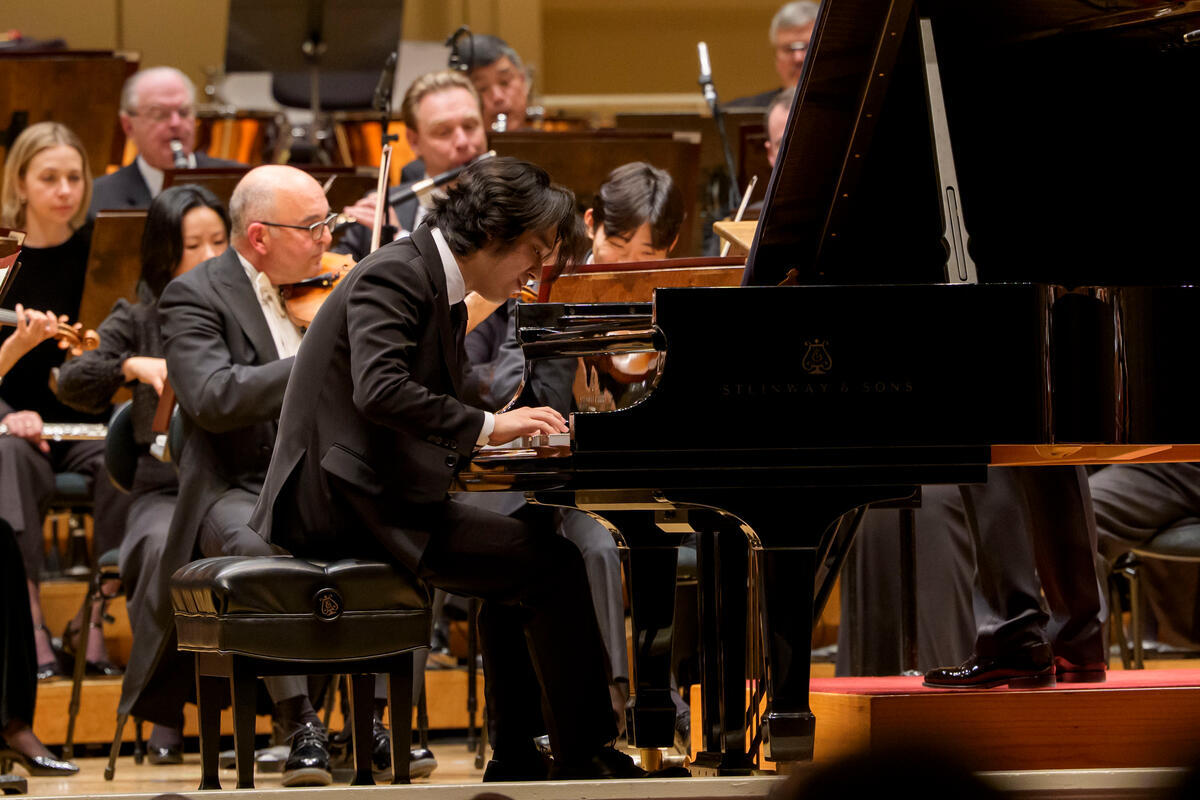
  • Yunchan Lim finds poetry in Schumann as Mäkelä unleashes Beethoven’s Seventh

    Yunchan Lim finds poetry in Schumann as Mäkelä unleashes Beethoven’s Seventh

    Last October, on vacation in Amsterdam, I slipped into the Concertgebouw to hear Klaus Mäkelä lead the Royal Concertgebouw Orchestra. He had not yet assumed his full duties as music director there, but the relationship already felt settled and purposeful. The program paired Andrew Norman’s Play with Richard Strauss’ Don Juan and Rosenkavalier waltzes, a combination that showed both Mäkelä’s ambition and his curiosity. Norman’s sprawling, high-voltage score came off better than expected; the Strauss, lush and heroic by nature, felt less fully shaped. Still, the concert offered a useful snapshot of a conductor in the midst of defining himself, drawn to contrasts and willing to take risks.

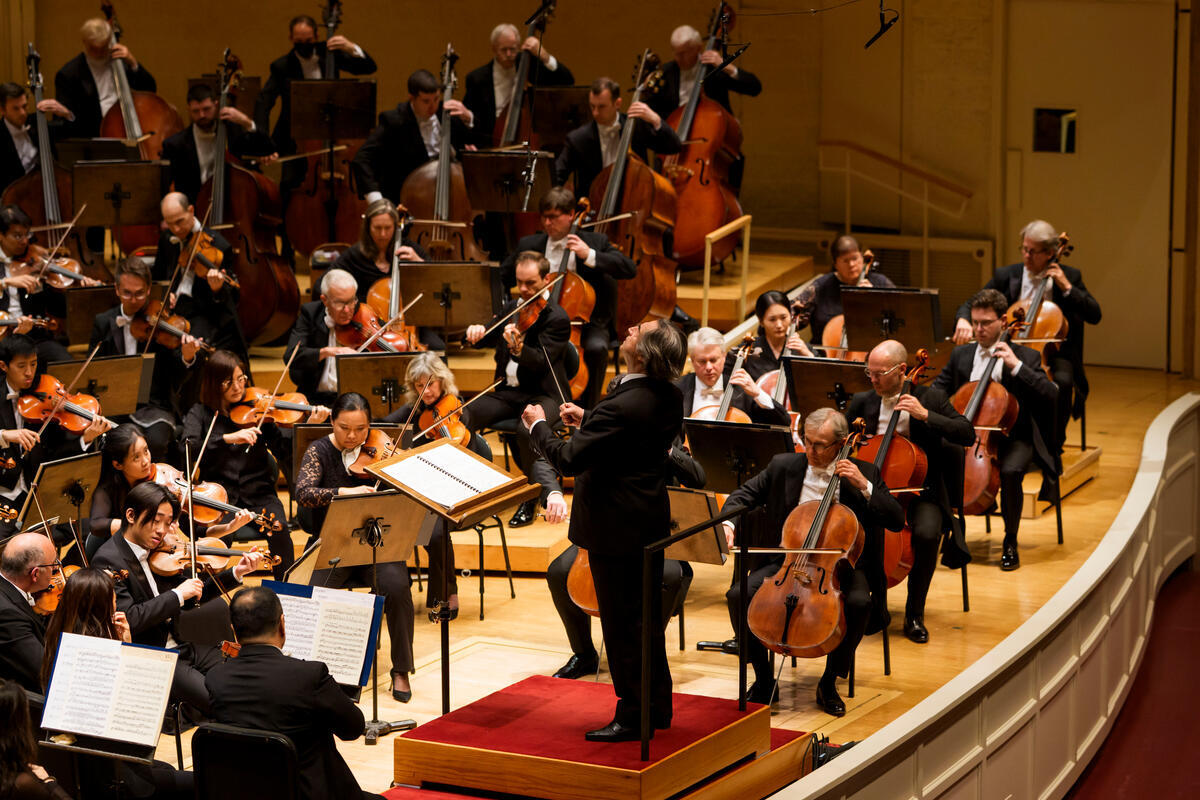
    This week, Mäkelä brought a similar philosophy to Orchestra Hall, standing before the Chicago Symphony, another orchestra he is soon to lead. Once again, old and new were placed in close proximity. Schumann and Beethoven formed the spine of the program, flanked by two modern works: Unsuk Chin’s subito con forza and Jörg Widmann’s Con brio – both receiving Chicago Symphony premieres. The effect was not novelty for its own sake but a deliberate attempt to focus Beethoven’s familiar music through a modern lens.

    (more…)

  • Chicago Opera Theater rediscovers Salieri’s Falstaff one prank at a time

    Chicago Opera Theater rediscovers Salieri’s Falstaff one prank at a time

    Before Chicago Opera Theater’s recent production of Antonio Salieri’s Falstaff began, the General Director Lawrence Edelson posed a question to the audience in the Windy City’s famed Studebaker Theater: How many people had heard an opera by Antonio Salieri? Fewer than six hands went up. The question was pointedly rhetorical. The Italian-born Viennese composer is opera’s most notorious footnote, a composer whose reputation was tarnished not by his music but by rumor, innuendo, and a playwright’s imagination. Peter Shaffer’s celebrated work for stage, Amadeus, and its subsequent film adaptation cast Salieri as a villain, a mediocre counterpoint to Mozart’s genius. 

    (more…)

  • Nova Linea Musica hosts the Catalyst Quartet in Against All Odds a program of resistance and reach

    Nova Linea Musica hosts the Catalyst Quartet in Against All Odds a program of resistance and reach

    John Adams has a way of claiming the air around him. For the better part of fifty years, his music has defined the sound of American classical life, much as Aaron Copland’s did in the middle of the 20th century. So when a concert begins with Adams and then turns its attention elsewhere, the gesture carries weight. It suggests a quiet resistance: a willingness to acknowledge a dominant voice without letting it set the terms.

    At Guarneri Hall on December 3rd, the Catalyst Quartet leaned into that tension. Their program, “Against All Odds,” opened with Adams’s brisk six-minute Fellow Traveler and closed with Coleridge-Taylor Perkinson’s String Quartet No. 1 “Cavalry”. Between the two stood a constellation of short works by younger composers—world premieres by Derrick Skye and Andrea Casarrubios, along with pieces by Jessie Montgomery, Jorge Amando Molina, and Aftab Darvishi. The lineup read like a study in how artists carve out space for themselves, whether by confronting the past, reframing inherited forms, or simply insisting on their own perspective.

    (more…)

  • A song for the reappeared

    A song for the reappeared

    Some works arrive at exactly the moment they’re needed. Matthew Aucoin’s Song of the Reappeared, receiving its world premiere with the Chicago Symphony Orchestra this week, is one of them.

    The piece draws from Raúl Zurita’s INRI, a book-length poem born from Chile’s darkest chapter. After Pinochet’s dictatorship disappeared thousands—bodies dropped from helicopters, lives erased from memory—Zurita imagined those lost souls rising from sea and mountains. It was a memorial and a vision, anchored in grief but turned toward rebirth.

    Written for soprano Julia Bullock, the work speaks to our present with unsettling clarity. In a city still reckoning with the effects of mass detentions that tore families apart, the title’s promise of return carries weight. This collaboration between Bullock and Aucoin represents both artists at their most potent. Aucoin has found new balance in his writing: vocal lines that connect immediately, layered over orchestral passages of startling power. Bullock herself describes it as some of the most exciting work the composer has produced.

    After these Chicago performances, there are no plans set for the piece. That alone makes these four nights essential. Don’t let the chance to hear this new work work pass.

    Information and tickets for remaining performances

    (more…)

  • Honeck offers a living, breathing setting for Mozart’s Requiem

    Honeck offers a living, breathing setting for Mozart’s Requiem

    Classical music’s great monuments often arrive in the concert hall trailing long histories behind them, along with layers of interpretation and expectations that no performance can meet. Mozart’s Requiem is undoubtedly one of those works. It gathers together some of the composer’s most stirring music and binds it with a spiritual character weighted by lore surrounding Mozart’s final days. The piece’s fragmentary nature allowed later composers to supply completions of varying character, adding an almost philosophical dimension on which are the most or least “Mozart.”

    Put together, its murky antecedents, spiritual impact and mythological status leave Mozart’s Requiem almost in a state of suspension. For all its beauty, it is a piece that can inspire more promise than fulfillment. I have long thought that it thrives more readily on recordings than in performance, where its scale and pacing create challenges for modern orchestras.

    (more…)

  • Chicago Symphony spotlights Julia Bullock in world premiere of Matthew Aucoin’s Song of the Reappeared

    Chicago Symphony spotlights Julia Bullock in world premiere of Matthew Aucoin’s Song of the Reappeared

    On a September morning in 1973, Chile’s turbulent political reality pivoted into a nightmare, with a coup that brought General Augusto Pinochet to power  inaugurated nearly two decades of repression. For many Chileans, the brutality unfolded in darkness. Secret police agents arrived at homes in unmarked cars. People vanished from doorways and street corners, becoming rumor. Some were taken to clandestine detention centers, interrogated, and tortured. Many were killed, their bodies discarded in rivers, lakes, and mass graves, or pushed from helicopters into the Pacific. It was terror designed not only to erase opponents but to erase evidence of their existence.

    (more…)


  • Muti affirms what matters in a program of Brahms, Stravinsky and Rodrigo with the Chicago Symphony

    Muti affirms what matters in a program of Brahms, Stravinsky and Rodrigo with the Chicago Symphony

    For a good many people, the image of Johannes Brahms is inseparable from Maria Fellinger’s photographs. Fellinger, a friend of the composer, captured him in his later years: belly pushing outward, age etched into his face, his long beard and hair gone white or very light gray. Yet even in these twilight portraits, Brahms maintains his composure. He looks commanding, his suit still purposeful. These are the attributes of a composer who has lived life, knows what he believes, and is ready to share those convictions without hesitation. This same spirit permeates much of his later music, including the Fourth Symphony. By this point in his career, any hesitation in his musical voice has vanished entirely.

    (more…)

  • Behzod Abduraimov brings quiet mastery to the piano and Orchestra Hall

    Behzod Abduraimov brings quiet mastery to the piano and Orchestra Hall

    When Beatrice Rana withdrew from the Symphony Center Presents series earlier this Fall, event organizers called upon Behzod Abduraimov to fill this prominent slot in the season. And that  decision proved fortuitous for those who attended his recital on Sunday afternoon.

    Abduraimov is no newcomer to the international circuit. His victory at the 2009 London International Piano Competition launched a career that has proceeded steadily upward since then. Now 35, the Uzbek-born pianist has established himself among the premier keyboard artists of his generation. He has performed twice at Ravinia and appeared on Symphony Center’s own piano series in 2019. His Chicago Symphony Orchestra debut, delayed by the pandemic, finally materialized in 2024.

    (more…)

  • Classical music’s youth movement grows up, grows wise

    Classical music’s youth movement grows up, grows wise

    Classical music has an uneasy relationship with youth. The very word “classical” suggests age, tradition, dust on velvet seats. Yet the field periodically becomes infatuated with young conductors, as if a twenty-something on the podium might rescue an art form everyone agrees is perpetually dying. The counterargument is equally familiar: conducting requires life experience, the emotional depth that only comes with years. You cannot truly understand Mahler at twenty-five, or so the thinking goes.

    I confess to having held both views. As a younger concertgoer, I wanted the gerontocracy swept aside. Now, middle-aged myself, I care less about the conductor’s biography than whether the performance moves me. Still, there’s something instructive about watching how one era’s young lions become the next era’s establishment.

    Last September in New York, two evenings illustrated this progression perfectly. At Geffen Hall, Gustavo Dudamel led the New York Philharmonic through Beethoven’s Fifth and John Corigliano’s First. Later that week at the Met, Yannick Nézet-Séguin conducted Mozart’s Don Giovanni.

    (more…)

  • Medea delivers an unforgettable experience at the Lyric

    Medea delivers an unforgettable experience at the Lyric

    I had hoped to write something longer about Medea, which opened a week ago at the Lyric Opera. Time and circumstance have conspired against me, but this production demands to be acknowledged, even if briefly. Suffice it to say, the performance and production is not to be missed.

    Luigi Cherubini’s Medea remains one of opera’s most unjustly neglected masterworks. A magnificent, proto-Romantic affair that bridges classical restraint with the full-throated passion that would define the nineteenth century. The score crackles with intensity, its dramatic architecture built on a foundation of inexorable tension that tightens with each scene until the inevitable, devastating conclusion. It’s a work that demands everything from its performers, particularly its title role.

    Sondra Radvanovsky rises to meet those demands with a performance that can only be described as revelatory. She is one of the most dynamic, emotional singers on stage today, and her portrayal of Medea’s descent from wounded dignity to vengeful fury is nothing short of mesmerizing. Her voice carries the full weight of Medea’s rage and anguish yet never sacrifices beauty for dramatic effect. This is singing that cuts to the bone.

    Equally crucial to the evening’s success is the presence of conductor Enrique Mazzola, a committed advocate for this work who understands its every contour. Under his baton, the Lyric Opera Orchestra played with a precision and fervor that matched the intensity unfolding onstage. The production itself serves the opera well, allowing the drama to unfold with clarity and power.

    It all adds up to the most memorable opera experience for me of the last five years. If you have any opportunity to see this production before it closes, seize it. Performances of this caliber are rare, and Medea is an opera that deserves to be experienced in the theater, where its full power can be felt. The Lyric has given us something special.

    Here is a roundup of critical opinions.

    (more…)

  • Jordan and Hadelich lead the Chicago Symphony through its repertoire sweet spot

    Jordan and Hadelich lead the Chicago Symphony through its repertoire sweet spot

    Not long ago, while spending a week in New York, I found myself walking through Central Park after a concert by the New York Philharmonic, wondering which composers belong to which American orchestras. It is a parlor game without definitive answers – New York might claim Gershwin or Ives – but Chicago’s answer came to me immediately: Brahms. Or, more broadly, the music of Central Europe. The Chicago Symphony Orchestra’s history is inseparable from the great European Classical and Romantic traditions, shaped by towering figures like Fritz Reiner and Georg Solti. When the orchestra recently offered an evening of Kodály, Dvořák and Brahms – works squarely in its wheelhouse – the performance felt like a homecoming.

    (more…)

  • In Chicago, a new venue makes its case with Hickey’s audacious piano work Sapiens

    In Chicago, a new venue makes its case with Hickey’s audacious piano work Sapiens

    Chicago has no shortage of performance spaces, but none quite like The CheckOut. Housed in a former 7-Eleven on Clark Street in Uptown, the venue opened its doors September 12th under the stewardship of Access Contemporary Music. In just two weeks it has already staked its claim as one of the city’s most intriguing cultural outposts. The inaugural festival gave a sense of the possibilities: two sold-out nights devoted to Arvo Pärt’s hushed mysticism, the Black Oak Ensemble channeling Studs Terkel’s working class ethos, chamber music turns from the Palomar Trio and Kontras Quartet, and, finally, Wicked Drawl—a band that refuses genre with a gleeful mash of cabaret, country, classical, and jazz.

    (more…)